

 Phoenix 24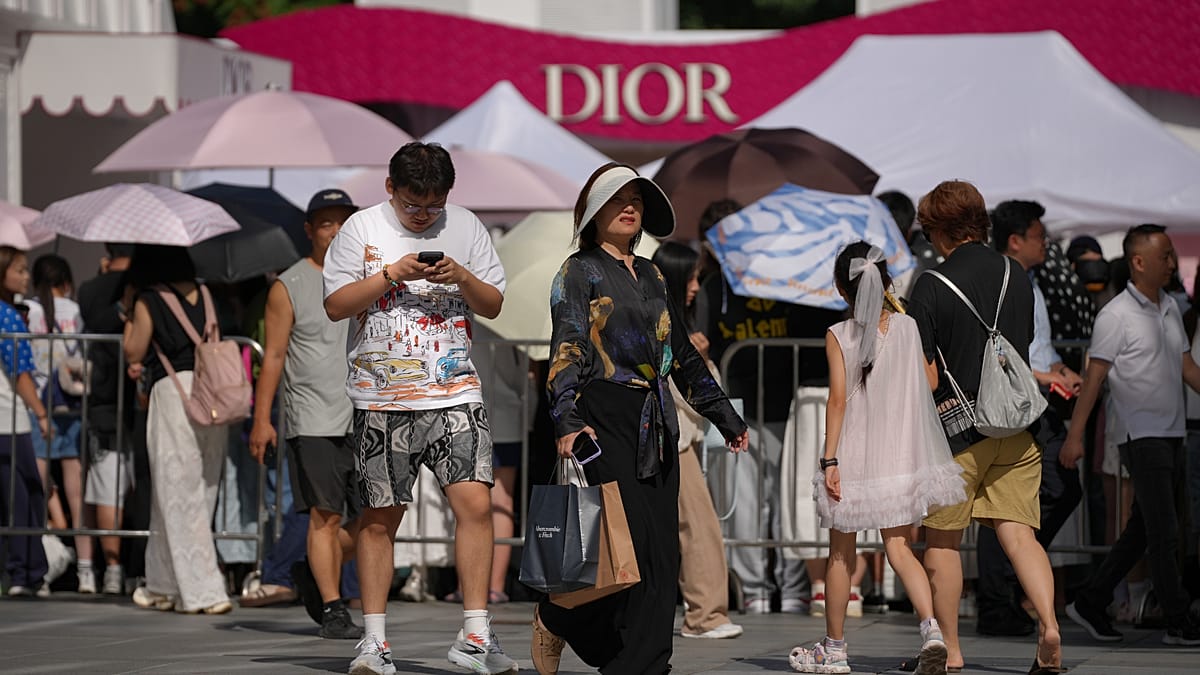
Stronger factories conceal an economy still unable to persuade households to spend.
BEIJING, CHINA
China’s retail sales increased by only 0.4% year on year in August, slowing from 0.6% in July and falling below economists’ forecast of 0.8%. Although the figure remained positive after May’s contraction, it indicates that household consumption is still close to stagnation.
The weakness contrasts with industrial production, which expanded by a stronger-than-expected 5.2%. Advanced manufacturing, artificial intelligence equipment, lithium-ion batteries and industrial robots contributed to the improvement, reinforcing China’s position as a global production power.
Investment presented a less favourable picture. Fixed-asset investment declined by 7.2% during the first eight months of the year, while property investment fell almost 20%. The prolonged housing downturn continues to reduce household wealth, discourage purchases and weaken confidence in the broader economy.
Beijing has introduced consumer subsidies, loan support and public spending measures, but these policies have not fully addressed the reasons families remain cautious. Employment uncertainty, declining property values and limited social protections encourage households to save rather than spend.
China’s imbalance has international consequences. When domestic consumers absorb fewer goods, factories become more dependent on exports. The resulting trade surpluses intensify tensions with Europe and the United States, where governments accuse Beijing of exporting industrial overcapacity and threatening local manufacturers.
China’s challenge is therefore structural rather than temporary. Expanding production can sustain headline growth, but a durable recovery requires stronger household income, greater social security and renewed confidence in housing and employment. Stimulus can encourage purchases; it cannot easily manufacture economic trust.
An economy can produce without limits, but it cannot grow sustainably without confidence.