

 Phoenix 24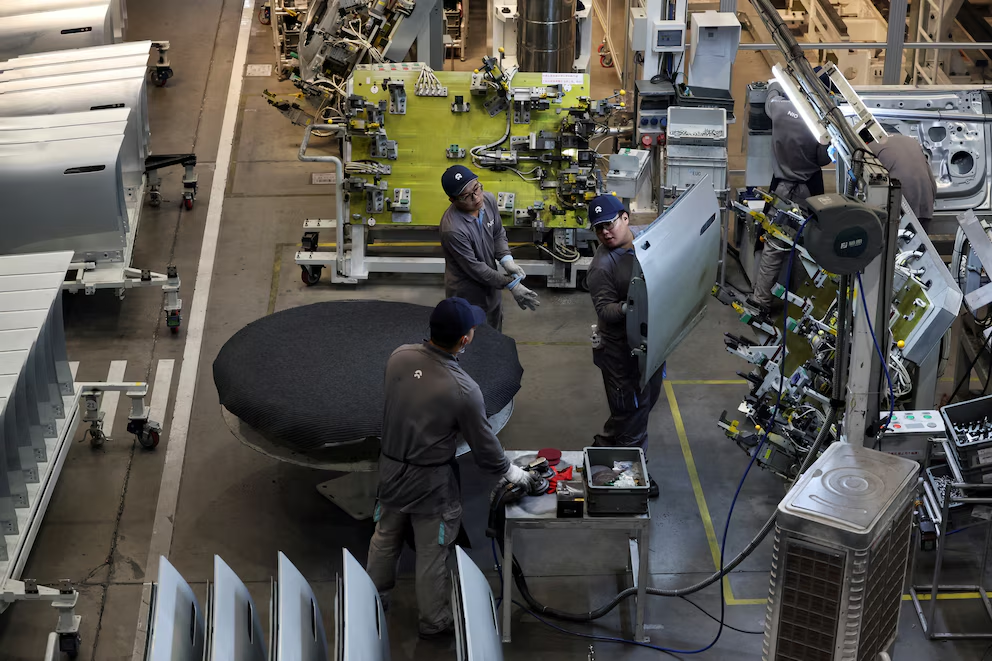
Factories accelerated in August, but households and property investors continued to retreat.
BEIJING, CHINA
China’s economy delivered another divided performance in August as stronger factory production contrasted with weak consumer spending and a deepening property crisis. The figures do not indicate that the entire economy contracted during the month, but they reveal an increasingly unbalanced growth model dependent on manufacturing and exports.
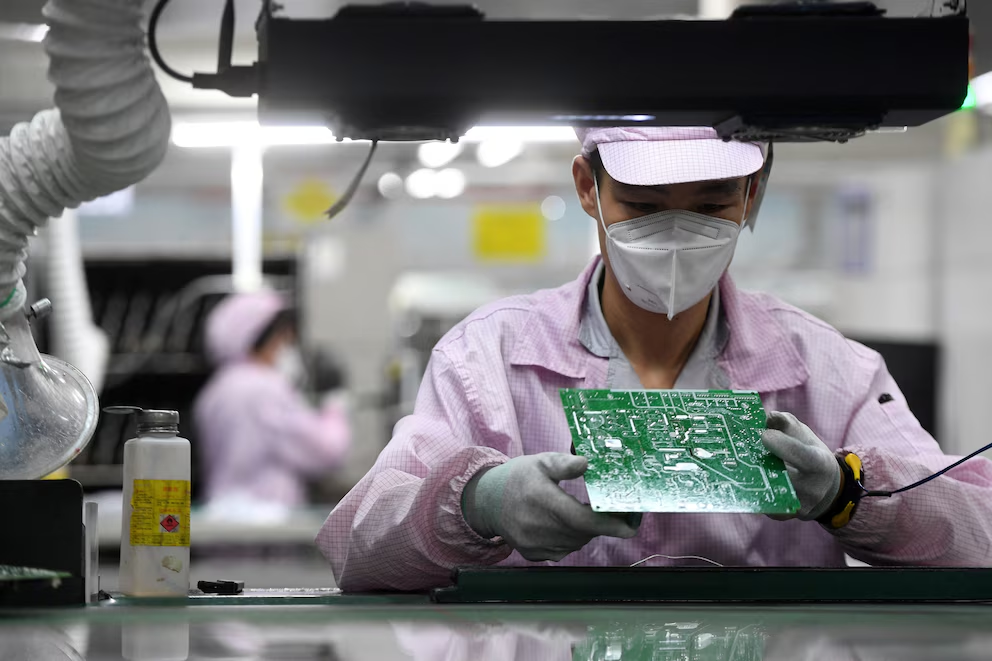
Industrial production increased 5.2 percent from a year earlier, accelerating from July and exceeding market expectations. Growth was concentrated in strategic sectors supported by Beijing, including artificial intelligence infrastructure, industrial robots, lithium-ion batteries and other advanced technologies.
Domestic consumption remained considerably weaker. Retail sales grew only 0.4 percent year on year, below both July’s result and analysts’ forecasts. Households continue to limit discretionary spending amid employment uncertainty, falling property values and doubts about future income. Urban unemployment also rose slightly to 5.3 percent.
The real-estate sector remains the principal structural burden. Property investment fell 19.9 percent, while new and existing home prices continued to decline in many cities. Because housing represents a substantial portion of Chinese household wealth, falling prices affect confidence, discourage consumption and weaken demand for construction materials, appliances and financial services.
Fixed-asset investment contracted 7.2 percent during the first eight months of the year, demonstrating that weakness extends beyond residential construction. Private companies remain cautious despite government bond issuance, infrastructure spending and lending incentives. Beijing has supported selected industries more aggressively than household consumption, reinforcing productive capacity without generating equivalent internal demand.
This imbalance has international consequences. Chinese factories increasingly depend on foreign markets to absorb goods that domestic consumers are not purchasing. Strong exports can sustain employment and production, but they also enlarge trade surpluses and intensify disputes with the European Union, the United States and emerging economies concerned about subsidized Chinese competition.
China’s economy expanded 4.3 percent in the second quarter, its slowest pace in more than three years and below Beijing’s annual target range of 4.5 to 5 percent. Achieving that objective may require stronger fiscal intervention directed toward households, social protection and the property market. Additional industrial stimulus alone could increase output without resolving the underlying crisis of confidence.
An economy cannot depend indefinitely on producing more than its people are prepared to consume.