

 Phoenix 24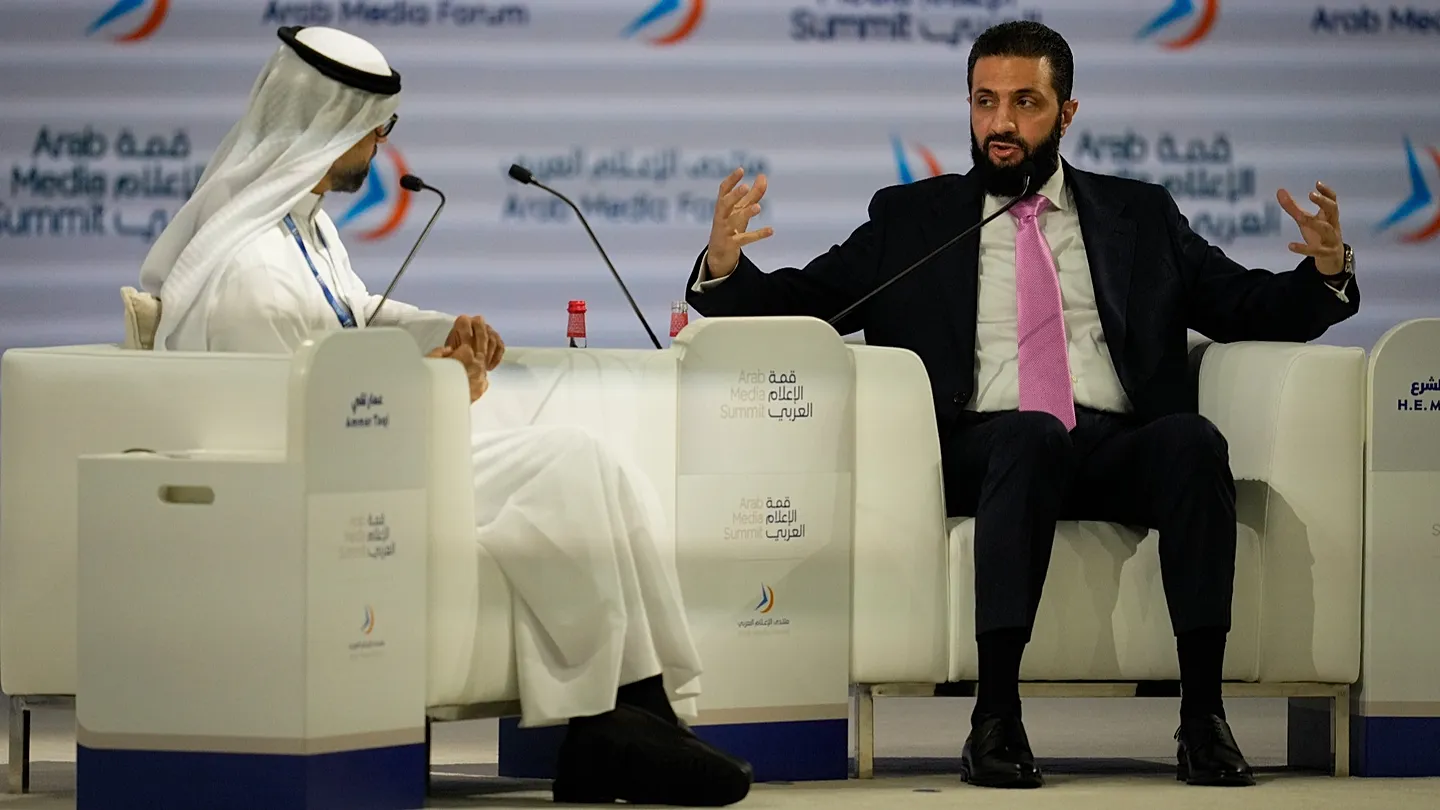
Syria presents stability as both a diplomatic necessity and an economic opportunity.
DUBAI, UNITED ARAB EMIRATES
Syrian President Ahmed al-Sharaa has warned that further escalation appears increasingly likely across the Middle East as the war involving Iran continues to destabilize regional security, energy supplies and commercial routes. Speaking at the Arab Media Summit in Dubai, he acknowledged that no government could confidently predict what would happen next.
Al-Sharaa urged Arab countries to remain calm and coordinate their responses to the conflict. He argued that regional cooperation would be essential to limit the humanitarian and economic consequences of another prolonged confrontation, particularly for societies already recovering from war and political fragmentation.
For Syria, the instability arrives during a delicate transition following decades of authoritarian rule and years of destructive conflict. Al-Sharaa described the country as moving toward a new political stage but cautioned that reforms require time and will probably encounter further shocks. His message combined optimism about national reconstruction with recognition that regional warfare could derail it.
The Syrian president also presented geography as an economic asset. With shipping through the Strait of Hormuz disrupted, he suggested that Syria could recover its historical role as a commercial corridor connecting East and West. Food security, energy infrastructure and regional supply chains could attract investment from Gulf countries, neighbouring states and Europe.
This ambition depends on more than strategic location. Syria must demonstrate institutional stability, legal predictability and political credibility if it expects international investors to participate in reconstruction. The gradual removal of American sanctions and terrorist designations has opened economic possibilities, but domestic reconciliation and protection for minorities remain decisive tests.
Al-Sharaa’s appeal for restraint therefore carries two dimensions. It reflects concern about an uncontrollable regional conflict, but it also protects Syria’s attempt to transform itself from a battlefield into a diplomatic and commercial bridge. Whether Damascus can maintain that position will depend on its ability to avoid becoming aligned with another competing regional bloc.
Peace begins with restraint, but survives through cooperation.