

 Phoenix 24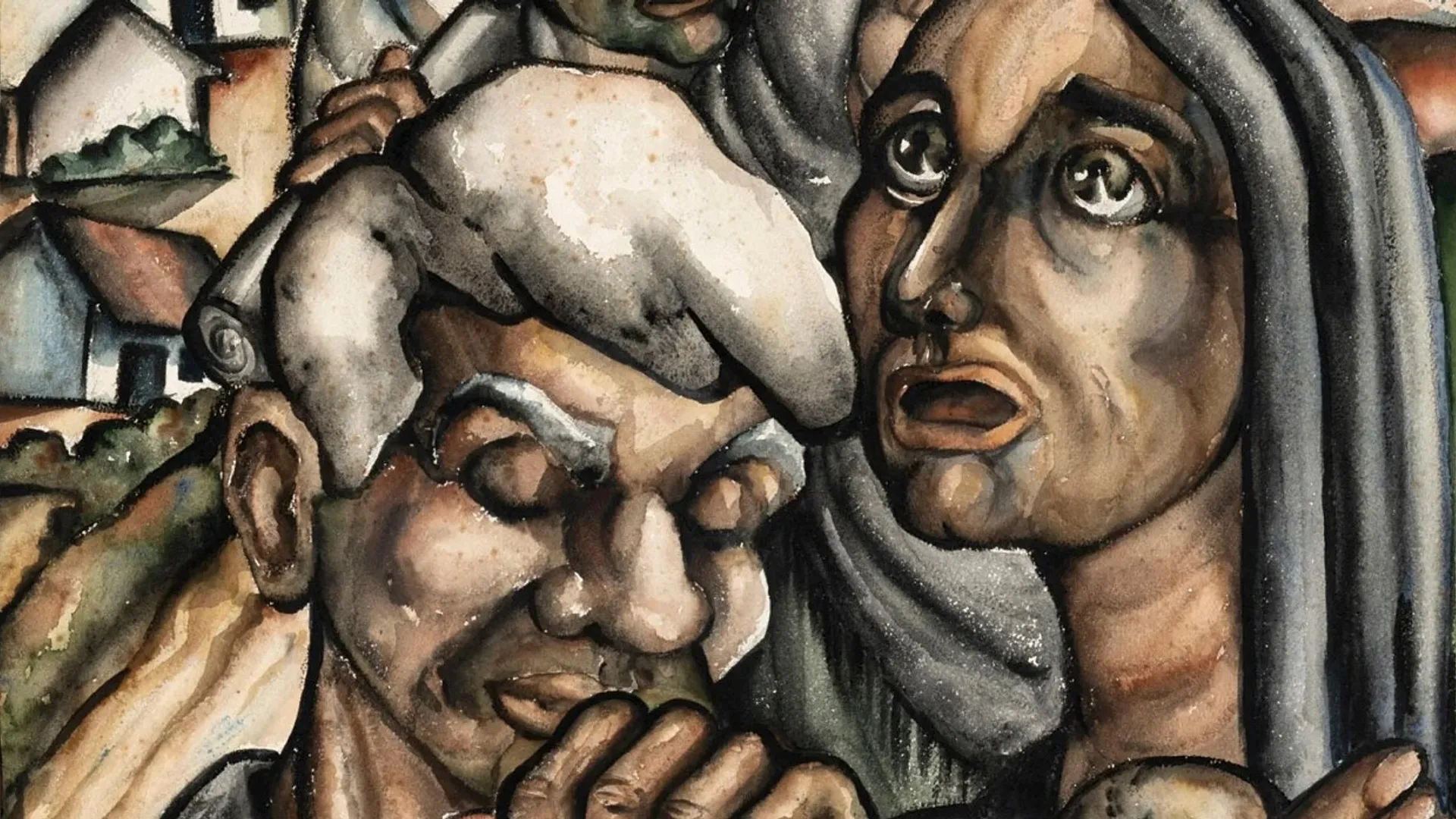
A small exchange now carries monumental memory.
Bogotá, May 2026. Fernando Botero’s earliest commercial trace is returning to public attention through the auction of La Plegaria, a 1949 watercolor the Colombian artist reportedly exchanged for two packs of cigarettes at the beginning of his career. More than seven decades later, the modest origin of that transaction has become part of the mythology surrounding one of Latin America’s most recognizable artistic figures.
The work belongs to Botero’s formative period, before the monumental volumes that later defined his global visual language had fully emerged. Instead of the exaggerated bodies and sculptural fullness associated with his mature style, La Plegaria presents a more intimate and tense scene: an elderly peasant praying, a woman protecting a child, and a rural atmosphere marked by fear, devotion and vulnerability.
That emotional gravity matters. The painting was created only a year after the assassination of Jorge Eliécer Gaitán, the Colombian liberal leader whose death triggered a wave of political violence that reshaped the country’s twentieth century. Seen from that context, La Plegaria is not merely an apprentice work; it is an early record of a society wounded by fear, faith and instability.
The Bogotá auction places the piece alongside more than 120 works of modern and contemporary Colombian and Latin American art. Its commercial value now depends not only on technique, rarity or provenance, but on narrative density. Collectors are not simply bidding on a watercolor; they are bidding on the first visible threshold between Botero’s anonymous youth and his later transformation into a global cultural icon.
Nearly three years after Botero’s death, the return of La Plegaria also reveals how art markets convert beginnings into heritage. What was once traded casually now circulates as memory, evidence and symbol. In that passage from cigarettes to auction room, the work tells a larger story about how artistic value is built: slowly, unevenly, and often long after the artist’s first gesture seemed almost invisible.
Narrative is power too. / La narrativa también es poder.