

 Phoenix 24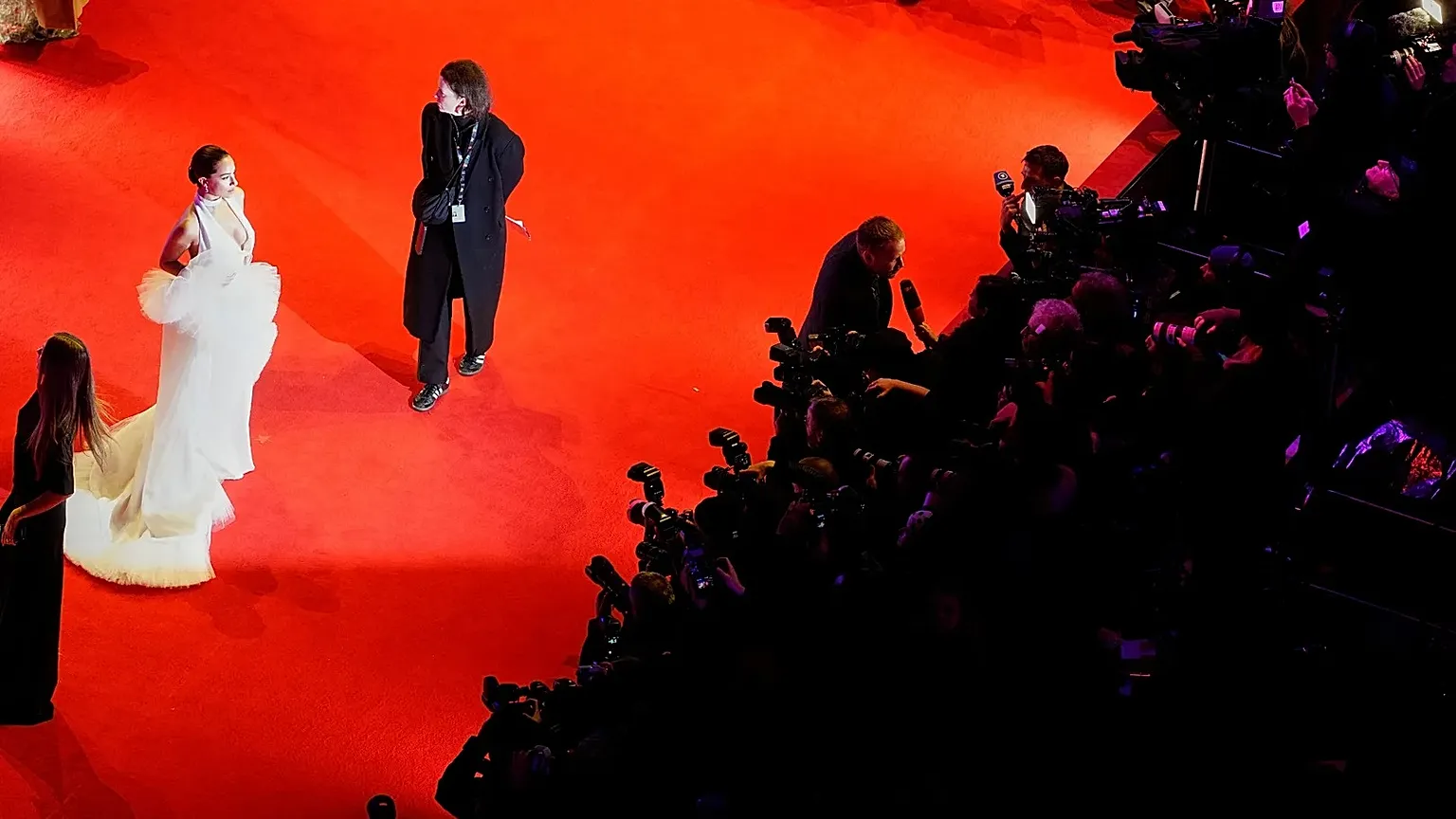
Symbols speak louder than speeches tonight.
Berlin, February 2026.
The opening of the 76th Berlin International Film Festival arrived under grey skies and bright cameras, and the contrast felt almost scripted. Euronews described a wet, gloomy day outside Potsdamer Platz, while inside the ceremony radiated the familiar glow of premieres, gowns, and industry ritual. Yet the atmosphere was never purely cinematic. The festival’s own insistence that it wants to keep politics at arm’s length collided with a red carpet culture that increasingly treats silence as a statement, especially when wars, censorship, and identity battles dominate the global feed.
This year’s tension crystallized around a single premise voiced by jury president Wim Wenders. In remarks covered by Reuters and expanded by industry press, Wenders argued that filmmakers should avoid becoming “dedicatedly political” because film should function as a counterweight to politics, not an extension of it. It was a classic humanist claim, and in another era it might have passed as harmless. In 2026, it landed like a line drawn in chalk across a room where many guests believe the floor is already on fire.
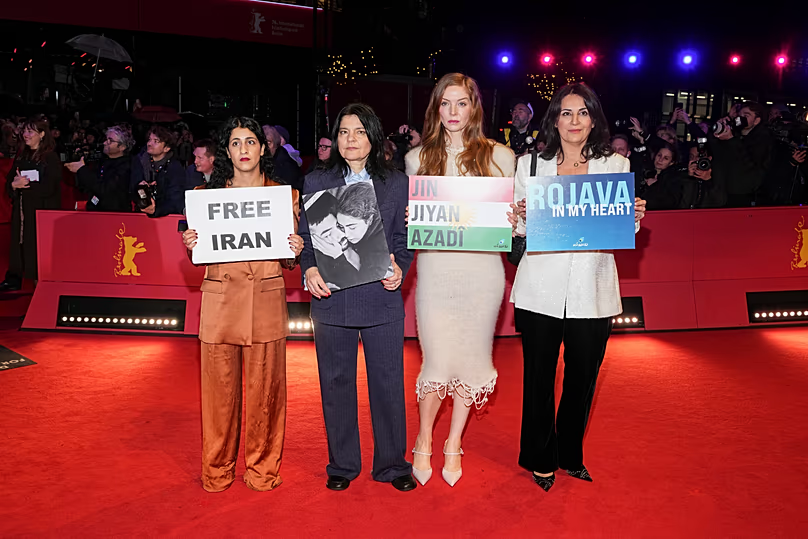
The backlash was swift and reputationally costly. The Guardian reported that writer Arundhati Roy withdrew from attending the festival after the comment circulated, framing the idea of staying out of politics as morally indefensible amid mass suffering and global polarisation. The dispute did not remain confined to the festival’s internal conversation. It became a proxy fight about who gets to define “political,” and whether calls for neutrality serve as a shield for institutions or a muzzle for artists. The result is that Berlinale opened with an argument about the legitimacy of boundaries, not only about the merit of films.
What makes this conflict structurally interesting is that the festival’s programming itself undercuts the fantasy of neutrality. Reuters reported that the opening film, “No Good Men,” is a political romantic comedy set in pre-Taliban Kabul, directed by Afghan filmmaker Shahrbanoo Sadat. The choice is not incidental. A story rooted in the social texture of a country transformed by authoritarian rupture forces audiences to confront politics as lived reality, not as an optional theme. Even if the festival leadership wanted a pure celebration of craft, the craft on screen is inseparable from power, memory, and violence.
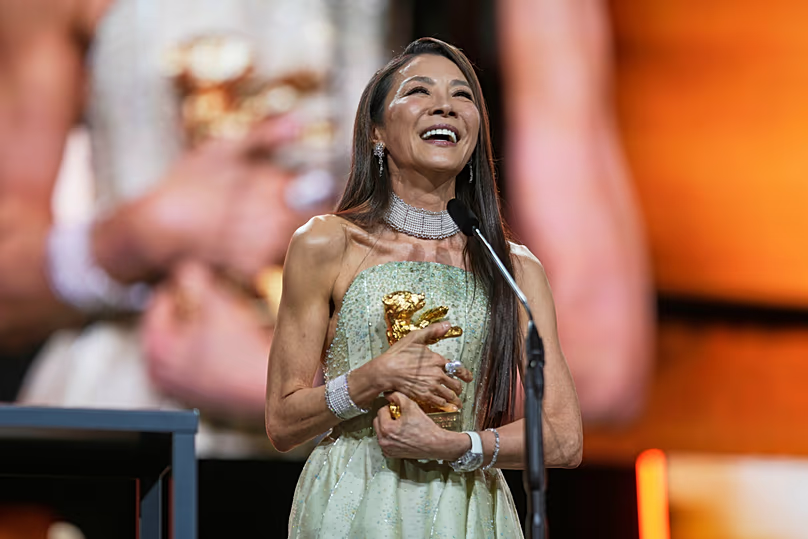
The Honorary Golden Bear awarded to Michelle Yeoh amplified another subtext: cultural authority is becoming visibly multipolar. Berlinale’s own press materials positioned Yeoh as a figure of range and longevity, while Reuters noted her speech leaned toward elevating new voices and the underrepresented. Asian media coverage echoed the emotional tone, portraying the moment as both celebratory and personal, an articulation of career, family, and belonging on a European stage. In a global cultural economy that is no longer dominated by one corridor, awarding Yeoh at the opening becomes more than tribute. It signals that the festival is negotiating relevance in a world where prestige must travel across regions, languages, and publics.
On the carpet, politics did what it always does at major festivals now: it arrived through coded symbolism rather than formal declarations. Euronews described guests using the event to carry messages that ranged from solidarity gestures to historical references. Reuters noted that some attendees signaled support for Iranian rights and criticism of fascism, pushing the evening’s meaning beyond cinema into civic posture. Symbols are efficient in this environment because they compress a position into an object, a phrase, or a reference that can circulate without needing a manifesto. They also allow participants to speak without giving institutions a single sentence to police.
The most telling feature of the opening night was not the presence of political expression but the distribution of it. Industry leadership, responsible for funding ecosystems, diplomatic sensitivities, and institutional continuity, leaned toward restraint. Guests and observers, less constrained by governance obligations, carried the sharper edge. Variety observed that overt political emphasis was less central in the official ceremony than in prior years, which implies the institution is trying to manage exposure even as the audience refuses to play along. That split is now a standard pattern across global cultural events: governance seeks stability while participants seek moral visibility.
Behind the spectacle sits a deeper European anxiety about legitimacy. Berlinale operates within a political environment where public funding, historical memory, and contemporary conflict narratives collide. When artists invoke anti-fascist language or quote political philosophers, they are not only making a point about the present. They are testing whether Germany’s cultural institutions can tolerate dissent without turning into instruments of boundary enforcement. When institutions call for art to remain “above politics,” they may be seeking calm. To many in the room, it reads as a demand for managed speech at exactly the moment when managed speech feels like complicity.
The Berlinale’s opening therefore functions as a diagnostic of cultural power under stress. Festivals are no longer judged solely by what they screen. They are judged by how they handle moral pressure, which voices they amplify, which conflicts they name, and which they attempt to bracket. The core paradox is that the more the world fragments, the more a festival must behave like a diplomatic arena, and diplomacy is never apolitical. In that sense, the argument about whether cinema should stay out of politics is already outdated. Politics is already inside the room, and the only remaining choice is whether institutions acknowledge it openly or let symbols speak on their behalf.
Lo visible y lo oculto, en contexto. / The visible and the hidden, in context.