

 Phoenix 24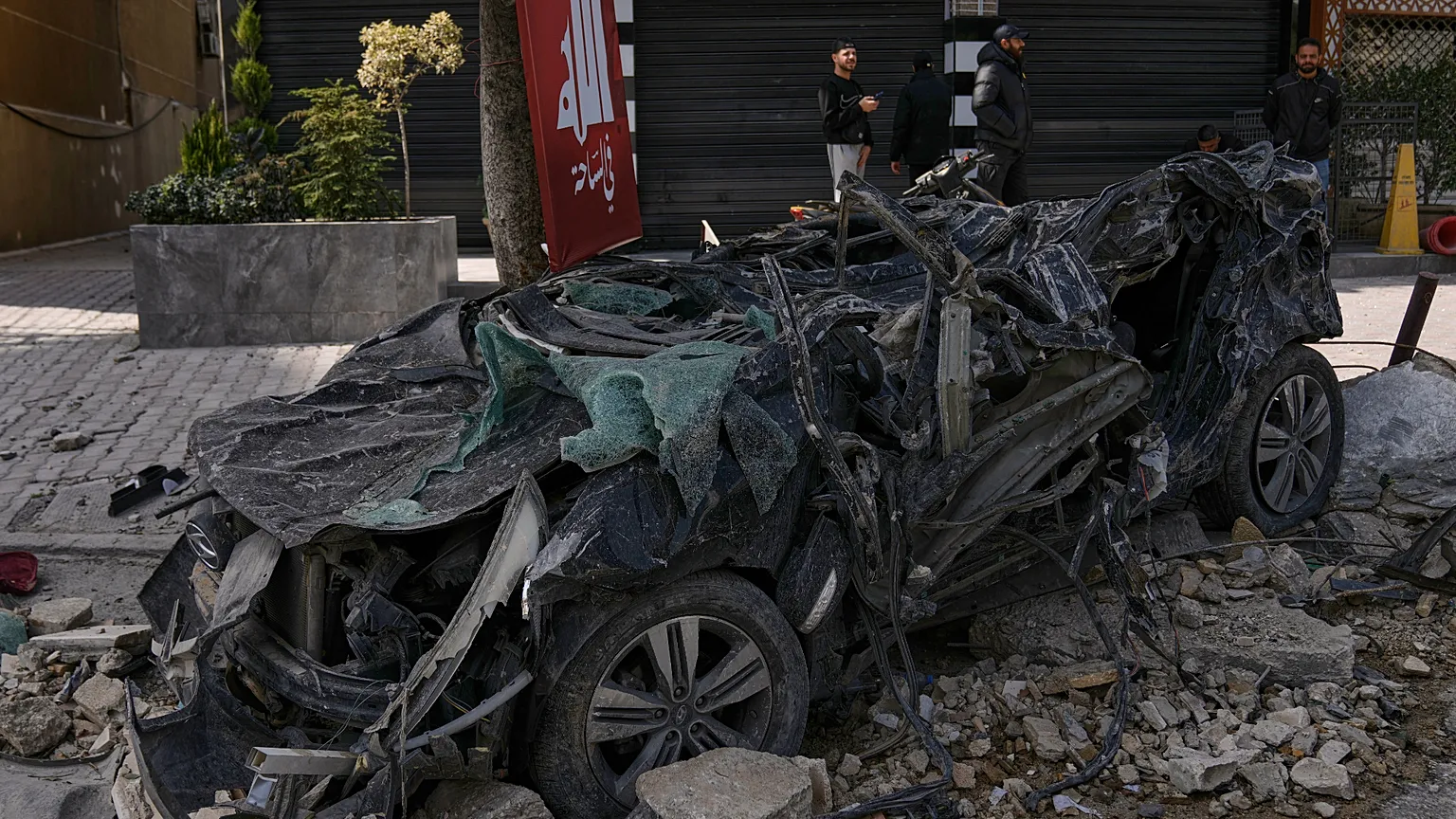
Evacuation now precedes urban punishment.
Beirut, March 2026
Israel’s latest bombardment of Beirut’s southern suburbs marks more than another round of cross border retaliation. It shows how quickly warning systems, evacuation orders, and urban airpower are merging into a single operational script across Lebanon. Israeli forces issued mass evacuation notices for broad parts of the southern suburbs before striking, framing the attack as part of an expanded campaign against Hezbollah after heavy rocket fire into Israel. What changed on March 12 was not only the violence itself, but the geography of acceptable risk: districts close to the political and commercial core of the Lebanese capital are now being treated as militarized space.
That matters because the southern suburbs of Beirut, often viewed by Israel as Hezbollah’s urban stronghold, are not an isolated battlefield in any clean military sense. They are dense civilian territory, deeply entangled with displacement routes, service networks, and the fragile civic metabolism of the capital. Reuters reported that Israeli strikes have already devastated large parts of southern and eastern Lebanon and that nearly 700 people have been killed, according to Lebanese authorities, while more than 800,000 have fled their homes amid widening evacuation orders. When evacuation becomes routine at this scale, it stops functioning as a protective exception and starts becoming a governing mechanism of war.
The immediate trigger was Hezbollah’s intensified barrage, described by Reuters as the group’s largest rocket attack of the conflict, coordinated with Iran and involving around 200 rockets and 20 drones. Israel’s defense minister responded by ordering an expansion of operations in Lebanon and publicly warning Lebanese President Joseph Aoun that the Israeli military would act if the Lebanese state failed to stop Hezbollah’s attacks. That is an important shift in tone. The pressure is no longer directed only at Hezbollah as a non state armed actor, but increasingly at the Lebanese state as a sovereign entity judged unable or unwilling to impose control.
Once that framing takes hold, the conflict begins to widen politically even before it widens territorially. Associated Press reported that Israeli strikes on March 12 reached areas near central Beirut, including zones near government buildings and a university campus, while photo coverage showed damage in Bashoura, the closest district to downtown Beirut hit in this phase of the war. This is not a symbolic detail. The closer the strikes move toward central urban space, the more the war stops looking like a contained border confrontation and starts resembling a campaign meant to reshape the balance of fear inside the Lebanese capital itself.
The deeper pattern is regional, not merely local. Reuters tied the current escalation to the broader war environment that followed the assassination of Iran’s supreme leader on March 2 and to Hezbollah’s alignment with Tehran in the current cycle of escalation. That linkage means Beirut is no longer just a Lebanese theater. It is part of a wider arc in which Israeli pressure on Hezbollah, U.S. military action, Iranian retaliation, and Gulf energy insecurity are feeding each other in compressed time. A strike in Beirut now travels instantly into calculations made in Tehran, Washington, European capitals, and Asian energy markets.
For Europe, this is a humanitarian and political stress test at once. A prolonged Israeli campaign in and around Beirut raises the risk of deeper displacement, domestic instability in Lebanon, and another wave of diplomatic paralysis among governments that support de escalation rhetorically but have limited leverage over the armed actors driving events. For the United Nations system, the problem is equally stark: evacuation orders may reduce immediate exposure in some cases, but repeated mass movement under bombardment steadily erodes the distinction between precaution and coercion. Every large scale warning to flee also announces something else, namely that civilian normality is losing any reliable territorial boundary.
There is also a strategic lesson in the sequencing. Israel is pairing warnings with strikes in a way that strengthens its legal and diplomatic narrative of prior notice, yet the cumulative effect still produces urban panic, institutional strain, and social exhaustion. That duality is central to modern conflict messaging. One side seeks to show it warned civilians; the other points to the reality that whole neighborhoods are becoming intermittently unlivable regardless of the warning. In practical terms, the result is the same for families already displaced or sheltering in improvised sites across Beirut: movement itself becomes the battlefield.
What happened on March 12, then, was not simply another air raid over a familiar target zone. It was a demonstration that Beirut’s southern suburbs have become a calibrated pressure valve inside a much larger war system, one in which evacuation, deterrence, punishment, and political signaling are now fused. Israel is showing that Hezbollah’s urban depth no longer guarantees spatial immunity. Hezbollah, by continuing rocket fire, is signaling that urban punishment will not automatically produce strategic submission. Between those two positions lies the real danger: a war that normalizes the managed emptying of major city sectors as if that were merely another military procedure.
Facts that do not bend. / Facts that do not bend.