

 Phoenix 24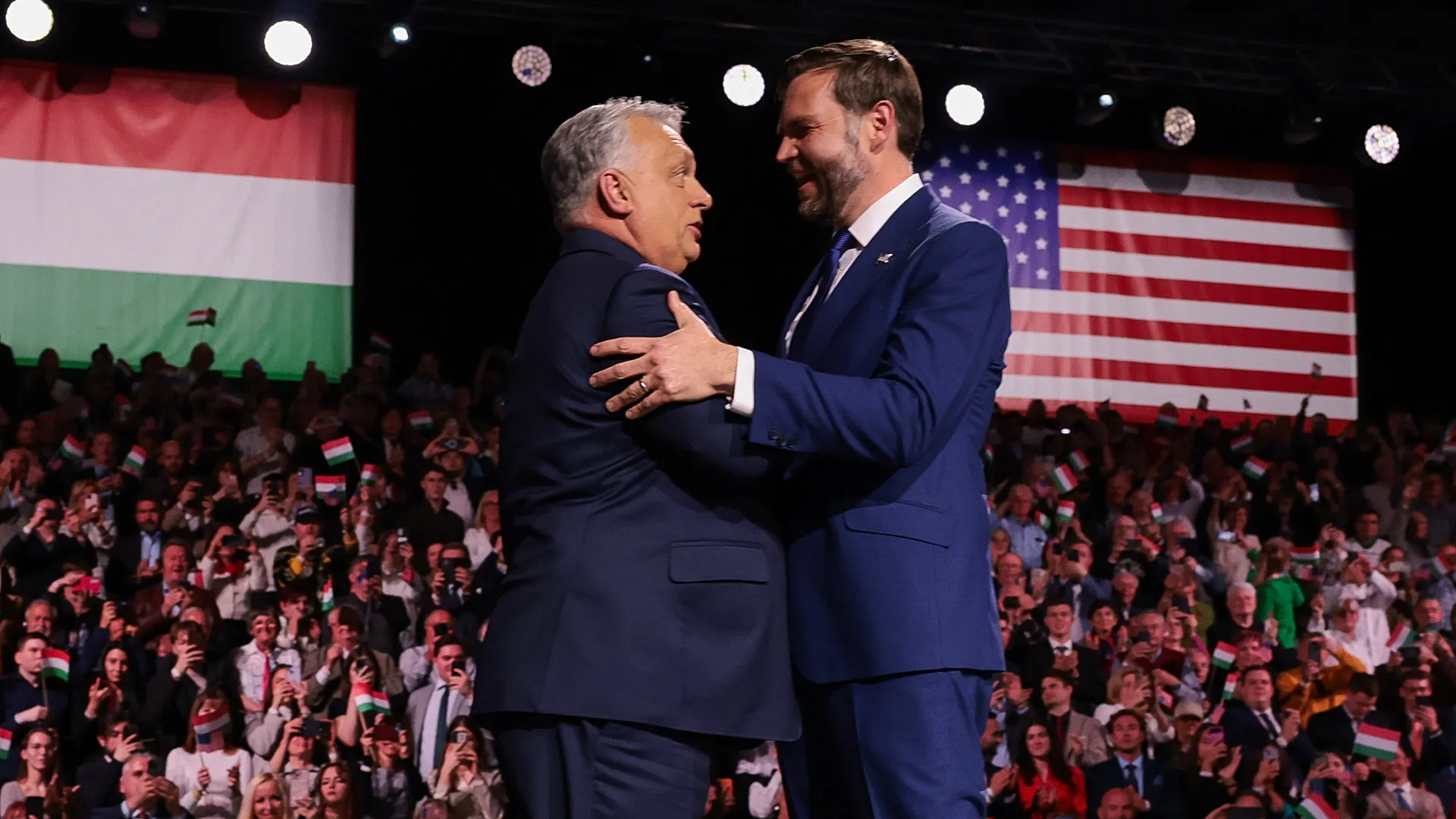
Transatlantic populism has hit a limit.
Brussels, April 2026. Viktor Orbán’s defeat in Hungary has triggered more than a domestic political upset. It has shaken the internal chemistry of Europe’s far right and forced a recalculation around one of its most visible symbolic assets: proximity to Donald Trump. What once looked like ideological alignment and mutual reinforcement now appears, for some nationalist forces, as a strategic burden in a continent increasingly suspicious of imported political spectacle.
The immediate lesson is not that Europe’s radical right is disappearing, but that its transatlantic branding model may be losing effectiveness. Orbán had long functioned as a reference point for sovereigntist leaders across the continent, admired for combining institutional control, anti liberal rhetoric, and a highly personalized state narrative. His defeat therefore lands as more than an electoral loss. It disrupts the myth of durability that had made Hungary a showcase for nationalist governance inside the European Union.
This matters even more because the relationship with Trumpism has become harder to defend politically. Public association with Donald Trump and figures such as JD Vance no longer guarantees ideological prestige in Europe. In fact, it can now create the opposite effect by reinforcing the perception that parties claiming to defend sovereignty are relying on foreign validation and imported culture war scripts. That contradiction is dangerous for movements built on national pride, civilizational rhetoric, and hostility toward outside interference.
The Hungarian result has therefore opened a broader strategic dilemma. European far right parties still share many instincts with Trumpism, especially on migration, elite distrust, institutional confrontation, and anti progressive mobilization. Yet they also operate in a different political ecosystem, one marked by coalition realities, economic fragility, war proximity, and the constraints of the European Union. In that setting, rhetorical mimicry of the American right can begin to look less like strength and more like dependency.
Another fracture is geopolitical. Trump’s posture on tariffs, military pressure, and international volatility does not always fit neatly with the sovereignty discourse of European nationalist actors. Some of these parties want strong borders and hard identity politics, but they do not necessarily want a Europe exposed to erratic American pressure, commercial punishment, or strategic turbulence imported from Washington. Orbán’s defeat sharpens that contradiction by showing that symbolic closeness to the American right may energize elites inside the movement while alienating voters who are focused on domestic stress and national stability.
None of this means the European far right has entered irreversible decline. Its social base remains real, its institutional presence remains significant, and its narratives still resonate across multiple countries. What is changing is the management of image, alliance, and tone. The new impulse is likely to be more cautious, more nationally coded, and less eager to appear as the European extension of a political project designed for the American arena.
In that sense, Orbán’s fall is not merely a Hungarian event. It is a warning signal for a broader bloc that had come to believe ideological affinity automatically produced political transferability. It does not. Styles of power can travel, but they do not always survive translation. Europe’s far right now faces a colder truth: what mobilizes one electorate may contaminate another, and what once looked like momentum can suddenly become excess baggage.
Detrás de cada dato, hay una intención. Detrás de cada silencio, una estructura.
Behind every fact, there is an intention. Behind every silence, a structure.