

 Phoenix 24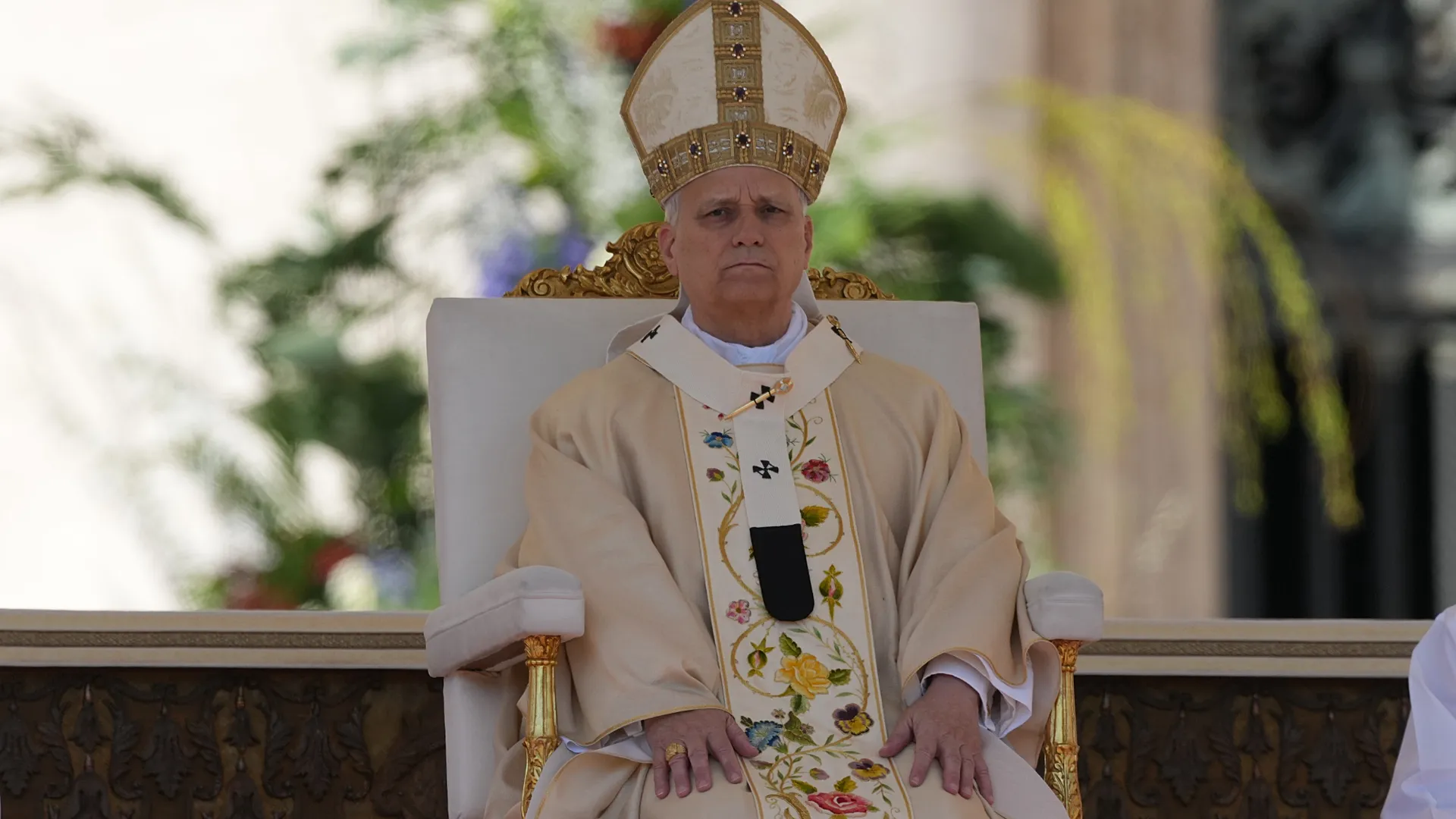
Power now performs through insult.
Washington, April 2026. Donald Trump’s refusal to apologize after attacking Pope Leo XIV did more than ignite a fresh controversy between the White House and the Vatican. It exposed a deeper struggle over who gets to define moral authority during a period marked by war rhetoric, nuclear anxiety, and ideological fatigue in the West. The dispute escalated after Trump attacked the Pope over his criticism of war and his posture on Iran, while also defending a deleted social media image that appeared to portray himself in quasi-messianic terms.
At the surface, the clash looks personal, even theatrical. Trump framed the Pope as weak on crime and foreign policy, then doubled down by insisting he would not apologize because he was merely responding to a public intervention by the pontiff. Yet the real significance lies elsewhere. This was not simply a conservative politician lashing out at a religious leader, but a sitting American president challenging the legitimacy of a transnational moral actor whose language still resonates across diplomacy, conflict mediation, and global Catholic networks.
Pope Leo XIV, the first American-born pontiff, answered from a different register. During a trip to Africa, he said he had a moral duty to speak against war and made clear that he would continue defending peace, dialogue, and multilateralism without fear of the Trump administration. That formulation matters because it places the Vatican not merely as a spiritual institution, but as a rival center of narrative power in an era when state leaders increasingly seek to monopolize the language of security. Giorgia Meloni’s criticism of Trump’s remarks added another layer, suggesting that even within the broader conservative sphere there are limits to how far anti-clerical aggression can be normalized when directed at the papacy.
The symbolic dimension is equally important. Trump also faced backlash over a deleted post that depicted him in biblical imagery, which he later tried to dismiss by saying he thought it made him look like a doctor healing people. That explanation did little to contain the reaction, because the controversy was never just about iconography. It touched a far more volatile fault line: the conversion of political leadership into performative redemption, where authority is no longer justified through policy coherence or institutional credibility, but through spectacle, grievance, and personalized salvation myths.
This is where the episode becomes geopolitically relevant. The Vatican still speaks to a global Catholic community whose demographic and diplomatic reach remains enormous, and the United States itself contains one of the world’s most politically consequential Catholic populations. In moments of military escalation, especially around Iran and the broader architecture of deterrence, papal criticism can function as a moral interruption to the logic of force. Trump’s response therefore reads less like irritation and more like strategic impatience with any institution capable of injecting restraint, ethical vocabulary, or multilateral legitimacy into a security narrative built on pressure and hard-power signaling.
What emerged on April 14 was not just a media scandal but a revealing image of the new political age. One side speaks in the grammar of peace, dialogue, and moral duty; the other in the grammar of insult, dominance, and refusal. That contrast should not be reduced to personality alone. It reflects a wider transition in democratic cultures, where politics increasingly rewards leaders who treat apology as weakness, spiritual authority as interference, and public outrage as a usable instrument of mobilization.
In that sense, Trump’s clash with Pope Leo XIV is not an anomaly. It is a warning about the kind of leadership model now competing for the soul of the Atlantic world. When political power begins to present itself as morally self-sufficient, every external conscience becomes an enemy. The conflict is no longer only between a president and a pope, but between two incompatible visions of legitimacy in an age of permanent tension.
Detrás de cada dato, hay una intención. Detrás de cada silencio, una estructura.
Behind every fact, there is an intention. Behind every silence, a structure.