

 Phoenix 24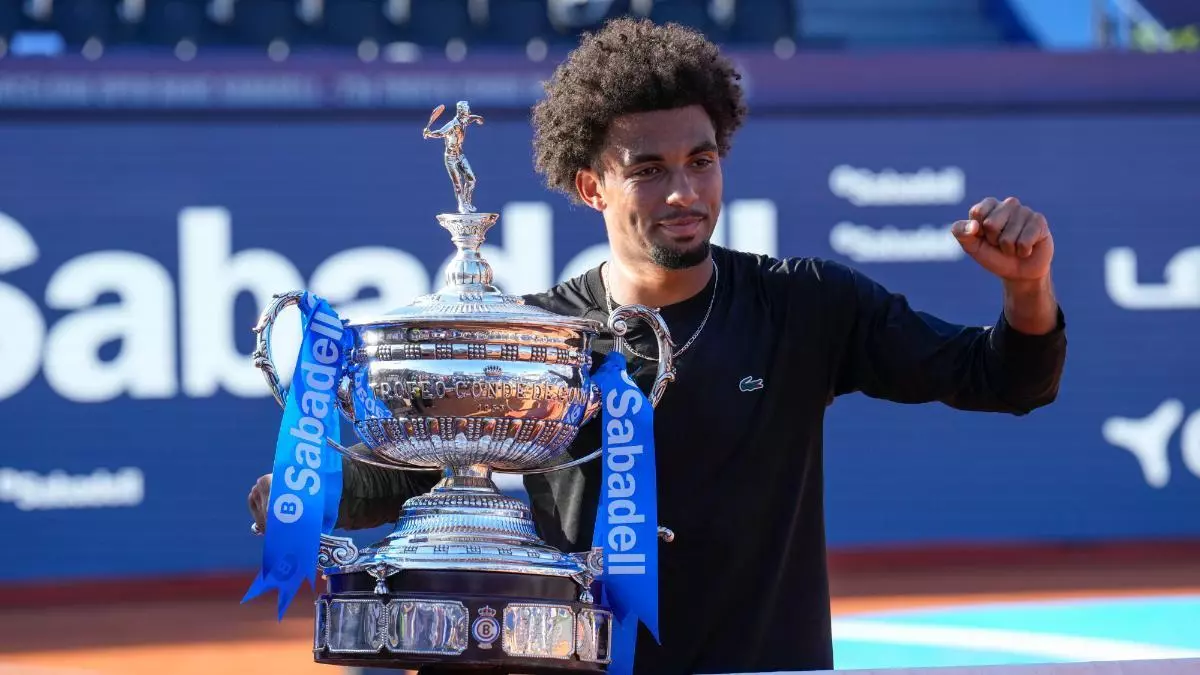
A final turned into a warning.
Barcelona, April 2026. Arthur Fils defeated Andrey Rublev 6-2, 7-6(2) to win the Barcelona Open and capture the most significant clay-court title of his career so far. The result confirmed that the French player is no longer operating as a prospect defined by potential, but as a contender beginning to impose himself on major tournaments. At 21, Fils did more than lift a trophy on one of the most demanding stops of the European clay swing. He altered the conversation around his place in the season’s most important stretch.
The match itself revealed why the title carries weight beyond the scoreline. Fils absorbed an early setback, quickly reasserted control, and then accelerated through the first set with a level of authority Rublev struggled to contain. His groundstrokes carried both depth and conviction, while his movement allowed him to dictate the rhythm rather than simply react to it. That control became one of the defining features of the final, because it prevented Rublev from establishing the emotional and tactical pressure he usually needs to dominate on clay.
The second set offered a more demanding test and, in some ways, a more meaningful one. Rublev improved, resisted collapse, and created the type of tension that often exposes the fragility of younger players in ATP finals. Fils, however, did not lose structural clarity when the match tightened. He stayed composed, managed the pressure without theatricality, and closed the contest with a commanding tiebreak that suggested emotional maturity as much as technical growth.
Barcelona matters because it is not just another week on the calendar. The tournament has long served as one of the clearest indicators of who is truly equipped for the deeper demands of the European clay season. Winning there means handling slow-court construction, physical discipline, and layered tactical exchanges against elite opposition. In that context, Fils did not win a decorative title. He passed a credibility test on one of the surfaces that most clearly separates talent from real competitive architecture.
There is also a broader significance to the victory in terms of career trajectory. Fils returned this season from a back injury that interrupted his momentum and threatened to delay his progression at a critical moment in his development. Titles after physical setbacks do more than add ranking points. They restore authority to a player’s narrative and show that recovery has moved beyond participation into genuine upward movement. Barcelona therefore reads as a comeback milestone, but also as proof that his progression remains structurally intact.
For French tennis, the symbolism is difficult to ignore. The men’s game in France has spent years searching for a player capable of sustaining elite expectations in the post-Tsonga, post-Monfils era without fading into inconsistency or hype fatigue. Fils is still young, and it would be premature to load him with the full burden of national succession. Yet this title sharpens the idea that he may be the strongest French claimant of his generation to sustained relevance at the top of the men’s tour.
Rublev’s defeat, meanwhile, revives a different set of questions. He remains one of the tour’s most dangerous players, especially in week-to-week events where his aggression can overwhelm opponents. Yet finals such as this one keep exposing a recurring instability when the match demands emotional control under pressure rather than pure baseline force. Against Fils, he never fully established command of the contest, and when the decisive moments arrived, he looked reactive instead of sovereign.
The tournament also unfolded within a wider climate of generational transition on clay. Established names still shape the hierarchy, but the field beneath them is becoming more fluid, more aggressive, and more open to disruption. That is precisely why Barcelona felt bigger than a single ATP 500 title. It looked like one of those weeks when an emerging player stops asking for entry into the elite conversation and begins forcing his inclusion through results that carry historical and competitive meaning.
What happened in Barcelona was not merely the coronation of a tournament winner. It was the moment Arthur Fils converted promise into leverage and recovery into status. The trophy matters, but the deeper consequence lies in how the circuit will now read him. From this point forward, he will arrive not simply as a talented young player, but as a serious threat on the surface that most often reveals who is built for the long campaign ahead.
Information that anticipates futures.
Información que anticipa futuros.