

 Phoenix 24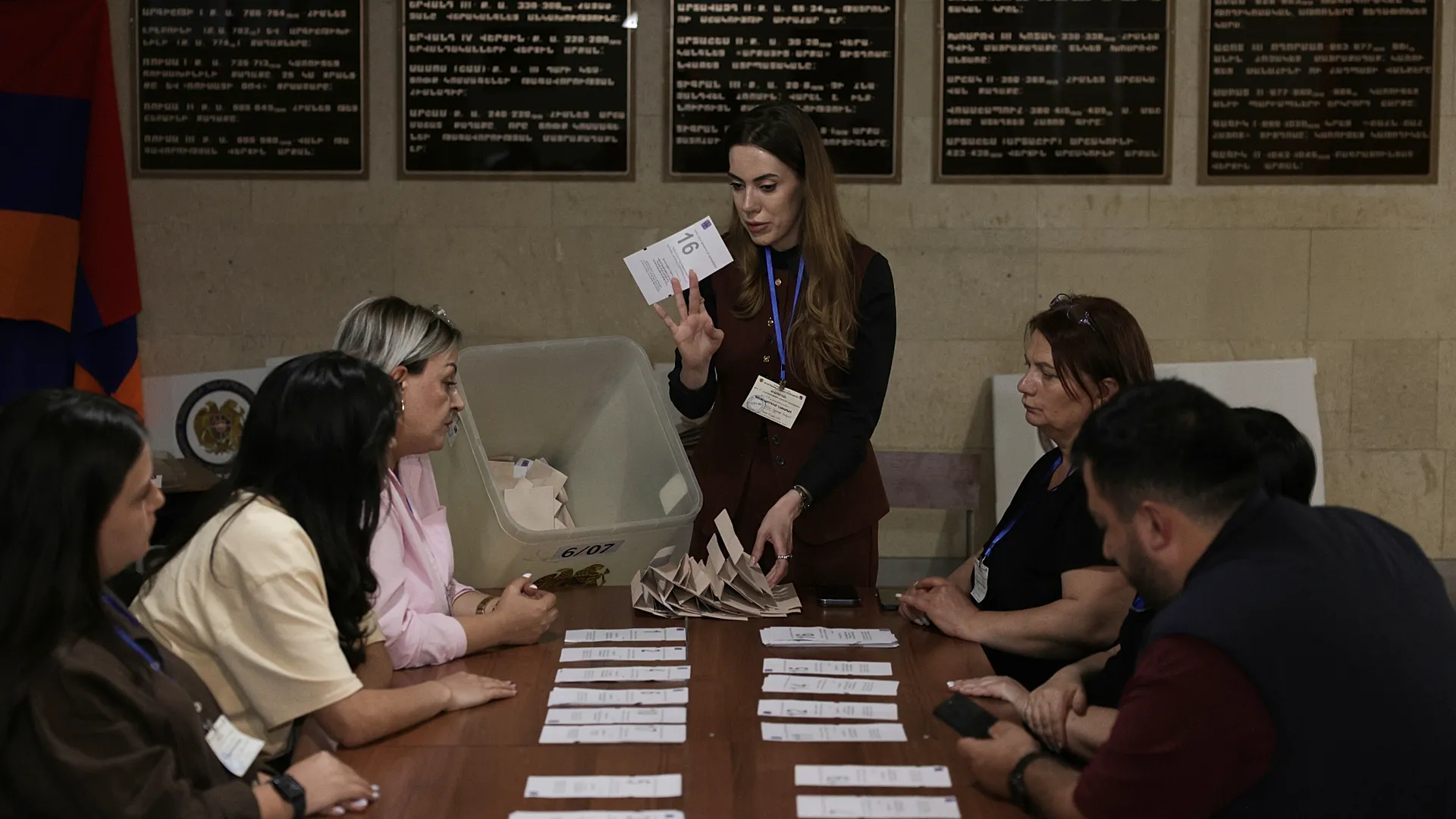
The ballot is redrawing a regional map.
Yerevan, June 2026. Armenia’s legislative election entered its decisive phase after polls closed on Sunday evening, opening a count that could shape not only the country’s government but the balance of power across the South Caucasus. The vote unfolded in a tense climate, with unofficial and contradictory exit polls circulating online and both the pro-Western government and pro-Russian opposition projecting confidence before official results were consolidated.
Prime Minister Nikol Pashinyan signaled optimism after voting ended, while his Civil Contract party sought to defend a political course that has gradually moved Armenia closer to the European Union and the United States. That shift accelerated after years of disillusionment with Moscow, especially following the security trauma around Nagorno-Karabakh and Armenia’s perception that Russia failed to provide the protection Yerevan expected from its traditional ally.
The opposition framed the vote as a rejection of Pashinyan’s direction. Figures linked to the Strong Armenia party suggested that higher turnout reflected dissatisfaction with the prime minister, while Moscow-aligned forces tried to turn the election into a referendum on Armenia’s Western pivot. That message matters because the contest is not only ideological; it is also strategic. Armenia sits between Russian pressure, Azerbaijani leverage, Turkish influence and Western attempts to stabilize a volatile corridor.
The stakes increased after the historic peace agreement with Azerbaijan, which repositioned Armenia inside a regional order long defined by war, blockade and unresolved borders. For Pashinyan, the agreement offered a path toward normalization and international support. For his critics, it became evidence of concession and vulnerability. That divide now cuts through Armenia’s political identity: whether security should still be anchored in Russia, or whether survival requires a difficult reorientation toward Western institutions.
Russia’s warning about a possible “Ukraine scenario” exposed the deeper pressure surrounding the vote. Moscow views Armenia’s Western turn as part of a broader erosion of Russian influence in its former imperial perimeter. The European Union and the United States, meanwhile, see Armenia as a fragile but strategically important partner in a region where energy routes, transport corridors and military alignments can shift the balance between Europe, Russia, Turkey and Iran.
The count will determine more than parliamentary seats. It will reveal whether Armenian society is prepared to sustain a geopolitical transition under pressure, or whether fear, fatigue and regional uncertainty will revive the pull of Moscow’s orbit. In the South Caucasus, elections are rarely domestic events. They are instruments through which borders, alliances and futures are quietly renegotiated.
Lo visible y lo oculto, en contexto. / The visible and the hidden, in context.