

 Phoenix 24
Safety now moves deeper into the device.
Cupertino, June 2026. Apple is expanding its child-safety controls with new filters, purchase restrictions and parental tools designed to reduce digital risks for minors across its ecosystem. The update strengthens the company’s attempt to make the iPhone, iPad and related services safer for children without turning family oversight into a fragmented technical burden for parents.

The central shift is practical. Rather than treating parental control as a separate layer that families must manually assemble, Apple is pushing safety deeper into the operating system. Content filters, app access limits, communication protections and purchase approvals are becoming part of a broader architecture where the device itself helps mediate what children can see, buy, download and share.
This matters because childhood now unfolds inside commercial digital environments built for attention, spending and data flow. Games, social platforms, messaging services and in-app purchases can expose minors to inappropriate content, manipulative design, unwanted contact and accidental financial charges. For parents, the problem is not only screen time, but the difficulty of supervising invisible interactions inside apps.
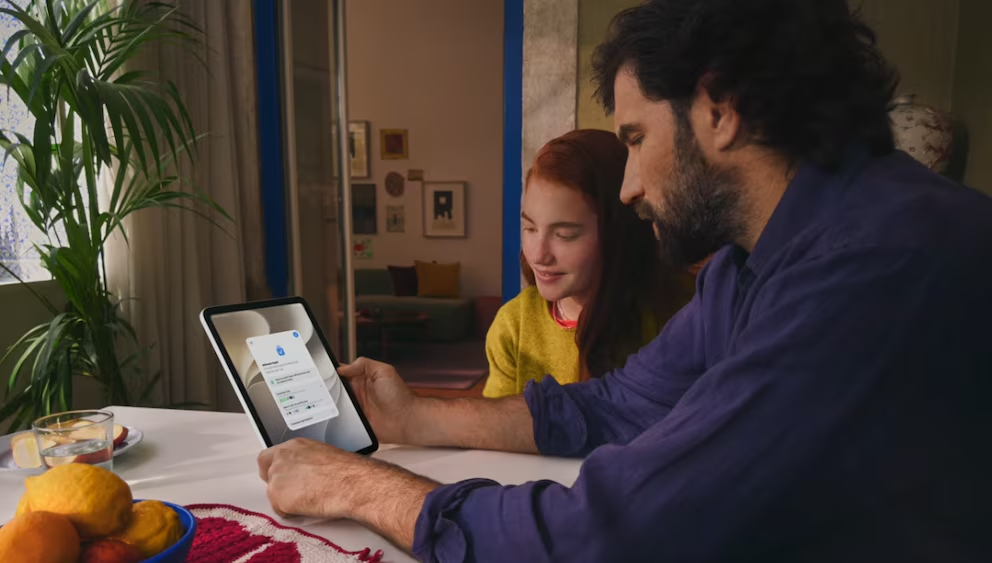
Apple’s strategy reflects a wider industry pressure. Technology companies are being pushed by governments, schools and families to prove that child safety is not an optional setting hidden inside menus. The expectation is changing: platforms must anticipate risk, not simply react after harm occurs. That shift transforms safety from a personal parenting issue into a corporate responsibility embedded in product design.
Still, stronger controls raise a delicate question: how to protect children without normalizing excessive surveillance inside the family. Effective digital safety must combine restrictions with transparency, age-appropriate autonomy and parental judgment. A device can block purchases or filter content, but it cannot replace conversations about privacy, consent, online manipulation and emotional dependence on screens.

The deeper challenge is trust. Parents want tools that work without being overly complex, while children need boundaries that do not feel arbitrary or punitive. If Apple’s new controls are reliable, understandable and easy to adjust, they could reduce daily friction in households. If they become confusing or overly restrictive, families may ignore them or disable them entirely.
Apple is not merely updating parental controls. It is acknowledging that the modern smartphone has become a childhood environment, not just a communication device. In that environment, safety must be designed before harm appears. The new filters and restrictions may not solve every risk, but they mark a clear direction: the next phase of consumer technology will be judged not only by what devices enable, but by what they are responsible enough to prevent.
Phoenix24: clarity in the grey zone. / Phoenix24: claridad en la zona gris.