

 Phoenix 24
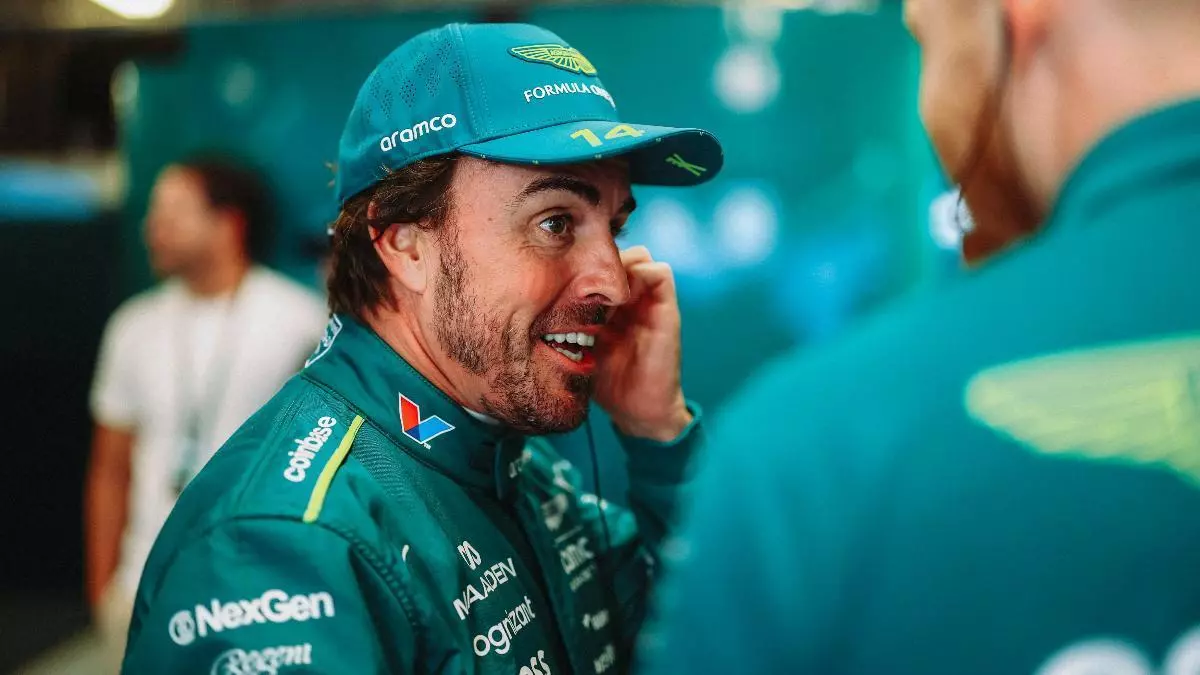
Exceptional cornering performance reveals a frustrating technical imbalance.
SÃO PAULO
Fernando Alonso has identified an encouraging sign in Aston Martin’s difficult Formula 1 season after delivering one of his most competitive performances at the São Paulo Grand Prix. Although the two-time world champion finished 12th and failed to score points, he praised the cornering capabilities of the Adrian Newey-designed AMR26, while acknowledging that its lack of straight-line speed continues to undermine the team’s competitiveness.
The race at Interlagos offered a rare opportunity for Alonso to challenge drivers from leading teams. In changing weather conditions, the Spaniard engaged in battles involving Ferrari and Mercedes, including a memorable overtaking maneuver against Lewis Hamilton.
The performance contrasted with a difficult season characterized by technical limitations, reliability problems and an inability to consistently compete for championship points.
Alonso described the car’s behavior through the corners as exceptional, suggesting that Aston Martin’s aerodynamic development has produced encouraging results despite the limitations of its overall package.
His assessment also highlighted a persistent weakness. The car surrendered considerable speed on the straights, making it difficult to defend positions or capitalize on the time gained in more technical sections.
The distinction is particularly important for evaluating Newey’s contribution. The renowned British engineer joined Aston Martin to lead the development of its new generation of Formula 1 machinery, bringing extensive experience from championship-winning projects at Williams, McLaren and Red Bull.
The AMR26 represents the team’s first car developed under his technical direction, alongside its new partnership with Honda.
Yet strong cornering performance does not automatically establish that the chassis is among the grid’s most competitive. Overall lap times also depend on power-unit performance, aerodynamic drag, energy management, tire behavior and mechanical setup.
Alonso acknowledged that the car performed better during the race than it had during practice sessions. The wet conditions initially helped the team remain competitive, although its straight-line disadvantage became more apparent as the circuit dried.
His teammate Lance Stroll experienced another difficult afternoon, retiring because of a battery-related problem. Alonso also encountered contact with Oliver Bearman during the race, adding to the challenges of an already demanding event.
Despite the encouraging handling characteristics, the Spanish driver remains realistic about Aston Martin’s immediate prospects. With 21 races completed, he believes the team already understands its principal technical weaknesses and must concentrate on resolving them.
The next challenge arrives at the Las Vegas Grand Prix, where long straights could further expose the car’s performance deficit.
For Aston Martin, the Brazilian race offered valuable evidence of progress in certain conditions without demonstrating that its broader competitiveness problems have been solved.
For Alonso, the experience reinforced a familiar frustration: possessing the driving ability to compete with stronger opponents while lacking the complete machinery needed to convert those battles into meaningful results.
The encouraging performance of Newey’s chassis provides a foundation for further development, but the team’s future will depend on achieving a more balanced combination of aerodynamic efficiency, power-unit performance and reliability.
Beyond the Hype, Reality Matters.