

 Phoenix 24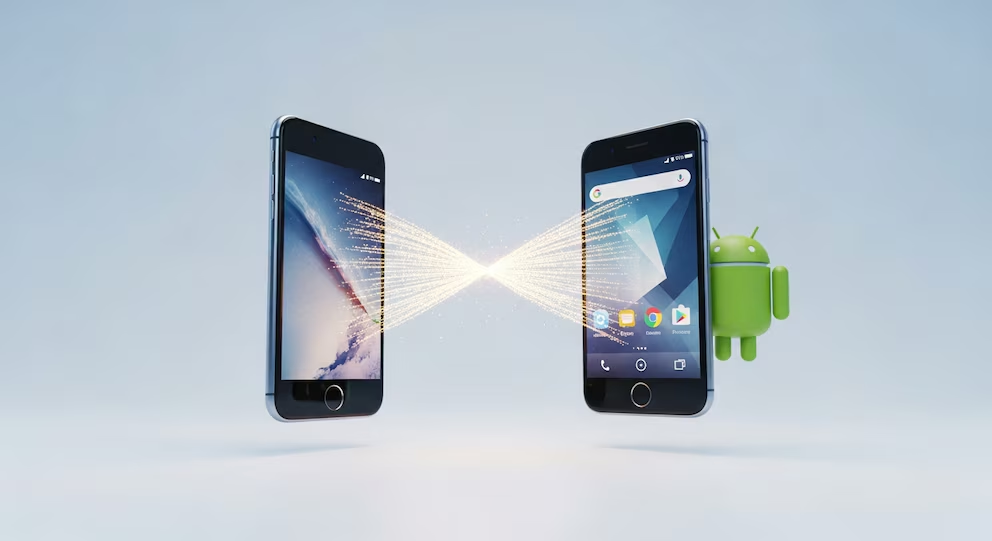
File sharing is becoming platform politics.
Mexico City, May 2026. The expansion of AirDrop-style compatibility to more Android phones marks a quiet but important shift in the mobile ecosystem. What once worked almost exclusively inside Apple’s closed environment is now moving toward broader interoperability through Android’s Quick Share, reducing one of the most persistent frictions between iPhone and Android users.
The change matters because file sharing is not a minor feature. Photos, videos, documents and links move through phones as part of daily social, academic and professional life. When two devices cannot exchange files easily, the problem is not only technical; it reinforces the invisible walls between digital ecosystems and pushes users toward messaging apps, cloud services or lower-quality workarounds.
Newer Android models are beginning to receive compatibility that allows transfers with Apple devices more directly, especially through updates linked to Quick Share. The experience is designed to reduce extra steps: users activate sharing, select nearby devices and send files without relying on cables, third-party apps or manual uploads. For users, the value is immediate: faster exchanges, fewer interruptions and less dependence on platform loyalty.
The models gaining this capability reflect a broader industry trend. Google has pushed Android toward stronger proximity-based sharing, while manufacturers such as Samsung and OPPO are integrating these tools into their own software layers. This means that interoperability is no longer only a Google-level promise; it is becoming a competitive feature for phone brands trying to make Android feel less fragmented.
Still, the experience will not be identical across all devices. Compatibility depends on software version, manufacturer support, regional rollout and whether the receiving Apple device has the right visibility settings enabled. In practical terms, Android users should update their operating system, open Quick Share, allow nearby-device visibility and confirm that Bluetooth, WiFi and location permissions are active.
The deeper story is that mobile ecosystems are being forced to become less territorial. As users move between work devices, personal phones, tablets and laptops, closed platforms become less convenient and more politically visible. AirDrop’s arrival beyond Apple’s traditional perimeter suggests that the next phase of mobile competition will not be fought only through cameras, processors or screens, but through the ability to connect without punishing the user for choosing a different brand.
Phoenix24: periodismo sin fronteras. / Phoenix24: journalism without borders.