

 Phoenix 24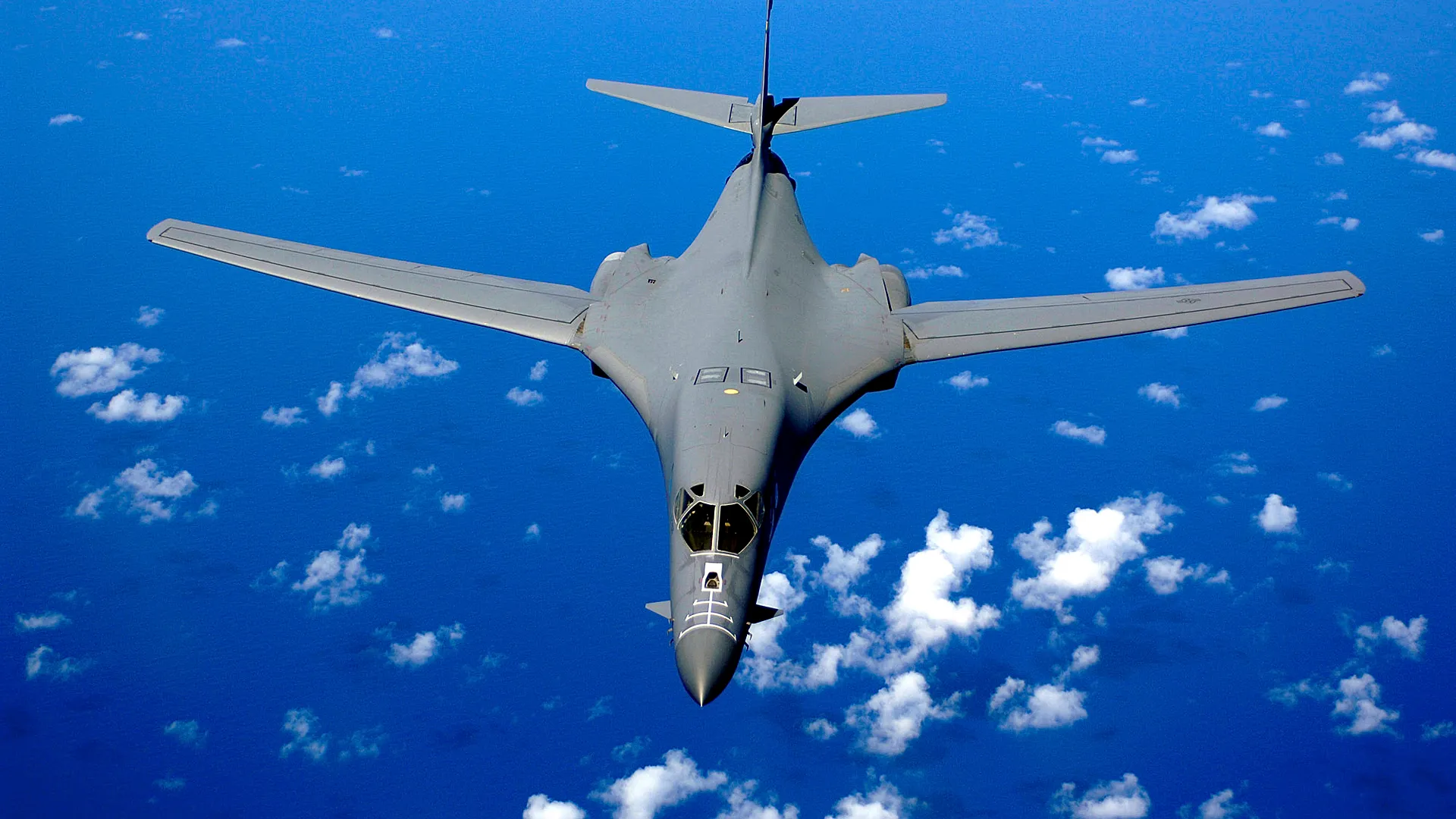
Bombing power now moves as a signal.
Fairford, March 2026
A single aircraft arrival can look like routine basing until you place it inside the week’s political geometry. The US B-1 Lancer, described in European reporting as the platform tied to Washington’s largest announced bombardment phase against Iran, has now landed at RAF Fairford in England. The move matters less as aviation trivia than as a logistics decision that carries diplomatic meaning: the war’s tempo is widening, and Europe is being pulled into the operational map even when governments insist they are not co-belligerents.
The B-1 is not an accidental choice. It is built for long-range, high-volume strike packages, the kind that translate political warning into physical capacity quickly. In this conflict, that capacity has become part of the messaging strategy. When senior US officials warn of escalatory waves, the credibility of that warning depends on platforms that can deliver sustained sorties and carry heavy payloads. A B-1 presence inside Britain signals readiness, not merely deterrence. It is also a way to shorten the decision chain: once the aircraft is forward-positioned, the distance between political order and operational execution compresses.
The deployment is also inseparable from another detail that European audiences have been watching closely: Spain’s refusal to allow US operations against Iran from the bases at Rota and Morón. That decision forced Washington to rebalance its basing posture and highlighted a growing fracture inside allied coordination. Spain’s position has been framed as a boundary, a refusal to be used as a launchpad for offensive action. Britain’s posture, by contrast, has moved toward conditional cooperation, presented publicly as defensive and protective rather than offensive. The arrival at Fairford sits in that gap. It allows the United States to stage capability in Europe while letting London claim that its support is bounded by a defensive interpretation of the mission.
This is where language becomes as important as runway length. European governments are trying to avoid the political and legal cost of being seen as enabling offensive escalation, especially as Iran has issued warnings that European involvement could trigger retaliation. A base access decision therefore becomes a statement about responsibility, even when it is framed as “routine use.” The B-1’s arrival forces an uncomfortable question to the surface: at what point does facilitation become participation. In wartime, the difference is rarely decided by rhetoric. It is decided by what the platform does next.
The choice of RAF Fairford also reflects an operational logic that is easy to overlook. Fairford has a history of supporting US bomber deployments and can handle the infrastructure demands of large aircraft movements, maintenance, and mission planning. In other words, it is not just a parking spot. It is a functioning node. When such a node becomes active, it changes how adversaries and markets interpret the conflict’s duration. A forward bomber posture suggests more than a one-off signal. It suggests a campaign rhythm, with sustainment and repetition in mind.
For Britain, the domestic political calculus is sharp. London has been managing two pressures at once: supporting alliance defense commitments in the region, while limiting the impression that it is joining a war of choice. This is why public explanations emphasize defensive operations, protection of bases, and interception of drones and missiles. Yet a bomber forward deployment is a different kind of symbol than a defensive interceptor. It looks offensive even when politicians label it otherwise. That is why the arrival is politically sensitive. It risks collapsing the careful distinction between shielding and striking.
For Iran, the optics are equally clear. A US bomber in Britain is not simply an American move. It is a sign that European territory is being woven into the war’s enabling infrastructure. That perception can be exploited by Tehran’s information strategy to argue that Europe is not a mediator but an accessory. It can also intensify the threat environment for European assets in the region and, potentially, for European political cohesion at home. Once basing becomes public drama, adversaries have an incentive to widen the argument, not only to punish but to fracture alliance narratives.
The arrival also interacts with the economic layer of the war. Markets have already been pricing regional disruption through energy costs, shipping risk, and insurance premiums. When bomber deployments rise in visibility, the market reads duration and escalation risk upward, even if no new strike is announced that day. In a conflict tied to chokepoints and supply routes, perception moves prices. Forward posture becomes part of that perception.
The deeper pattern is that Europe is being forced into a familiar role under modern conditions: the logistics rear area for a war whose political ownership is contested. In earlier eras, that role was quieter. Today it is loud, because aircraft movements are tracked, reported, and instantly turned into political narrative. The B-1’s landing at Fairford is therefore not only a military fact. It is a narrative event that increases pressure on European leaders to explain their red lines with precision, and to accept that ambiguity will be interpreted by others as intent.
In this environment, the most dangerous space is the grey zone between defensive framing and offensive capability. The bomber exists to strike. The base exists to enable. The politics exists to deny escalation while preparing for it. When those three coexist, misunderstandings become more likely and deterrence becomes harder to calibrate. That is why the arrival matters. It is a reminder that wars now expand through infrastructure choices as much as through battlefield headlines.
Phoenix24: clarity in the grey zone. / Phoenix24: claridad en la zona gris.