

 Phoenix 24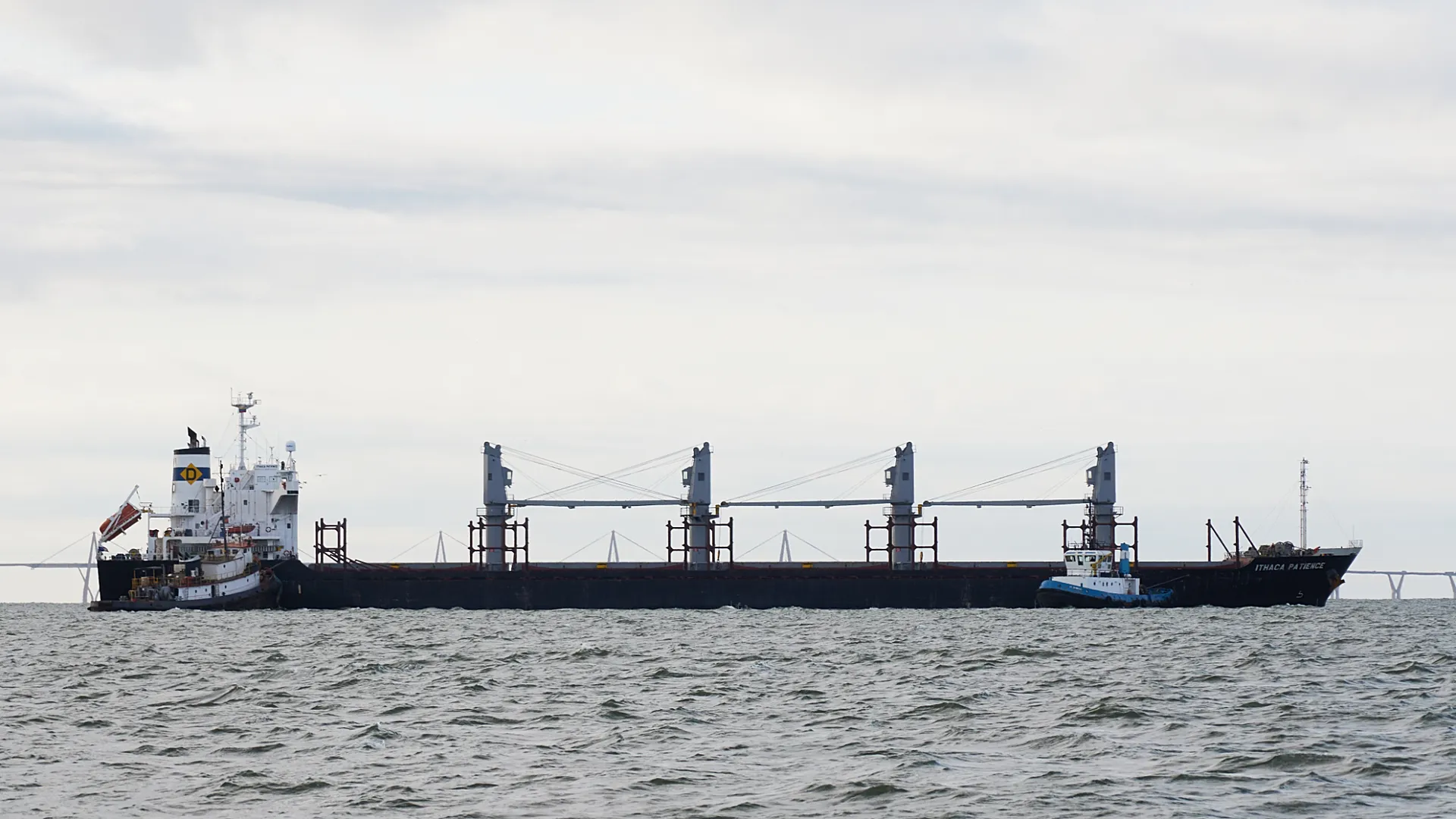
Power in the modern maritime domain is rarely announced; it is enforced quietly, ship by ship.
Caribbean Sea, January 2026.
United States forces have intercepted another oil tanker in the Caribbean, reinforcing a pattern that is reshaping how sanctions are enforced beyond diplomatic statements and financial restrictions. The operation, carried out in international waters, adds a new episode to a growing sequence of maritime interdictions aimed at disrupting oil shipments linked to sanctioned networks operating between South America, the Middle East, and Asia.
According to U.S. military officials, the tanker was operating under deceptive maritime practices, including irregular documentation and signal manipulation, a method increasingly associated with vessels attempting to bypass international sanctions. The boarding was conducted without resistance, and the ship was diverted for further inspection under established maritime enforcement protocols. While authorities have avoided disclosing all technical details, the interception fits squarely within an expanded enforcement strategy that prioritizes physical control over symbolic pressure.
The Caribbean has quietly become a strategic corridor in this contest. Its geography places it at the intersection of energy flows, transshipment routes, and competing spheres of influence. For Washington, enforcing sanctions at sea sends a message not only to the origin country of the oil but also to intermediaries, insurers, port operators, and flag registries that enable the trade. Each interception tightens the operational space for what security analysts describe as a fluid, adaptive shadow fleet.
From a legal standpoint, U.S. authorities maintain that these actions comply with international maritime law and domestic enforcement mandates tied to sanctions regimes. European policy institutions have taken note, as similar mechanisms have been debated within the European Union regarding enforcement gaps in existing sanctions frameworks. Analysts at transatlantic security forums argue that the shift from passive monitoring to active interdiction reflects frustration with the limitations of paper compliance in an era of globalized shipping.
Beyond the immediate seizure, the broader implications are economic and psychological. Oil traders operating in Asia have increasingly priced in the risk of interdiction when dealing with cargoes of uncertain origin. Insurance markets have responded by raising premiums or withdrawing coverage altogether for vessels flagged as high risk. According to international energy monitoring bodies, these secondary effects often prove more disruptive than the seizure itself, gradually eroding the financial viability of sanction evasion.
China and several Middle Eastern importers have watched these developments carefully. While official reactions remain measured, maritime analysts in Asia note that persistent interdictions introduce volatility into supply chains already strained by geopolitical uncertainty. Even when cargoes are not directly destined for U.S. adversaries, the precedent of boarding vessels in international waters introduces a new variable into global shipping calculations.
In Latin America, the interception has reignited debate over sovereignty and economic survival. Officials sympathetic to sanctioned states frame the actions as coercive, while others quietly acknowledge the operational effectiveness of maritime enforcement compared to diplomatic stalemates. Regional security experts point out that the Caribbean has historically been a testing ground for power projection, and that this latest phase reflects continuity rather than rupture.
The United States, for its part, has been careful to present the operation as technical rather than political. Military statements emphasize compliance checks, documentation irregularities, and established enforcement authorities. Yet the cumulative effect is unmistakable. Each tanker boarded reinforces a signal that sanctions are no longer abstract constraints but tangible barriers enforced on the open sea.
What makes this moment distinct is not the scale of force involved, but its precision. No blockades have been declared. No naval standoffs have erupted. Instead, control is asserted selectively, calibrated to avoid escalation while steadily constricting illicit flows. Security scholars in North America describe this as a model of contemporary power projection, where visibility is minimized and impact is maximized.
As global energy markets navigate another year of uncertainty, the interception underscores a broader reality. In a fragmented international order, enforcement increasingly migrates from conference rooms to choke points, from policy documents to hull inspections. The sea, long seen as a space of freedom, is once again becoming a domain of discipline.
Each silent boarding redraws the boundaries of what is permissible, and who decides.
La verdad es estructura, no ruido.
Truth is structure, not noise.