

 Phoenix 24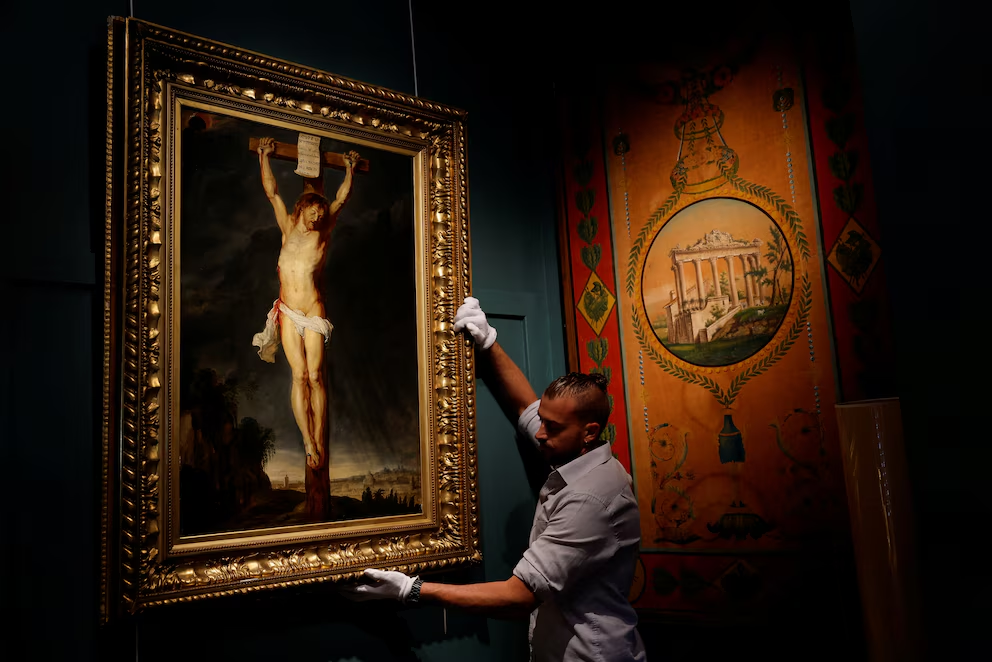
It began as a quiet discovery in a private room, an ordinary inventory of inherited belongings that suddenly opened a door into the seventeenth century.
Paris, December 2025. A previously unknown crucifixion attributed to Peter Paul Rubens has resurfaced in France and achieved a record price at a European auction, transforming an unassuming domestic find into one of the most remarkable art events of the year. The painting, long believed lost, was uncovered during a routine examination of a Paris residence where it had remained unnoticed for generations. Once specialists evaluated its materials, brushwork and underlying sketches through scientific analysis, the canvas was authenticated and prepared for sale. When it finally reached the auction room, the atmosphere shifted from curiosity to astonishment as collectors recognized both the rarity and the historical weight of the piece.
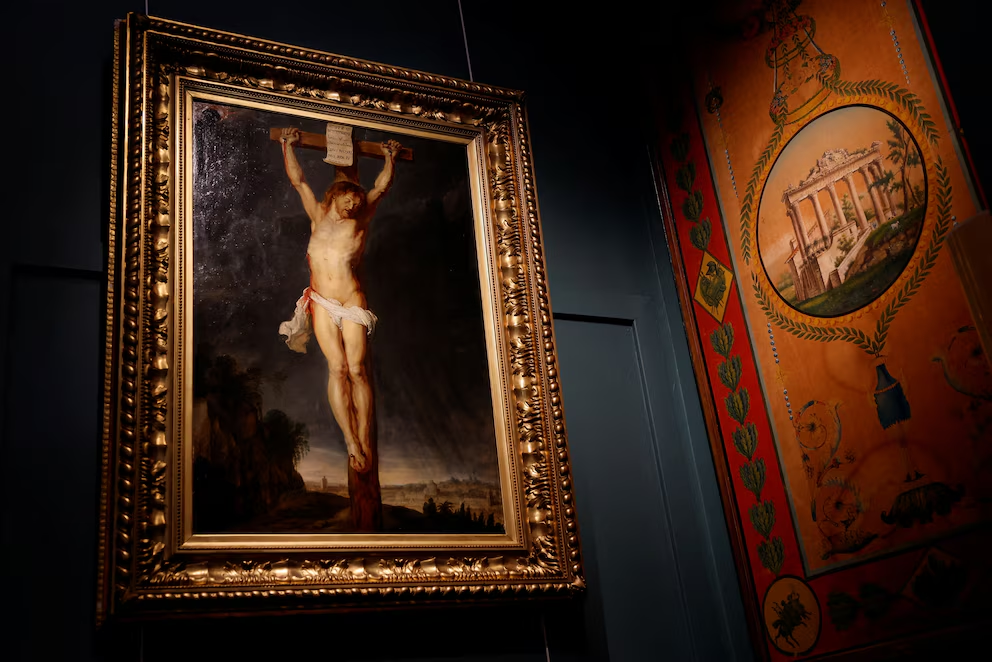
The work stands apart from other crucifixion scenes by Rubens. Scholars emphasize that this interpretation presents Christ alone, without the surrounding figures, dramatic skies or dynamic gestures so characteristic of the artist’s monumental religious compositions. The absence of additional protagonists heightens the emotional focus, concentrating the viewer’s attention on the body, the posture and the intimate tension of the scene. Experts note that the flow of blood and water from Christ’s side, depicted with restraint yet unmistakable precision, appears in only one other work previously associated with Rubens. This singularity strengthened the attribution and contributed to the intense interest among museums and private collectors.
Before this rediscovery, the painting existed only as a reference in an early seventeenth century engraving and in scattered historical documents. No confirmed original had been located for more than four hundred years. For decades, art historians assumed the piece had vanished, destroyed or separated beyond trace in the shifting movements of European collections. Its sudden emergence challenges established catalogues and may require updates to Rubens scholarship. Curators across Europe, North America and Asia have already begun reassessing archival materials in light of the find, considering how it might alter understandings of the artist’s development during his formative religious period.
The auction result illustrates how the market responds when history, rarity and mystery converge. Bidders competed vigorously, driving the final price far beyond the expectations announced before the sale. Specialists in European art markets point out that this outcome reflects renewed enthusiasm for Old Masters at a time when contemporary art often dominates headlines. Collectors value authenticity, provenance and the thrill of rediscovery. A painting that lay forgotten for centuries, only to be revealed and verified by modern scientific techniques, carries a narrative that resonates across the art world. The record price is therefore not only a financial measure but a cultural signal about the appetite for works that bridge past and present.
For the French art community, the event has become a reminder that significant masterpieces may still rest in private homes, overlooked among inherited possessions or stored without recognition of their importance. Each rediscovery demands careful evaluation of context, materials and historical references. Conservation laboratories in Europe explain that advances in imaging now allow experts to detect underdrawings, repairs and pigments that reveal an artist’s hand with increasing clarity. These methods were essential in confirming the authenticity of the Rubens crucifixion and in distinguishing it from similar works produced by followers or workshop assistants.
The painting’s composition invites deeper reflection. The solitary figure of Christ communicates immediacy and emotional intensity without relying on grand settings or dramatic companions. This approach suggests a more intimate theological meditation by Rubens during a period when he explored variations of religious subject matter. Art historians from the Middle East, where Baroque works are studied in comparative dialogue with regional iconographic traditions, highlight that the restrained scene amplifies both suffering and transcendence. The piece balances physical detail with spiritual symbolism, demonstrating Rubens’s mastery of emotion and technique.
As the artwork transitions into private hands, questions arise about future access. Museums express hope that the owner may loan the painting for exhibitions or research, recognizing its significance for understanding early Baroque religious art. The broader public may not see the work again for years, depending on the collector’s decisions. Heritage advocates in Europe emphasize the importance of documenting the piece thoroughly to ensure its place in art history remains secure regardless of its physical location.
The rediscovery also holds cultural resonance beyond the art world. It speaks to the fragility of memory, the unpredictability of inheritance and the possibility that major works of human creativity can disappear and reappear by chance. In an era where digital archives attempt to catalogue everything, the notion that a painting by Rubens could remain hidden for centuries offers a humbling reminder of how incomplete our understanding of the past remains. It also symbolizes hope that other lost works may still surface, expanding the known universe of art and enriching future scholarship.
What began as an ordinary inventory became a story that traveled across continents, reignited academic debate and set a new benchmark in the European art market. The canvas returned from silence not merely as an object of value but as a bridge to a world shaped by devotion, craftsmanship and the search for meaning through image.
Phoenix24: truth is structure, not noise. / Phoenix24: la verdad es estructura, no ruido.