

 Phoenix 24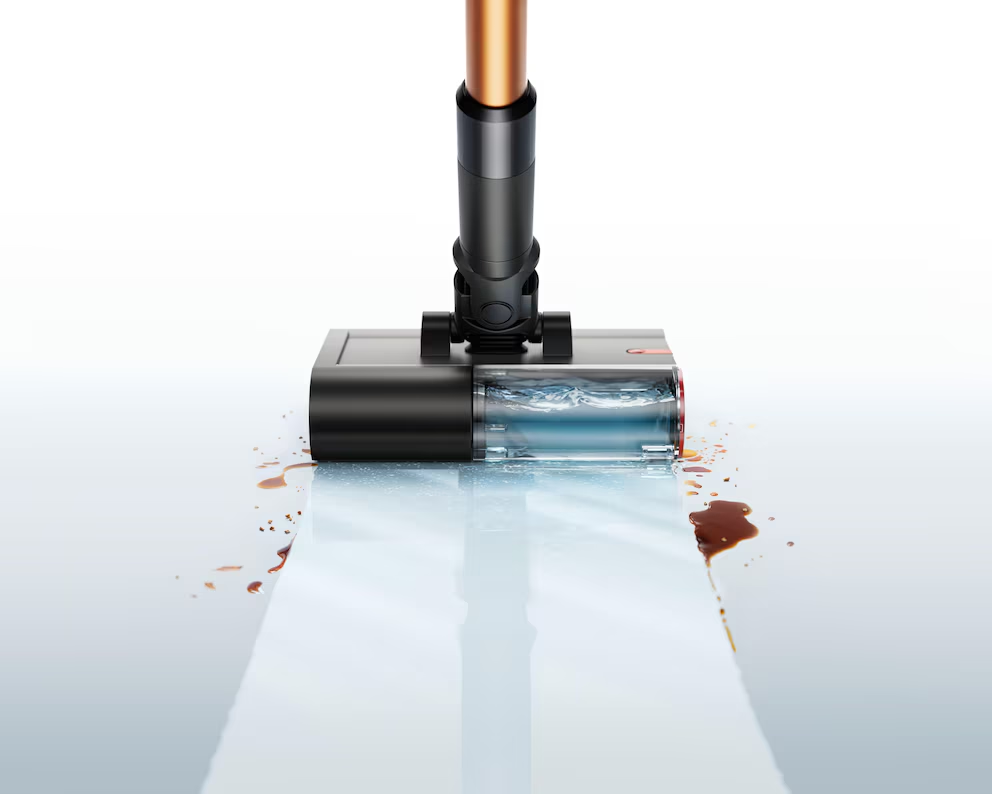
Convenience now lives in the hidden mechanics.
London, February 2026.
Home cleaning technology rarely changes through a single breakthrough; it changes when a few recurring irritations quietly disappear. A new electric mop concept is being framed around exactly that logic, promising to reach under low furniture by tilting up to 170 degrees, to keep dirty water from being dragged back across the floor, and to remove filters entirely from the maintenance routine. The headline feature is physical reach, yet the deeper claim is procedural, mopping becomes a managed circulation of clean and dirty water rather than a repeated dip into a gradually contaminated bucket. In a category crowded with incremental upgrades, the pitch is less about power and more about controlling contamination.
The absence of filters is the most strategic design choice, because filters are where many wet cleaning devices fail in real households. They trap residue, then they trap odor, and then they become the part people postpone cleaning until the device feels unpleasant to use. A filterless system tries to prevent that failure mode by shifting where grime collects and how it is removed. The trade is not magically “no maintenance,” it is a different maintenance discipline, tanks, rollers, and contact surfaces become the cleaning points. If the user rinses and dries those surfaces reliably, the no filter claim becomes a genuine reduction in friction.
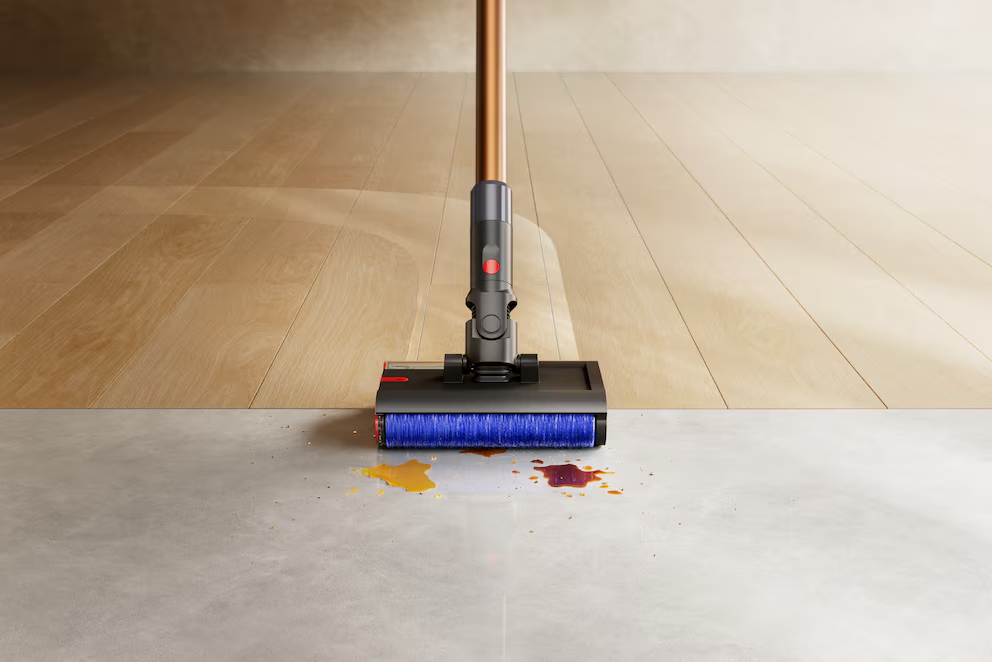
What makes the system legible is the separation of clean and dirty water into two dedicated tanks. The clean reservoir is described at around 300 milliliters, while the dirty tank sits closer to 360 milliliters, reinforcing the idea that the device is designed to extract as it washes. In practical use, that separation matters because traditional mopping is a compromise, you spread diluted residue while trying to remove it. A dual tank approach is an attempt to enforce a one way logic, fresh water goes out, contaminated water comes back, and the two do not meet. The manufacturer’s coverage claim, up to roughly 100 square meters on a low hydration setting, signals the intended use case, routine maintenance rather than heavy, all day scrubbing.
The cleaning head itself is positioned as a textile engineering problem, not merely a spinning accessory. A high density microfiber roller is described with a filament count that reaches 64,000 filaments per square centimeter, a statistic meant to communicate contact and pickup rather than marketing sparkle. Clean water is said to be delivered through eight hydration points, while dirty water is continuously extracted, creating a loop where the roller is constantly being refreshed. The point is to reduce the moment when the pad becomes a tool for smearing rather than removing. When the device is described as a pipeline, the roller becomes the interface where the pipeline succeeds or fails.
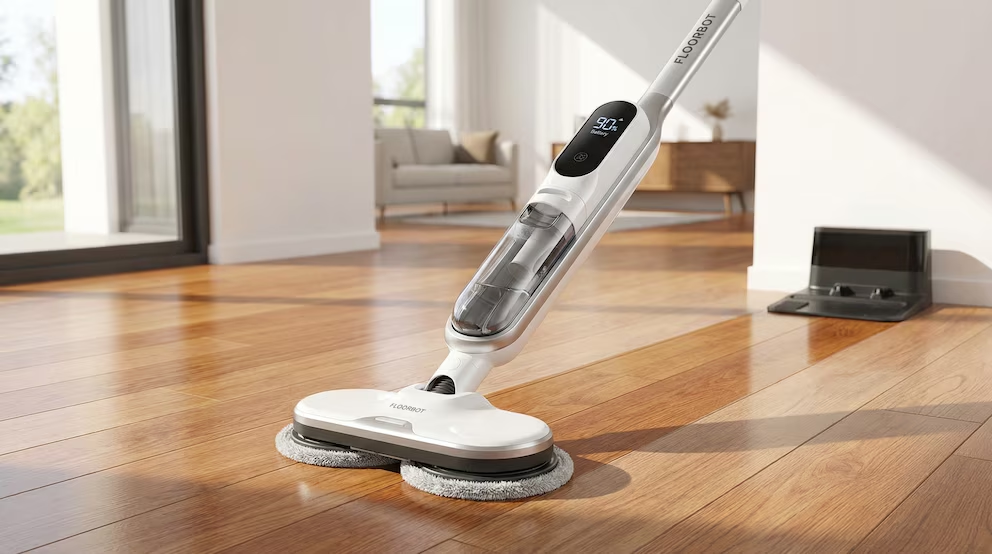
Ergonomics are treated as part of the system rather than an afterthought, because fatigue is one of the most underpriced costs in household cleaning. The total weight is described at about 2.2 kilograms, yet the argument is that the hand only carries a fraction of that, roughly 380 grams, because the head supports the load on the floor. This kind of distribution matters in everyday use, especially for people who avoid mopping precisely because it feels like repetitive strain. The tilt angle, up to 170 degrees, is positioned to reduce bending and awkward wrist angles when reaching under beds and sofas. The design goal is not just to clean, but to remove the body friction that makes cleaning feel like punishment.
Battery behavior reveals who the device is for, and who it is not for. The runtime is positioned at up to 30 minutes of continuous use, with a recharge time around 3.5 hours, and the option of an additional battery to extend autonomy. These numbers implicitly target the user who cleans in shorter sessions, touching high traffic areas frequently rather than doing a single marathon. For larger homes or deep cleaning cycles, the workflow becomes more about planning than spontaneity. In this category, the device wins if it makes the short session feel effortless, because the short session is the behavior most people can actually sustain.
Competition in wet cleaning is no longer about whether a device can clean, it is about which annoyance it deletes most convincingly. Some rivals emphasize flexibility beyond 170 degrees, pushing closer to 180 degrees to reach even lower clearances. Others center longer runtimes, larger tanks, or self cleaning routines that reduce how often the user must rinse, dry, and reset the machine. Certain models prioritize hair handling, acknowledging that households with pets and long hair experience wet rollers as a recurring failure point. Each approach is a different theory of the same market, people do not buy cleaning devices for performance alone, they buy them to stop thinking about the steps they hate.
There is also an adjacent competitor that changes expectations without directly occupying the same category, robot vacuums with mopping functions. These systems offer mapping, obstacle avoidance, and scheduled cleaning, and some packages include automated emptying and filtration. Their convenience sets a baseline, if a machine can clean while you are away, a manual device must justify why you should touch it at all. The usual answer is situational, robots handle maintenance and light soil, while human guided wet cleaning is still superior for sticky spills, edges, corners, and the kind of grime that accumulates in high use zones. In that landscape, an electric mop succeeds when it becomes the fast intervention tool that does not feel like a second job.
The bigger story here is that cleaning technology is being reframed as contamination management. In 2026, the selling point is not only how much dirt is removed, but how clean water is preserved, how dirty water is isolated, and how odor is prevented from becoming the device’s signature. A filterless design combined with dual tanks is an attempt to keep the machine from developing the stale smell that kills adoption after the novelty period. The system still depends on user behavior, tank rinsing, roller drying, and storage conditions will decide whether the promise holds. What is changing is the direction of the design, fewer steps that feel optional, fewer parts that quietly rot into inconvenience.
La verdad es estructura, no ruido. / Truth is structure, not noise.