

 Phoenix 24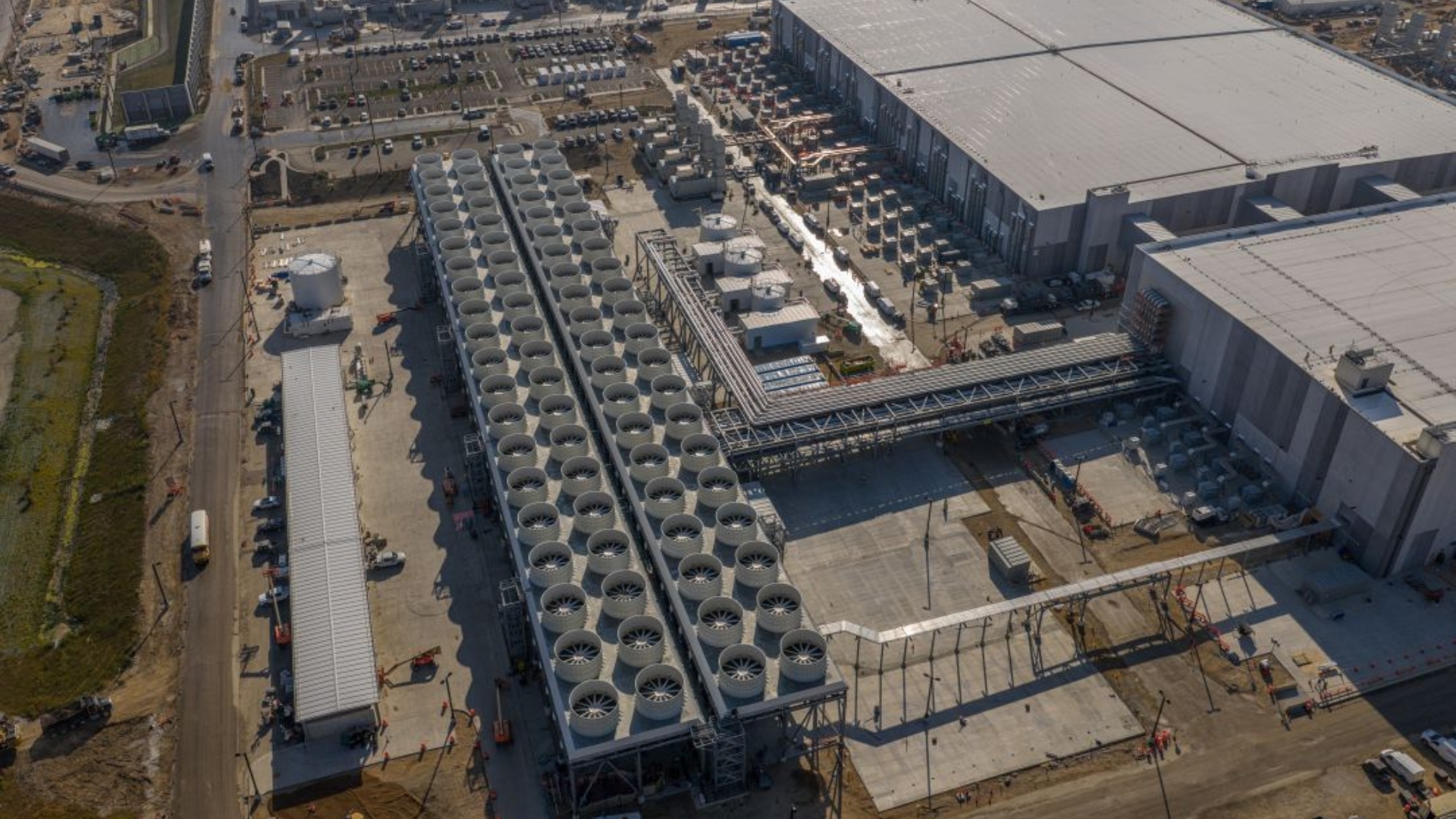
Helium and closed-loop cooling reshape digital infrastructure.
ORANGEVILLE, UNITED STATES — July 2026.
Nvidia and nuclear startup Valar Atomics have demonstrated an artificial-intelligence computing system powered by a small reactor at the San Rafael Energy Lab in rural Utah. The partners say the experiment could lead to an AI data center that places almost no demand on local water supplies while providing continuous electricity outside the conventional grid. During the presentation, a Valar reactor supplied power to Nvidia’s Blackwell computing technology as proof that advanced nuclear generation can support intensive digital workloads. The proposal remains experimental, but it brings together two technologies now considered central to the expansion of American AI infrastructure.
The project is often described as “waterless,” although nuclear energy does not directly replace the liquid used to remove heat from computer processors. Water savings would instead come from combining Valar’s high-temperature, helium-cooled reactor with Nvidia’s new closed-loop, direct-to-chip cooling architecture. Helium transports heat inside the reactor without requiring the large water systems associated with many conventional nuclear plants, while the computing equipment circulates coolant repeatedly through a sealed loop. External heat can then be released through dry coolers in favorable conditions, sharply reducing or nearly eliminating evaporative water consumption at the facility level.
Nvidia recently presented a 45-degree Celsius liquid-cooling design for its next generation of AI factories, allowing servers to operate with much warmer coolant than traditional installations. Higher coolant temperatures reduce the need for energy-intensive chillers because ambient air can remove heat from the closed circuit more effectively. The company estimates that this architecture could lower facility cooling-water use from roughly 2.6 million gallons per megawatt annually in a conventional cooling-tower system to near zero under suitable climatic conditions. The claim applies to cooling operations and does not mean that every indirect water requirement across construction, electricity production and equipment manufacturing disappears.
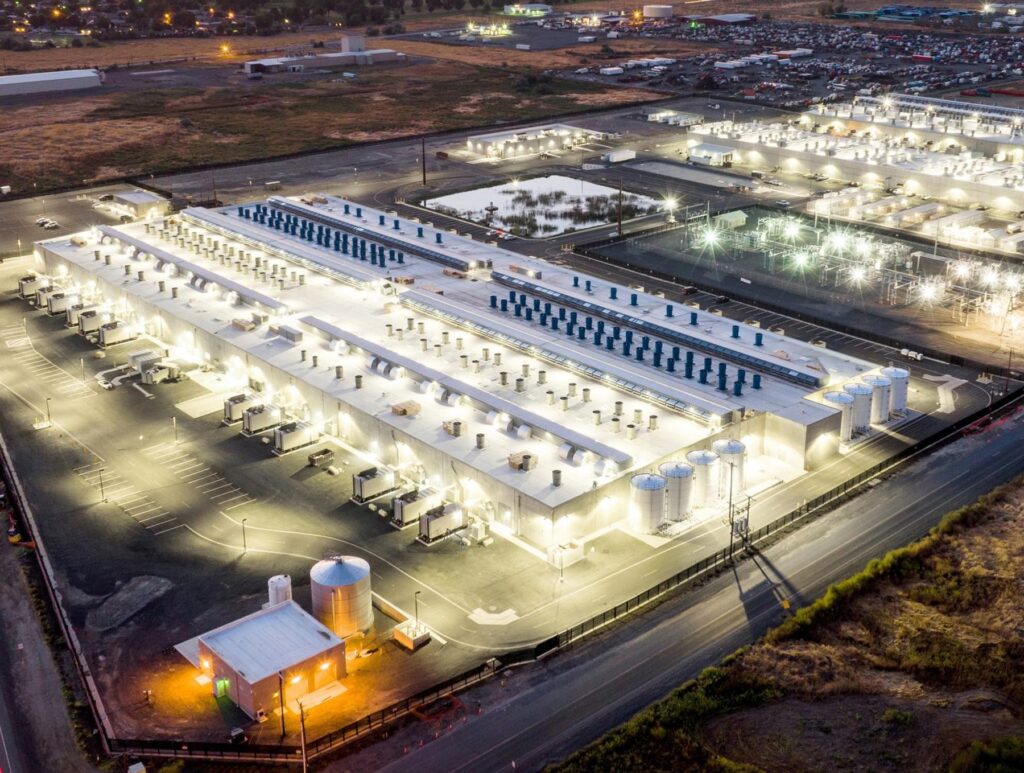
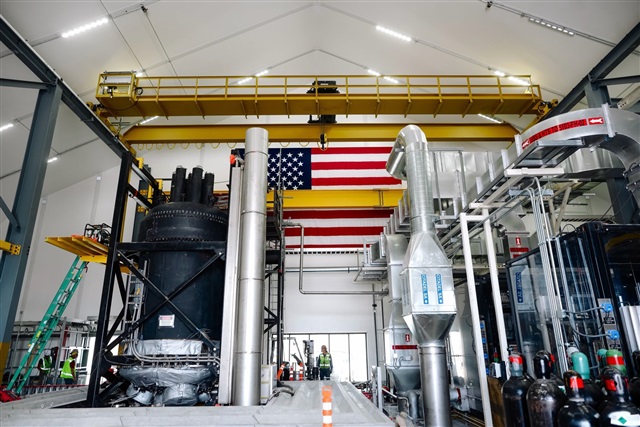
Valar’s Ward250 microreactor uses pressurized helium and was reported to have reached criticality in June, meaning it sustained a controlled nuclear chain reaction. At the July demonstration, the installation operated at a scale of about 100 kilowatts and powered Nvidia equipment during a live presentation. Valar and Nvidia are now exploring a future data center of approximately 30 megawatts in Emery County, far larger than the test but still modest compared with gigawatt-scale AI campuses. No commercial opening date has been announced, and substantial engineering, financing, safety and regulatory work remains before such a facility could operate continuously.
The Utah experiment responds to growing public resistance against data centers because of their electricity and water demands. Communities across the United States increasingly question whether large AI facilities could raise utility costs, compete with residents and agriculture for limited water, or place new pressure on transmission networks. Utah has faced particularly intense debate because prolonged drought and the condition of the Great Salt Lake make water consumption politically and environmentally sensitive. State authorities have consequently promoted guardrails for new projects while supporting nuclear development through an energy-expansion strategy known as Operation Gigawatt.
For Nvidia, the partnership is part of a wider attempt to create standardized “AI factories” whose computing, power and thermal systems are designed as one integrated platform. Advanced GPUs generate extraordinary heat when operating continuously, making cooling capacity a limiting factor alongside chip supply and access to electricity. Direct liquid cooling removes heat more efficiently than traditional room-level air conditioning and enables greater computing density inside each rack. Pairing that architecture with dedicated generation could allow developers to build facilities in locations where public grids cannot provide sufficient capacity on the required timeline.
Small nuclear reactors are attractive to technology companies because they could supply carbon-free electricity around the clock without depending on weather conditions. Unlike solar and wind generation, reactors can provide steady output suitable for data centers that operate continuously and cannot tolerate extended interruptions. Microreactors could also be installed behind the meter, connecting directly to a facility rather than waiting years for a major grid interconnection. However, their commercial economics, fuel supply, waste management, security requirements and ability to scale rapidly have not yet been proven across a large fleet.
The project also faces a complex regulatory path because reaching criticality in a test environment is different from receiving permission to sell electricity commercially. Valar will need appropriate authorization before deploying a reactor as a permanent power source, and debates continue over whether some advanced reactors should be regulated primarily at the federal or state level. Safety reviews must examine containment, emergency planning, radioactive material, transportation, cybersecurity and the consequences of operating next to valuable computing infrastructure. Faster licensing may accelerate innovation, but public acceptance will depend on transparent evidence that speed does not weaken independent oversight.
The Nvidia-Valar demonstration therefore represents a technological milestone rather than the immediate end of water consumption by data centers. Its importance lies in showing how high-temperature nuclear power and warm-water computing systems might be engineered together to reduce dependence on both municipal water and overstretched electrical grids. Success would offer AI developers a potential model for expanding capacity in dry regions without forcing communities to choose between digital investment and essential resources. The decisive test will be whether the concept can move from a 100-kilowatt demonstration to a licensed, reliable and economically competitive commercial facility.
Phoenix24 — Global news with clarity and perspective.