

 Phoenix 24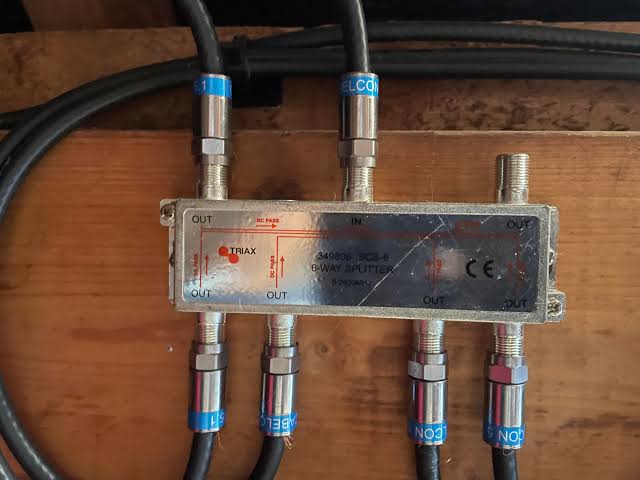
Existing antenna wiring can solve weak connectivity.
MADRID, SPAIN — July 2026.
Old television coaxial wiring can provide a practical route to faster and more stable home internet without relying entirely on Wi-Fi. Many houses and apartments already contain antenna cables running between rooms, either exposed along walls or concealed inside conduits. That infrastructure was originally installed for television signals, but it can be reused to carry network data through suitable adapters or replaced with Ethernet cable along the same pathways. The approach is especially attractive in buildings where thick walls, crowded wireless channels or awkward layouts weaken Wi-Fi coverage.
The most direct solution is to remove the old coaxial cable and pull Category 5e or better Ethernet cable through the existing route. A properly installed Category 5e connection can support gigabit networking, while newer categories may provide additional capacity when compatible equipment and appropriate distances are used. If the antenna cable is visible and attached to a wall, replacement may be relatively straightforward, although connectors usually need to be installed after the new cable is positioned. Hidden conduits create more difficulty because bends, limited space and other services can prevent a terminated Ethernet cable from passing through safely.
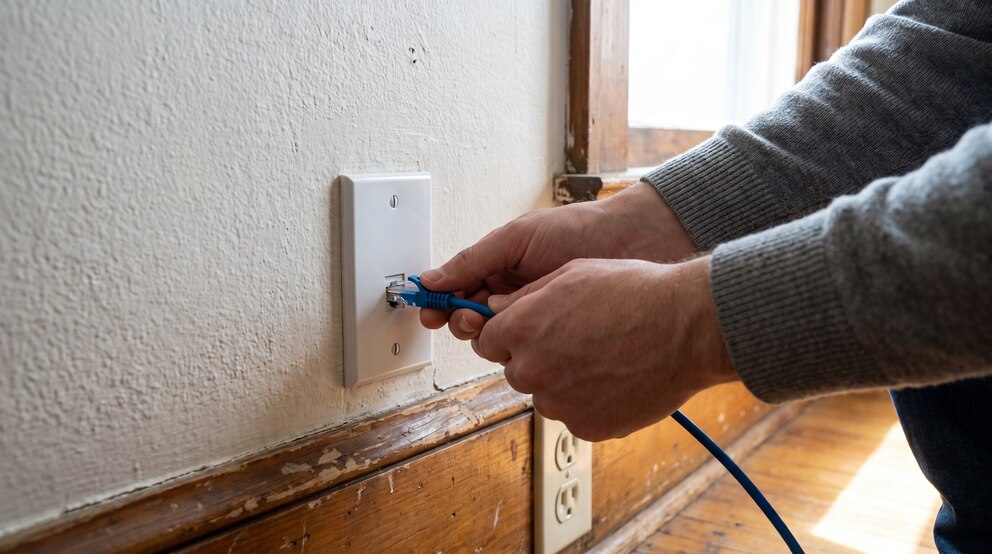
Installers often use unterminated network cable and a pulling guide when the route runs through walls or long conduits. The old coaxial line can sometimes help draw the new cable, but excessive force may damage the conduit, nearby wiring or the replacement cable itself. Electrical power cables should not be handled casually, and local installation rules may limit how data and mains wiring share enclosed spaces. Homeowners should inspect the route before beginning and consider professional assistance when access points are unclear, conduits are crowded or structural work may be required.
When replacing the cable is impractical, coax-to-Ethernet adapters offer a less invasive alternative. One adapter connects the router’s Ethernet port to a coaxial outlet, while another converts the signal back to Ethernet in the destination room. Each unit normally requires electrical power, but the installation can be largely plug-and-play when the coaxial path is compatible. Current equipment can provide multi-gigabit link rates, making the system suitable for streaming, video calls, cloud backups, smart televisions and online gaming.
Actual performance depends on the condition and layout of the existing antenna network rather than on the adapters alone. Direct point-to-point coaxial runs generally offer the simplest results, while old splitters, amplifiers, filters and damaged connectors may reduce speed or block communication completely. Some homes distribute television signals through a central cabinet, allowing individual room connections to be reorganized more easily for data use. In other properties, an installer may need to remove incompatible components or create a dedicated coaxial route between the router and the required room.
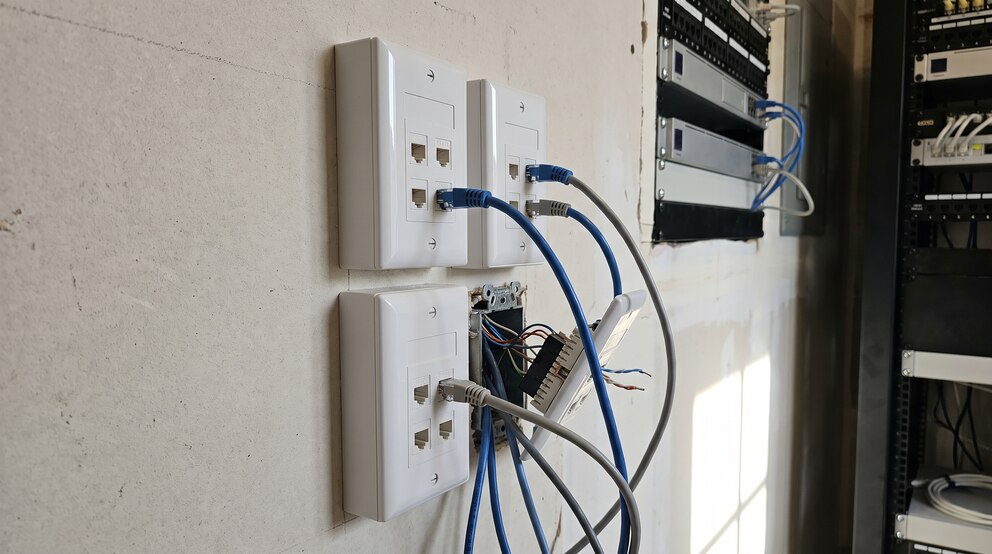
Coaxial networking does not necessarily eliminate Wi-Fi from the home, because wireless access remains useful for phones, tablets and portable devices. Its greatest value is providing a reliable wired backbone for equipment that stays in one place or for additional wireless access points positioned closer to users. Connecting a computer, console, television or mesh node by cable reduces dependence on radio conditions and can improve latency, consistency and available bandwidth. This hybrid design often performs better than repeatedly adding wireless extenders that must share the same congested spectrum.
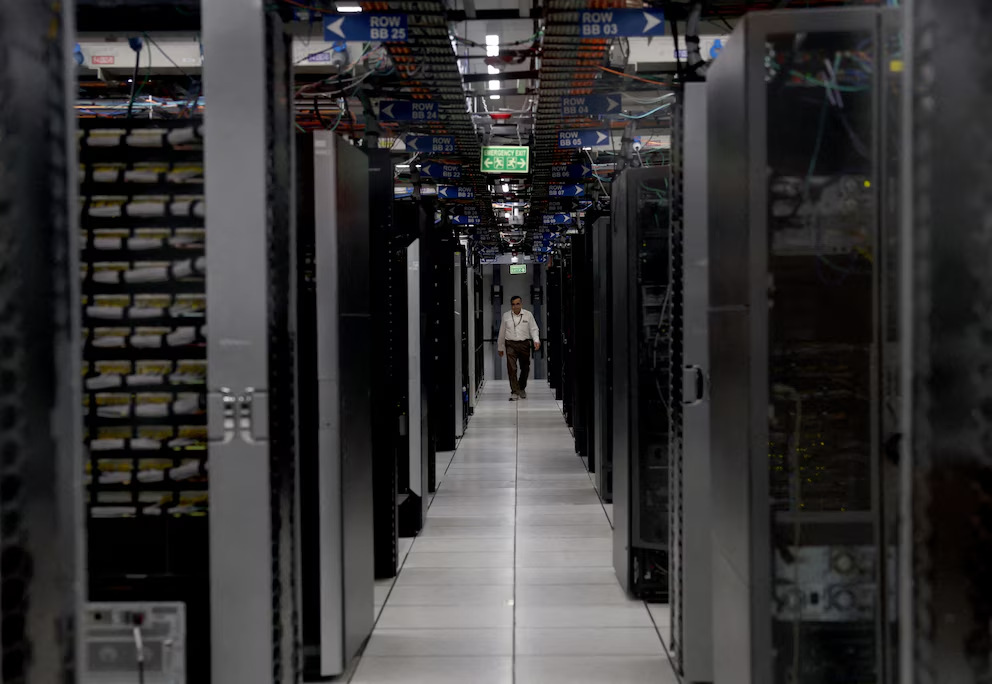
Users should also confirm that the selected adapters match their network ports and internet service before purchasing hardware. A device advertised with a 2.5-gigabit coaxial rate cannot deliver that speed if the router, switch, computer or Ethernet port is limited to one gigabit. Shared coaxial segments may also divide capacity among several endpoints, while real-world throughput is normally lower than the headline physical link rate. Compatibility with active television, satellite or cable services should be checked carefully because frequencies, filters and distribution equipment vary among installations.
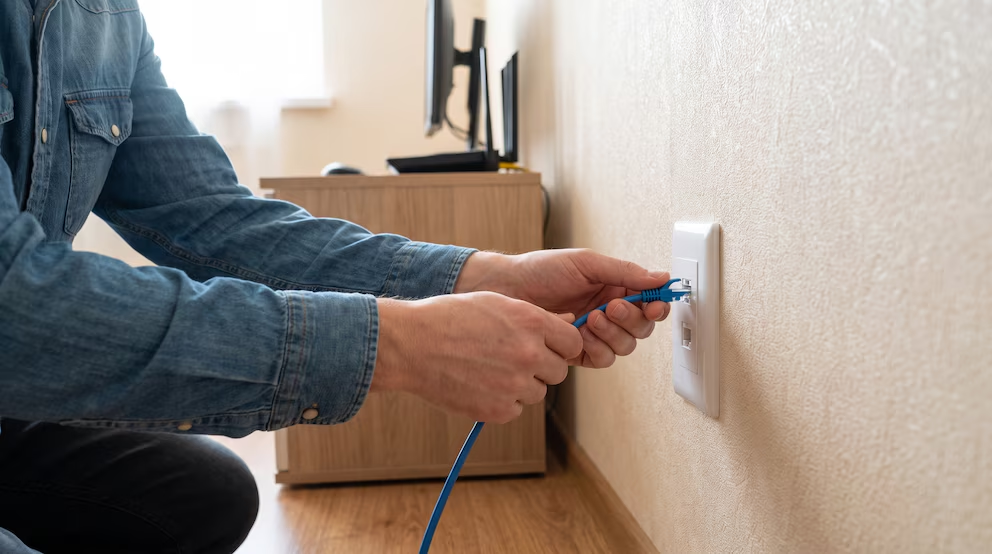
Reusing existing coax can reduce drilling, exposed cabling and renovation costs while extending wired connectivity into rooms that are difficult to reach. It can also prolong the usefulness of infrastructure that would otherwise remain abandoned inside walls after traditional television systems are removed. The best option depends on the building: replacing coax with Ethernet offers a conventional long-term network, while adapters preserve the existing installation and avoid major work. A careful assessment of cable routes, splitters, required speeds and connected devices can turn an outdated antenna system into a valuable component of a modern digital home.
Phoenix24 — Global news with clarity and perspective.