

 Phoenix 24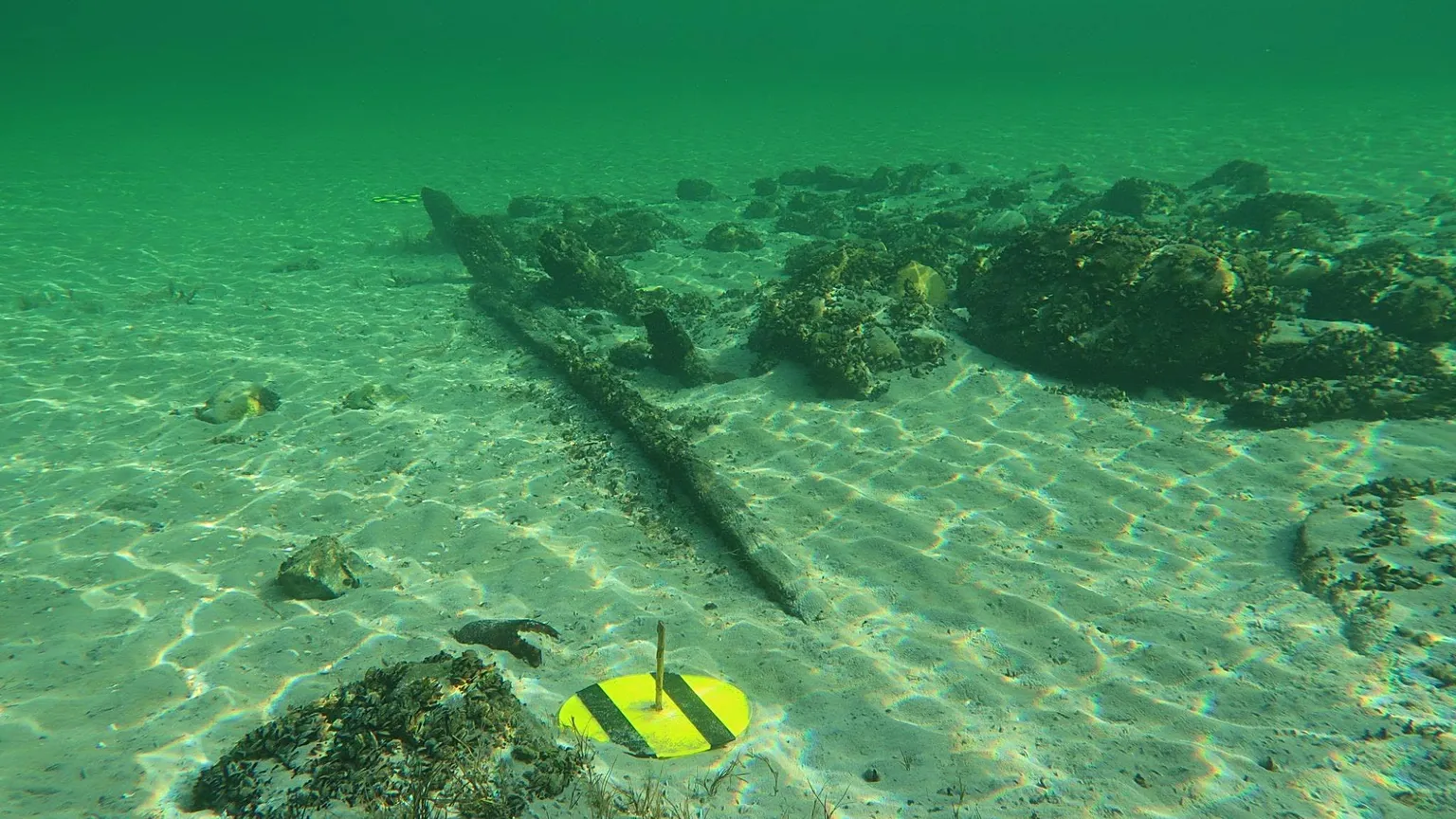
Fifteenth-century timbers reveal a forgotten navigation era.
Lindau | July 2026
Underwater archaeologists have identified the remains of a late-medieval vessel in Lake Constance, a discovery that could provide rare evidence about shipbuilding, transportation and commercial activity in one of Central Europe’s most important inland waterways.
The wreck was located off the coast of Lindau, near Germany’s border with Austria and opposite the Swiss shoreline. Its identification began after an experienced recreational diver alerted specialists to submerged wooden remains that appeared inconsistent with naturally accumulated material.
Researchers from the Bavarian Society for Underwater Archaeology initially approached the site with caution. Individual pieces of timber beneath a lake can originate from docks, collapsed structures, transported cargo or modern debris, making it necessary to establish whether the remains belonged to an actual vessel.
That uncertainty diminished when divers documented several frames and fragments of the hull projecting from the lakebed. The curved structural elements functioned like ribs, forming part of the internal framework that once supported the vessel’s sides and gave its body strength.
Preliminary measurements indicate that the boat may have been between eight and 12 metres long and approximately three metres wide. Although substantial parts remain covered by sediment, the visible configuration was sufficient for archaeologists to classify the structure as a shipwreck rather than an unrelated collection of timber.
The most surprising result emerged from the analysis of a small wood sample. Radiocarbon dating placed the vessel between 1420 and 1450, during the final phase of the Middle Ages. Researchers had initially expected the remains to belong to a considerably more recent period.
The dating gives the discovery exceptional archaeological value. Only a small number of late-medieval wrecks had previously been identified in Lake Constance, leaving scholars with limited physical evidence of the vessels that transported people and goods across the region during the fifteenth century.
Written records can describe trade, taxation and travel, but an archaeological wreck provides a different form of knowledge. Its timber, joints, proportions and construction sequence may reveal how local shipwrights adapted vessels to the lake’s winds, depths, currents and commercial requirements.
The ship may also help researchers determine whether builders followed a standardized regional tradition or combined techniques circulating through broader European trade networks. Even a limited investigation could reveal how the hull was assembled, which types of wood were selected and how much cargo the vessel may have carried.
Lake Constance occupies a strategic geographical position between present-day Germany, Austria and Switzerland. During the medieval period, its waters connected towns, markets, religious institutions and agricultural communities. Boats transported grain, wine, timber, salt, stone, livestock and passengers at a time when overland travel could be slower, more expensive and more dangerous.
The newly identified wreck may therefore represent more than a lost boat. It could preserve material evidence of the economic network that linked communities around the lake centuries before modern national borders defined the region.
The investigation has so far remained deliberately limited. Archaeologists have conducted only two dives, completed an initial survey, produced photographic documentation and removed a small sample from one of the frames for scientific analysis.
Orthophotography has allowed specialists to combine multiple images into an accurate visual representation of the site. This technique helps document the position of structural elements without immediately disturbing the wreck or exposing fragile timber to additional deterioration.
Researchers are not currently planning to raise the vessel. Recovering waterlogged wood is an extremely expensive and technically demanding operation because timber that has remained submerged for centuries can begin deteriorating rapidly once exposed to air.
Every recovered piece would require stabilization, controlled drying and long-term conservation. Without sufficient funding, specialist facilities and a clear research objective, removal could place the archaeological material at greater risk than leaving it underwater.
Sediment can act as a natural protective layer by limiting oxygen, light, biological activity and physical disturbance. For that reason, underwater archaeologists frequently consider preservation in place the safest option when a wreck is stable and not threatened by construction, erosion or unauthorized interference.
A small-scale excavation remains possible. Such an intervention could expose selected sections of the vessel to determine its exact dimensions and identify the construction system without attempting a complete recovery.
The site’s future will depend partly on environmental conditions. Lake Constance has experienced unusually low water levels in recent years, increasing concern about the exposure and vulnerability of archaeological remains located in shallower areas.
Changes in temperature, sediment movement and water levels can alter preservation conditions that remained stable for centuries. Once timbers become exposed, currents, microorganisms, anchors and human activity may accelerate their deterioration.
The involvement of a recreational diver also illustrates the importance of cooperation between local communities and professional archaeologists. People who repeatedly explore the same underwater environment may notice changes or unfamiliar structures that formal surveys have not previously recorded.
Responsible reporting remains essential. Removing objects, disturbing sediment or revealing precise coordinates can damage a site before specialists have assessed it. In this case, the initial observation led to a controlled archaeological investigation rather than the unauthorized extraction of material.
The discovery remains at an early stage, and researchers have avoided drawing conclusions about the vessel’s function, origin or final voyage. No cargo has been identified, and the circumstances of its sinking remain unknown.
Yet the surviving framework has already opened a rare window into medieval life around the lake. Its wooden ribs preserve the physical decisions of shipbuilders who worked six centuries ago, constructing vessels for communities whose economies and daily movements depended on the water.
The ship disappeared beneath Lake Constance sometime in the fifteenth century. Its rediscovery now offers an opportunity to reconstruct a chapter of European maritime history that written documents alone could never fully preserve.
Phoenix24 | History beneath the surface, knowledge beyond borders. Historia bajo la superficie, conocimiento sin fronteras.