

 Phoenix 24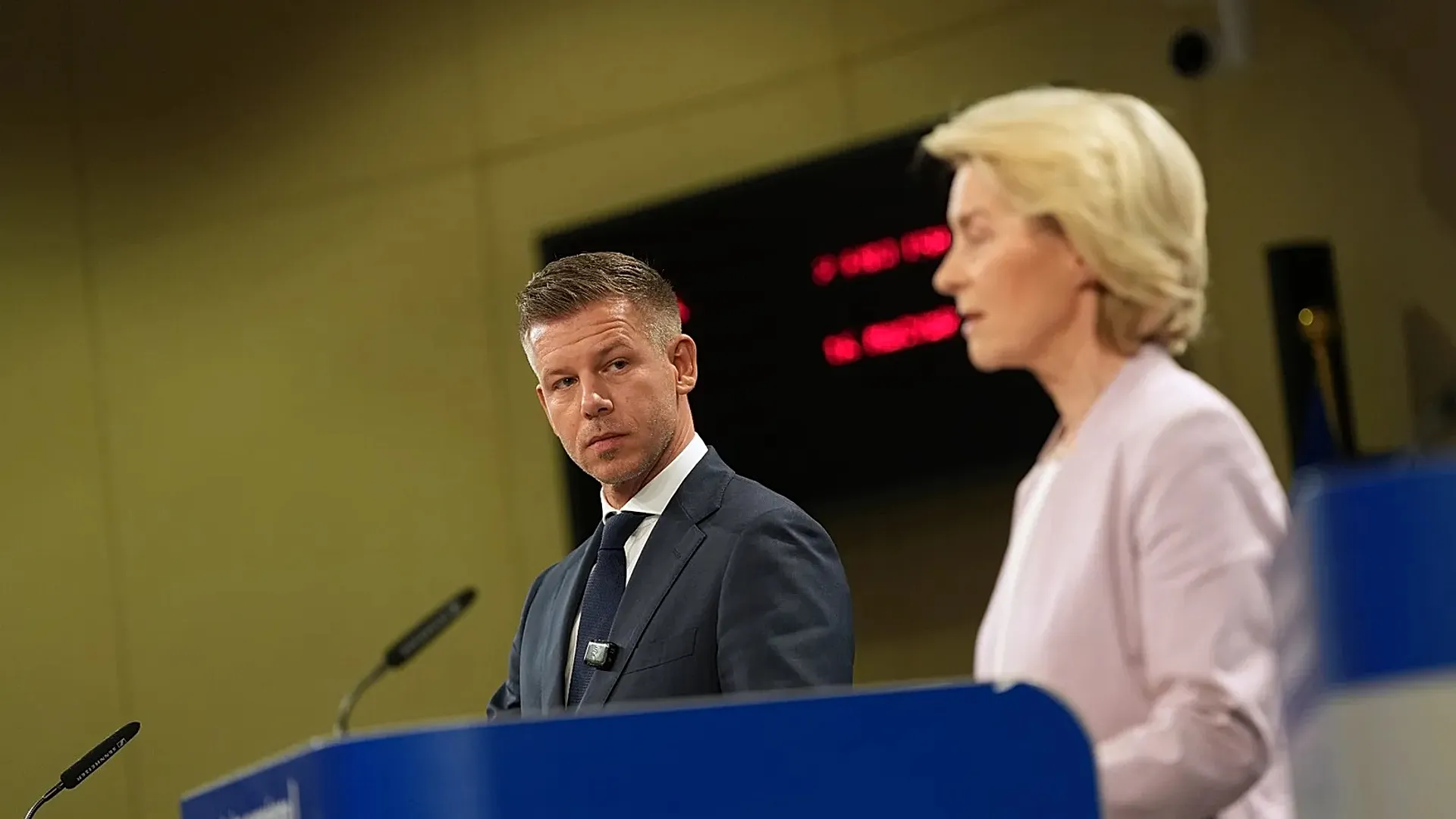
Students may again pay for political delay.
Brussels | July 2026
Hungary’s promised return to the Erasmus student exchange program is facing renewed uncertainty as reforms required by the European Union remain incomplete. Prime Minister Péter Magyar’s government committed to restoring academic freedom and changing the governance of universities placed under politically connected foundations during Viktor Orbán’s administration. Delays could prevent some institutions from rejoining the program in time for the next academic cycle.
Brussels suspended new Erasmus+ and Horizon Europe funding commitments for more than twenty Hungarian universities after identifying serious conflict-of-interest risks. Many of the affected institutions had been transferred from direct state control to public-interest foundations governed by boards containing ministers, political officials and figures linked to the former ruling structure. Several trustees received broad authority and appointments without clear time limits.
The European Commission argued that these arrangements created insufficient safeguards for European money. Concerns included opaque appointments, weak procedures for removing board members, inadequate conflict-of-interest rules and the concentration of institutional power in foundations operating beyond ordinary public oversight. The restrictions were intended to protect EU funds rather than exclude Hungarian students because of their nationality.
Magyar’s government initially moved rapidly to repair relations with Brussels after defeating Orbán in the April election. Hungary agreed to strengthen judicial independence, intensify anti-corruption controls and join the European Public Prosecutor’s Office. Those measures helped unlock billions of euros in previously frozen recovery and cohesion funds.
Restoring Erasmus became one of the most visible promises of the political transition. European Commission President Ursula von der Leyen announced in May that Hungarian students should be able to participate again from the next academic year. That expectation, however, depended on Budapest completing legally enforceable reforms rather than offering political assurances alone.
The required changes involve restructuring the foundations that control the affected universities. Brussels expects transparent selection procedures, fixed terms for trustees, effective dismissal mechanisms and restrictions preventing senior public officials from exercising institutional authority while holding government positions. Independent supervision must also ensure that academic and financial decisions are protected from political influence.
Negotiations have advanced more slowly than students and universities expected. Drafting rules acceptable to both Hungarian institutions and the Commission requires decisions about current board members, foundation assets and the balance between university autonomy and public accountability. Every delay reduces the time available for legal review, EU approval and the preparation of new mobility agreements.
Erasmus does not function through last-minute individual applications alone. Universities must establish partnerships, nominate students, approve courses, organize accommodation and sign funding contracts months before participants travel. Even if political approval arrives later in the year, institutions could miss the administrative window needed for full participation.
The consequences would fall most heavily on students planning studies abroad in 2026 and 2027. Many have organized academic programs, language preparation and personal finances around the expectation that European mobility would be restored. Continued uncertainty makes it difficult to know whether placements will be funded, postponed or replaced by national alternatives.
Hungary created the Pannónia Scholarship Programme after its universities lost access to Erasmus funding. The national initiative supports international study and maintains opportunities for some students, but it does not fully reproduce the scale, institutional network or shared academic framework of Erasmus. Participation in the European program also carries symbolic importance because it connects Hungarian universities directly with thousands of institutions across the continent.
The dispute extends beyond travel scholarships. Horizon Europe restrictions affect research cooperation, scientific networks and access to multinational projects. Universities unable to lead or participate fully in European consortia may lose researchers, international visibility and opportunities to develop long-term partnerships.
Academic leaders face a difficult institutional calculation. Some supported the foundation model because it promised financial flexibility, private investment and greater independence from annual government budgets. Critics argued that it replaced direct state control with permanent boards dominated by political allies, reducing transparency while preserving government influence through another structure.
The new administration must dismantle those safeguards without creating another form of partisan intervention. Replacing Orbán-linked trustees with figures loyal to the current government would not satisfy the principle of university autonomy. Brussels is evaluating whether the system itself has changed, not simply whether different people now occupy the same powerful positions.
The delay also creates a political risk for Magyar. Younger voters helped end Orbán’s sixteen-year rule and viewed restored access to Erasmus as evidence that Hungary was returning to the European mainstream. Failure to deliver quickly could weaken confidence in the government’s ability to transform campaign promises into durable institutional reform.
For the European Union, the case tests the credibility of conditional funding. Releasing restrictions too early could suggest that political alignment matters more than verified safeguards. Maintaining the suspension after genuine reforms, however, could punish students for institutional failures they did not create and undermine the EU’s claim that compliance produces measurable benefits.
Hungary’s broader democratic reconstruction has moved at exceptional speed, including judicial changes, anti-corruption measures and controversial constitutional reforms. That pace has created its own tensions, with critics warning that correcting authoritarian structures should not involve repeating accelerated legislative practices associated with the previous government. Sustainable reform requires transparency even when political urgency is real.
The Erasmus dispute therefore concentrates several of Hungary’s larger challenges into one issue. It involves academic freedom, public money, political appointments, European trust and the expectations of a generation seeking opportunities beyond national borders. A scholarship program has become a practical test of whether institutional change can follow electoral change.
Hungarian students have already lost years of mobility because university governance became entangled with political power. The new government promised that this period was ending, while Brussels signaled that reintegration was possible. Whether that promise becomes reality now depends on reforms being completed before administrative time runs out.
La educación no debe pagar las deudas del poder. / Education should not pay the debts of power.