

 Phoenix 24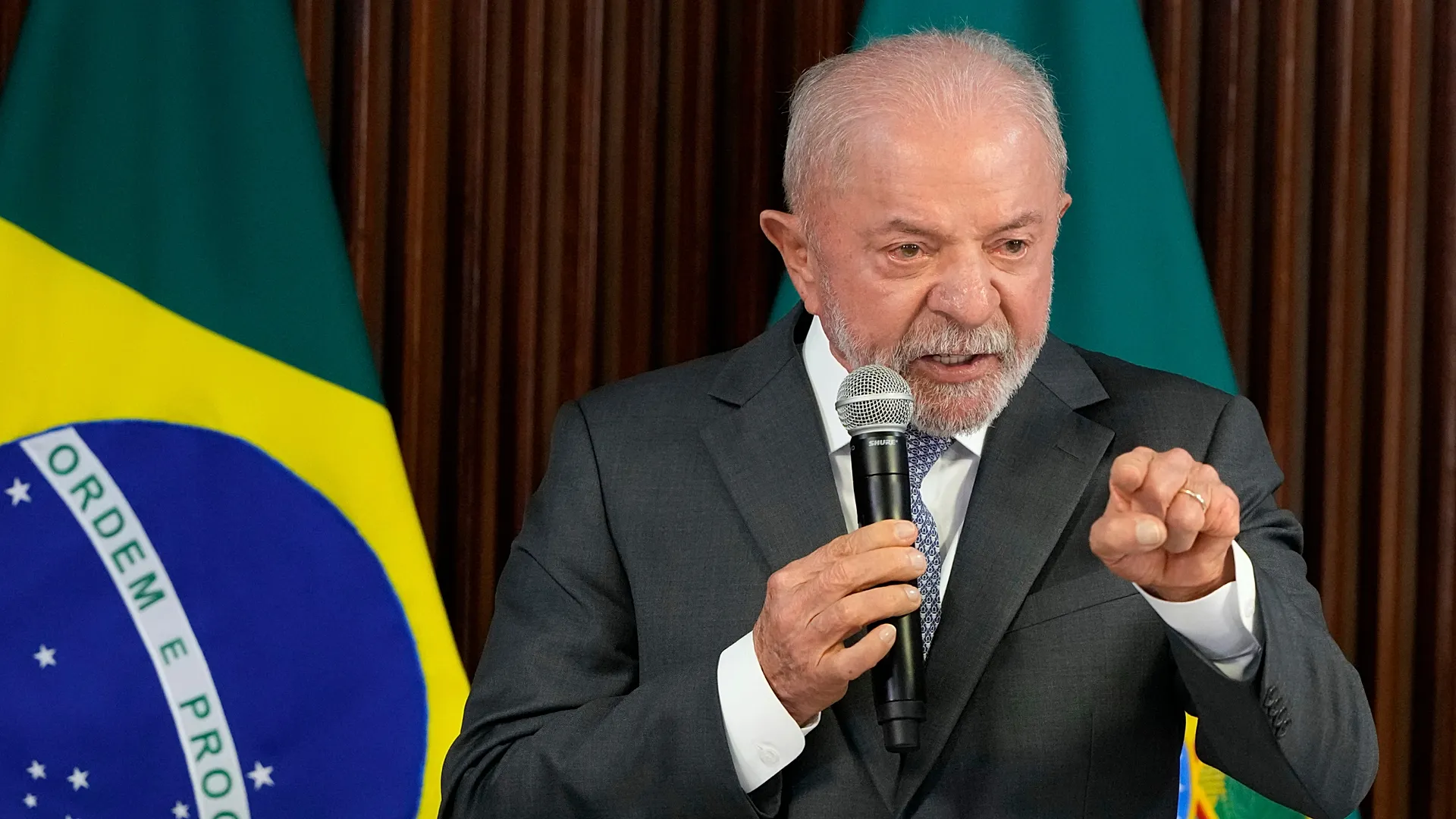
A strategic waterway becomes a test of global power.
São Paulo | July 2026
Brazilian President Luiz Inácio Lula da Silva accused United States President Donald Trump of engaging in “piracy” after Washington announced plans to charge a 20 percent fee on cargo transported through the Strait of Hormuz. Lula argued that the United States cannot create or intensify a security crisis and then demand payment from commercial vessels for managing its consequences. His criticism introduced a powerful diplomatic challenge to a measure capable of affecting energy prices, maritime law and global trade.
Trump presented the charge as reimbursement for the military costs of keeping the strategic passage open. Under the announced policy, the United States would assume the role of security guarantor in the strait while enforcing a renewed blockade against vessels traveling to or from Iranian ports and coastal areas. Other countries would retain access, but cargo passing through the route would be subject to the proposed 20 percent levy.
Lula rejected that justification during a public appearance in São Paulo. He said that demanding money from shipowners in exchange for passage through an international maritime corridor would historically have been described as piracy. The Brazilian leader emphasized that the United States, a country that has long claimed to combat maritime piracy, should not adopt conduct resembling the practice it condemns.
The accusation is political rather than a formal legal ruling. Piracy has a specific meaning under international law and generally involves private acts of violence or detention committed at sea for personal gain. Lula used the term rhetorically to portray the proposed charge as coercive, unilateral and incompatible with the rules expected from a major global power.
His criticism also focused on responsibility for the latest crisis. Lula argued that the Strait of Hormuz had not been closed before the escalation involving Washington and Tehran and that the United States should not charge other nations for repairing instability connected to its own military decisions. From Brazil’s perspective, the dispute is not an isolated Middle Eastern confrontation because its economic consequences extend rapidly to food, fuel and transportation costs across the developing world.
The Strait of Hormuz is one of the most sensitive energy corridors on the planet. Commercial tankers carrying oil and liquefied natural gas from Gulf producers depend on the narrow passage to reach international markets. Any disruption, military confrontation or additional cost imposed on navigation can influence insurance premiums, freight rates and the global price of energy.
A 20 percent charge would represent far more than a conventional port or security fee. Applied to the value of all cargo transported through the strait, it could generate enormous costs for shipping companies, energy producers and importing nations. Those expenses would likely move through supply chains and eventually reach industries, governments and consumers far from the Gulf.
Trump argued that the payment would compensate the United States for protecting navigation in one of the world’s most unstable regions. His administration has described Washington as the new guardian of the Strait of Hormuz and said naval forces would enforce restrictions against Iranian maritime activity. The strategy combines military control with an economic mechanism that seeks to transfer part of the security burden to commercial users.
The proposal raises immediate questions about jurisdiction. The strait connects the Persian Gulf with the Gulf of Oman and includes territorial waters belonging to Iran and Oman, while international navigation rights protect passage through such strategic corridors. A unilateral charge imposed by a third country would probably encounter legal objections from governments, shipping companies and maritime organizations.
It also risks transforming naval protection into a form of economic leverage. Countries dependent on Gulf energy could face a choice between accepting the American terms or challenging the authority of the military force controlling access. Even governments that oppose Iranian actions may hesitate to legitimize a system in which one power determines the price of movement through an international waterway.
Recent attacks against commercial vessels have intensified the security crisis. The United States responded with renewed military action against Iranian strategic positions and announced stronger enforcement around the strait. Tehran, meanwhile, retains geographical proximity and military capabilities that make any attempt at complete external control highly dangerous.
The possibility of miscalculation remains considerable. A confrontation involving a tanker, naval patrol or vessel connected to Iran could expand rapidly beyond the original incident. Maritime insurance would become more expensive, shipping companies might delay journeys and energy markets could react before the physical supply of oil is significantly reduced.
Brazil has a direct interest in preventing that economic chain reaction. Lula warned that the conflict is already contributing to higher domestic prices for fuel and essential foods, including rice and beans. For a government managing inflation and household purchasing power, instability in the Gulf can become a domestic political problem even when Brazil is geographically distant from the military confrontation.
His administration has introduced measures intended to reduce the impact of higher energy prices. Revenue from a tax on crude oil exports has been presented as one instrument for cushioning increases faced by consumers. The broader objective is to prevent international volatility from eroding living standards and damaging Lula’s economic agenda.
The Brazilian president’s intervention also reflects his preference for a multipolar international order. Lula has repeatedly criticized the use of military and economic superiority by powerful countries to impose unilateral decisions on the rest of the world. His response to the Hormuz proposal places Brazil alongside nations that may reject both Iranian disruption and unchecked American control.
That position does not require supporting Tehran. Brazil can condemn attacks on civilian shipping while questioning whether Washington possesses the legal authority to impose a universal commercial charge. The distinction is central because opposition to Iran’s conduct does not automatically create international consent for every American response.
The dispute may also test the diplomatic influence of emerging economies. Nations in Latin America, Africa and Asia often absorb the inflationary consequences of conflicts they did not initiate and cannot control. Lula’s language gives political expression to that frustration by presenting the proposed charge as an extraction of wealth from global commerce under military pressure.
For the United States, the central challenge will be demonstrating that its plan protects freedom of navigation rather than converting security dominance into a revenue system. Transparency about how the fee would be calculated, collected and used would be essential, but it would not resolve the deeper issue of international authorization. Military capacity can enforce a policy temporarily without making that policy universally legitimate.
The Strait of Hormuz has become more than a contested maritime route. It is now a confrontation over who may define global security, who must finance it and whether strategic power permits one nation to charge the world for access to international commerce. Lula’s accusation is deliberately provocative, but the question beneath it is precise: when protection is imposed without consent and accompanied by payment, where does security end and coercion begin?
Resistencia narrativa global. / Global narrative resilience.