

 Phoenix 24
Fame gives way to a quieter family world.
Georgia, July 2026
Millie Bobby Brown has offered a rare glimpse into her life as a mother, describing a home filled with costumes, drawings, puppet shows and everyday moments of imagination. The 22-year-old actress and her husband, Jake Bongiovi, welcomed their daughter through adoption in 2025 and have protected her identity from public exposure. Brown’s account avoids the luxury-centered imagery often associated with celebrity families. Instead, she presents motherhood as an intimate experience shaped by affection, creativity and shared play.
Dressing up has become one of the family’s favorite activities. Their home contains a large collection of costumes that allows Brown and her daughter to transform into princesses, knights, dinosaurs and other imaginary characters. For the actress, these games reconnect her with a childhood fascination that may have anticipated her future as a performer. With her daughter, however, acting is no longer professional work but a language of emotional connection.

Arts and crafts also occupy a central place in the household. Brown displays her daughter’s creations alongside paintings made by herself and Bongiovi, treating each piece as a family memory rather than an object that must satisfy an external standard. Artistic value inside the home comes from emotional meaning, not technical perfection. The result is an environment where creativity is encouraged before it can be evaluated.
Puppet shows, painting and imaginative games allow Brown to create a world very different from the controlled sets where she spent much of her own childhood. She became internationally famous at a young age through Stranger Things and experienced adolescence under intense public attention. Motherhood now places her on the other side of childhood, responsible for protecting another person’s freedom to develop privately. That contrast gives her family choices a significance extending beyond ordinary celebrity lifestyle reporting.
Brown and Bongiovi are raising their daughter on a rural property in Georgia surrounded by dogs and rescued animals. The actress has described the home as lively and sometimes chaotic rather than polished or conventionally glamorous. Daily life includes animal care, family responsibilities and the practical demands of maintaining a farm. This setting gives their daughter space to grow away from the permanent visibility associated with Hollywood.
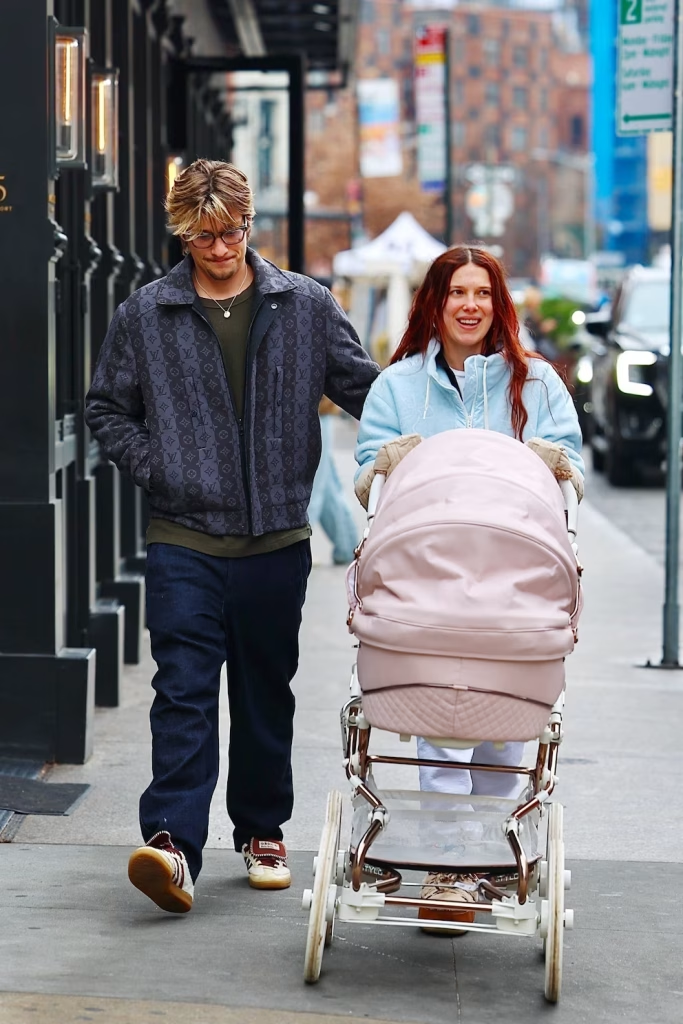
The couple has maintained strict boundaries since announcing the adoption. They have not publicly revealed their daughter’s name or transformed her image into an extension of their commercial identities. That decision is particularly significant because Brown understands how quickly a child can become a public product when fame arrives early. Her approach suggests that protection, rather than exposure, will define the first stage of her daughter’s life.
Motherhood has also influenced Brown’s professional decisions. She now evaluates roles partly through the example they may offer her daughter, especially when portraying women with intelligence, agency and emotional strength. Her continued involvement with Enola Holmes reflects this interest in stories where young women determine their own direction. Brown does not expect her daughter to follow the same career, but she wants her work to contribute to a broader culture of possibility.
This transformation does not mean she has abandoned acting, production or her business ventures. Instead, she is reorganizing ambition around a new emotional center and allowing family responsibility to influence which projects deserve her time. The transition reflects a form of adulthood developed under observation but now exercised through selective withdrawal. Her daughter has become central to her decisions without becoming available to the audience.

Brown has described motherhood as a profound journey that has taught her to appreciate simple experiences with greater intensity. That reflection carries particular weight in a life marked by early success, global recognition and a professional schedule that often converted time into a commercial resource. Play, drawing and caring for animals represent forms of value that cannot be measured through ratings, box-office figures or social media engagement. The home becomes a space where meaning exists without requiring public validation.
Her experience also challenges the assumption that celebrity motherhood must be communicated through highly curated photographs and public milestones. Brown shares selected reflections while keeping the child herself outside the spectacle. This separation allows her to discuss personal transformation without surrendering family privacy. The narrative remains intimate, but the daughter is not converted into content.
At 22, Brown is balancing an established international career with a family life intentionally grounded in creativity, animals and domestic memory. The drawings on the walls and costumes inside the house may appear to be minor details, yet they reveal the principles shaping that environment. Her daughter is being raised not inside a museum of celebrity achievement, but in a home where imagination is allowed to leave visible traces. The most significant part of Brown’s motherhood may be precisely what the public is not permitted to see.
Lo visible y lo oculto, en contexto. / The visible and the hidden, in context.