

 Phoenix 24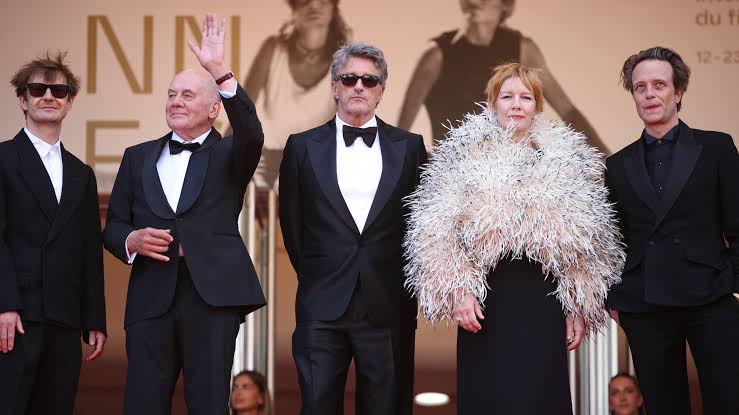
A divided Germany becomes a landscape of ghosts.
WARSAW, POLAND — July 2026.
Paweł Pawlikowski has returned to cinema after an eight-year absence with Fatherland, an austere historical drama that earned him the Best Director award at the 79th Cannes Film Festival. The Polish filmmaker, previously honored in Cannes for Cold War in 2018, once again uses black-and-white photography to examine people trapped between private memory and violent European history. Sandra Hüller and Hanns Zischler lead the film as Erika and Thomas Mann, whose journey through postwar Germany exposes unresolved family wounds and competing political claims over national identity. Euronews Culture selected the film as its standout release of the week and described it as one of the strongest cinematic achievements of 2026.
Set four years after the end of the Second World War, the story follows Nobel Prize-winning novelist Thomas Mann as he returns to the country he left in 1933. He has spent years in exile in the United States, but Germany now wants to reclaim him as a cultural symbol during the earliest phase of the Cold War. Authorities in the American-controlled west and the Soviet-controlled east prepare separate honors for the celebrated writer within only a few days. Each side hopes that Mann’s reputation, moral authority and connection to Goethe can be used to validate its own ideological vision of the country’s future.
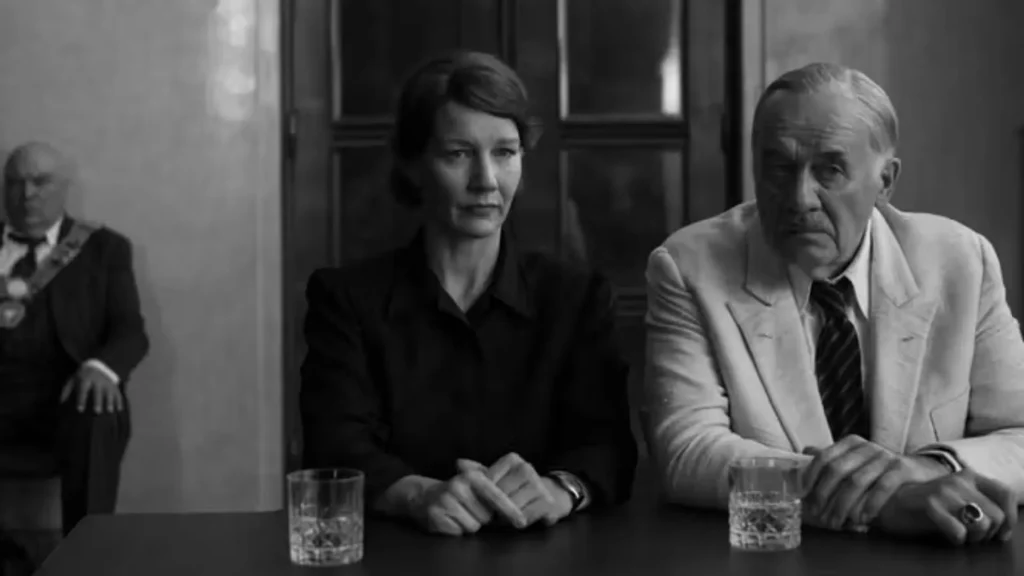
Erika initially resists accompanying her father because Germany represents persecution, betrayal and the destruction of the life her family once knew. Her brother Klaus, played by August Diehl, is equally alienated and remains in France after his anti-Nazi writing was prohibited under the dictatorship. Thomas nevertheless insists on traveling to Weimar despite warnings that the visit could endanger his American citizenship and compromise his public standing. Erika reluctantly becomes his driver, translator, speech editor, personal assistant and emotional protector as they move between two political systems competing for his presence.
The physical journey gradually becomes an examination of whether returning to a birthplace is possible after history has made the idea of home unrecognizable. Father and daughter encounter damaged landscapes, institutional ceremonies and people eager to transform Thomas Mann into a usable monument rather than confront the complexities of his exile. Their conversations reveal affection, resentment and emotional distance, while the absent members of the family exert a powerful influence over every encounter. Pawlikowski presents Germany not as a restored nation, but as a divided territory haunted by war, complicity and the pressure to construct competing versions of collective memory.
Fatherland functions as an informal companion to Ida and Cold War, extending Pawlikowski’s exploration of European lives shaped by the aftermath of the Second World War. The film again uses the academic screen ratio, sharply contrasted monochrome images and carefully controlled compositions that have become central to his visual language. Cinematographer Łukasz Żal creates fixed frames and extended shots in which architecture frequently appears to confine the characters rather than provide shelter. The familiar style does not reduce the film to repetition because its visual severity serves a new inquiry into cultural appropriation, mourning and the unstable meaning of belonging.
Hüller gives the film its emotional center through a performance built on restraint, observation and sudden flashes of accumulated anger. Erika Mann was a writer, actress, political journalist and war correspondent whose life extended far beyond her role as the famous novelist’s daughter. The film recognizes that independence while also showing the exhausting responsibilities she assumes as Thomas’s intermediary, caretaker and intellectual partner. Hüller communicates grief through controlled gestures and silences, allowing the character’s contempt for postwar hypocrisy to emerge without turning her into a simple symbol of resistance.
One of the film’s most painful confrontations occurs when Erika encounters her former husband Gustaf Gründgens, portrayed by Joachim Meyerhoff. His association with the Nazi cultural establishment carries personal and political consequences that cannot be resolved through polite conversation or postwar reinvention. The encounter forces Erika to face a society where many compromised figures have survived, adapted and resumed influential positions. Pawlikowski avoids theatrical accusation and instead lets hesitation, facial expression and suppressed fury expose the moral unease beneath the surface of reconstruction.
The film reaches its emotional peak when Erika and Thomas sit together inside the ruins of a destroyed church while a solitary organist plays Bach. Surrounded by beauty, rubble and spiritual absence, they briefly acknowledge emotions that have remained concealed throughout the journey. The scene depends on stillness rather than explanatory dialogue, transforming the ruined building into a space where personal grief and national devastation become inseparable. Pawlikowski handles the moment with precision, allowing silence to carry the recognition that the homeland they remember no longer exists in any recoverable form.
At only 82 minutes, Fatherland is concise without feeling incomplete, because nearly every image contributes to its atmosphere of displacement and historical uncertainty. The film does not offer an easy resolution to the conflict between exile, identity and political ownership, nor does it suggest that cultural prestige can repair a fractured nation. Its Cannes success confirms Pawlikowski’s continuing ability to transform European history into intimate cinema without sacrificing formal rigor or emotional depth. After opening in Polish theaters, the film is expected to reach other European markets gradually from September and enter year-end conversations about the finest films of 2026.
Phoenix24 — Global news with clarity and perspective.
b