

 Phoenix 24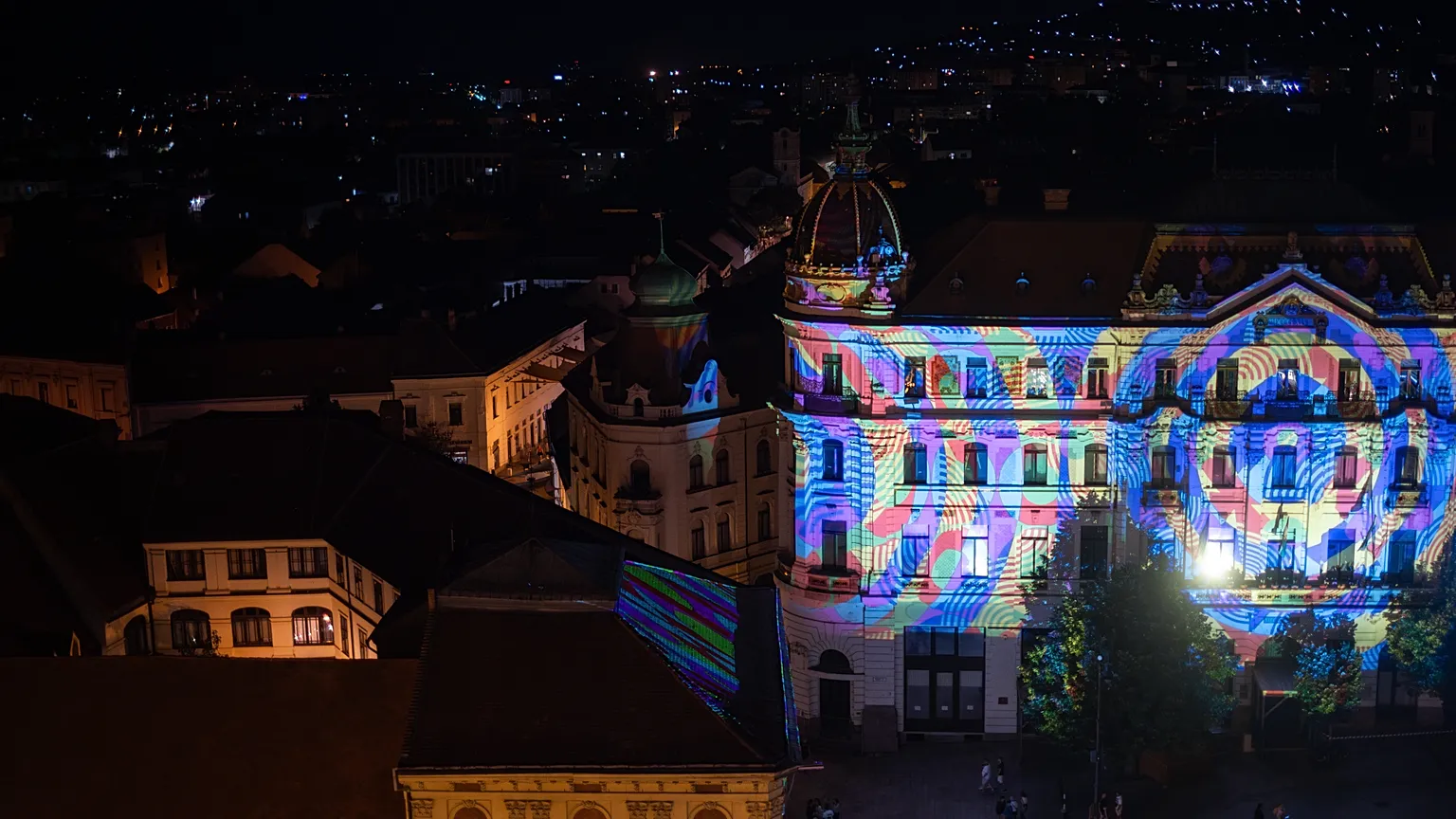
Optical art turns an entire city into light.
PÉCS, HUNGARY — July 2026.
Pécs has transformed its historic buildings, public squares and cultural districts into a vast illuminated gallery for the tenth edition of the Zsolnay Light Festival. Held from July 2 through July 5, the four-night celebration presents monumental projections, interactive installations and immersive audiovisual environments across 35 locations. Hungarian and international artists are using architecture as both a surface and an active component of their compositions. The anniversary edition honors Victor Vasarely, the Pécs-born artist widely recognized as a founding figure of the Op Art movement.
The festival’s central experience is the Route of Light, which guides visitors between 16 locations in the city center and 19 venues surrounding the Zsolnay Cultural Quarter. Organizers recommend approaching the program as a two-night adventure because its scale makes seeing every installation during a single evening difficult. One night can be devoted to the historic center, where projections reshape familiar streets and façades after sunset. A second evening allows visitors to explore the Zsolnay Quarter and the Kodály Centre, which together form the festival’s principal immersive hub.
The celebrations began in Széchenyi Square with LIGHTS ON!, a performance combining fire, LED technology and physical theater by the Brazilian-Peruvian company Equilibra. The production symbolically activated the city before audiences entered the complete Route of Light and began moving through its illuminated spaces. Public buildings, stone surfaces and urban monuments then appeared to expand, move or dissolve under carefully synchronized projections. By integrating performance, sound and architecture, the opening demonstrated that contemporary light art can transform public space without permanently altering its physical structure.
This year’s theme marks the 120th anniversary of Vasarely’s birth and the fiftieth anniversary of the museum dedicated to him in Pécs. His geometric compositions used contrast, repetition and color to create sensations of vibration, depth and movement on otherwise flat surfaces. Those principles naturally connect with projection mapping, digital animation and contemporary installations that manipulate how viewers perceive architectural dimensions. Participating artists are therefore not merely reproducing his visual patterns, but extending his investigation of perception through technologies unavailable during much of his career.
Vasarely’s concept of a colorful city provides the intellectual foundation for the anniversary program and its relationship with urban architecture. He believed art could move beyond museums and become an accessible element of buildings, neighborhoods and everyday collective experience. The festival realizes that ambition by placing visual experimentation across streets and civic spaces rather than limiting it to conventional exhibition rooms. Pécs consequently becomes a temporary demonstration of how color, geometry and optical illusion can modify the emotional character of an entire city.
The international Zsolnay Light Art Video Mapping Competition remains the most anticipated component of the festival. Every evening, the southern façade of Pécs Cathedral becomes a monumental projection surface for finalists representing Italy, China and Bulgaria. Their Vasarely-inspired productions compete for an audience award determined directly by festival visitors. The program also presents notable works from the competition’s previous ten years, connecting the current edition with the visual history developed since the event began.
Italian artist Martina Stella’s Leyre explores the relationship between image and language through a typeface inspired by Vasarely’s plastic alphabet and his works from the 1950s. Bulgaria’s MP-STUDIO presents Modular Entropy, a generative composition in which black-and-white structures gradually acquire color while visual patterns are converted into sound. Chinese collective SKGPLUS combines Vasarely’s optical legacy with ideas from The Three-Body Problem, transforming the cathedral into an unstable space shaped by dimensional distortion and cosmic signals. Each finalist demonstrates how a twentieth-century visual vocabulary can generate substantially different experiences when interpreted through contemporary digital tools.
The festival extends far beyond projection mapping by filling the city with fire jugglers, acrobats, puppeteers, circus performers, musicians and street artists. Families can participate in creative workshops, collaborative activities and interactive installations designed to make light art accessible beyond specialist audiences. DJs and concerts continue into the night, creating an atmosphere in which visual culture, entertainment and urban tourism reinforce one another. An Irish-focused program and a projection honoring Hungarian artist Ferenc Martyn further broaden the artistic references incorporated into the anniversary edition.
Many downtown installations and the cathedral competition are available without charge, while selected experiences within the expanded program require a festival wristband. This combination allows residents and visitors to encounter major works in public space while providing revenue for technically complex installations requiring specialized equipment and personnel. The festival has grown into one of Europe’s prominent urban light-art events and regularly attracts more than 100,000 visitors. Its expansion also strengthens Pécs as a cultural destination capable of connecting architectural heritage, contemporary technology and international artistic exchange.
The tenth Zsolnay Light Festival demonstrates that illumination can function as an artistic medium rather than simply as decoration or spectacle. Through Vasarely’s legacy, the program invites audiences to reconsider movement, space and depth while walking through a real city temporarily transformed by optical invention. Historic architecture remains recognizable, yet projections allow it to appear fluid, unstable and responsive to sound and human presence. For four nights, Pécs becomes the colorful, accessible and continually changing urban artwork that Vasarely imagined.
Phoenix24 — Global news with clarity and perspective.