

 Phoenix 24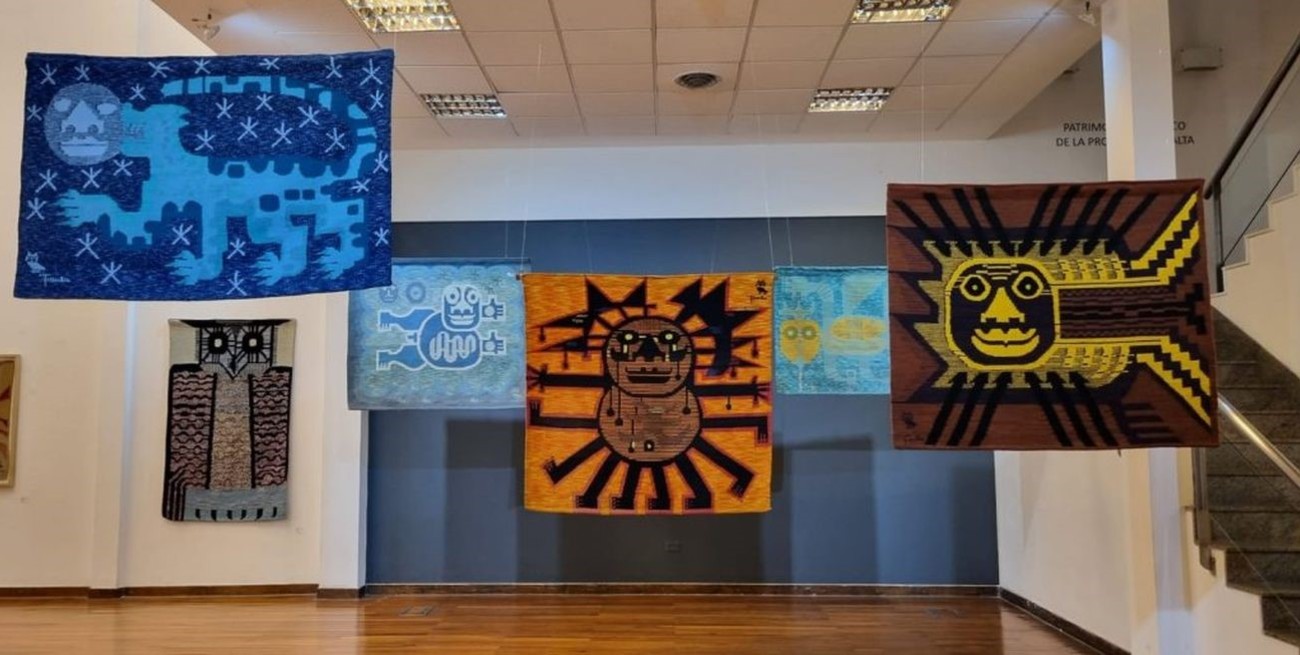
Six rare tapestries reclaim textile art’s autonomy.
BUENOS AIRES, ARGENTINA — July 2026.
Galería Julia Baitalá will open Nocturno on July 4, presenting six tapestries by Carlos Luis “Pajita” García Bes created between 1973 and 1977. The works have never previously been shown together in Buenos Aires, giving the project the character of both a historical recovery and a new curatorial reading. Organized by Solana Franzini, the exhibition coincides with the gallery’s third anniversary and places textile production at the center of Argentina’s modern artistic debate. The pieces will remain on view through August 14 at the gallery’s Villa Crespo headquarters.
The exhibition challenges the traditional classification of tapestry as an applied or decorative art subordinate to painting and sculpture. Its central argument is that García Bes transformed woven material into a complete visual language capable of carrying narrative, symbolism, rhythm and formal invention. Rather than treating wool and loom work as secondary craft, the presentation frames each textile as an autonomous work within Argentine visual culture. This perspective revisits a longstanding division between art and craftsmanship that has often restricted recognition of artists working with fibers and indigenous techniques.
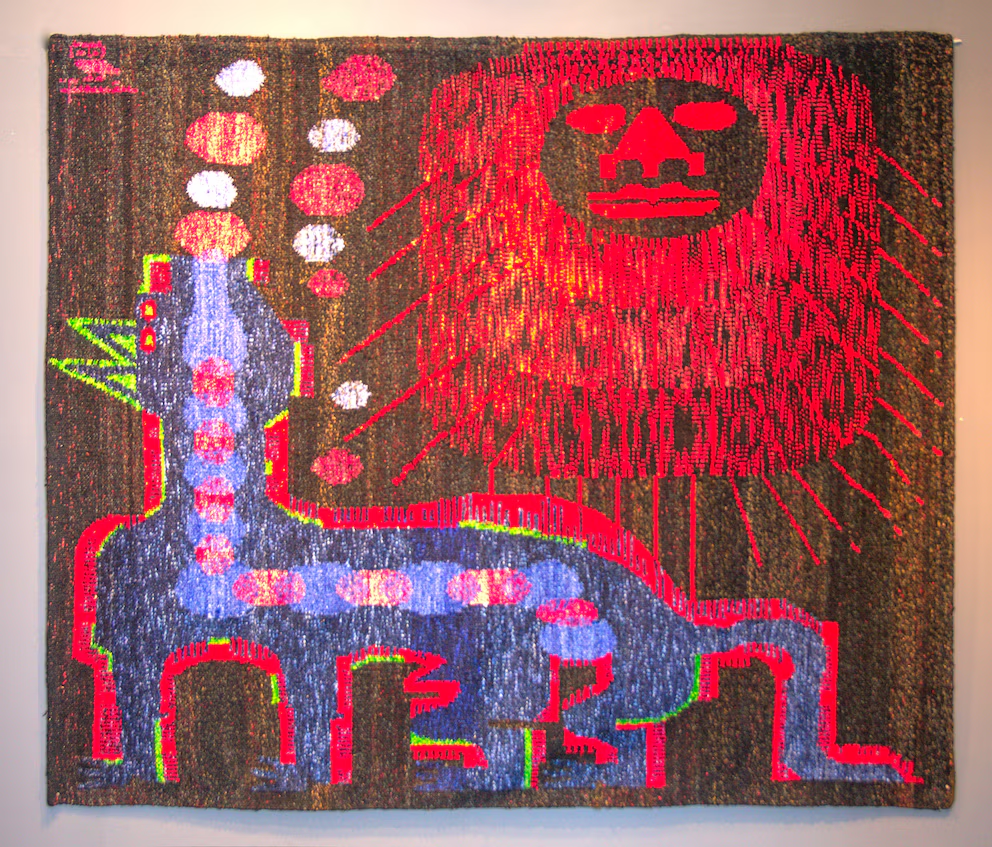
The title Nocturno provides the conceptual structure connecting the six pieces and the imagery unfolding across them. Franzini uses the term broadly to include everything associated with night, from celestial phenomena and astronomical observation to intimate music and literary compositions set after sunset. Within the tapestries, the moon becomes a visual center surrounded by barking dogs, a shadowed owl, dancing women, birds and the gradual appearance of sunlight. The sequence transforms darkness into an active territory filled with movement, memory, ritual and the expectation of dawn.
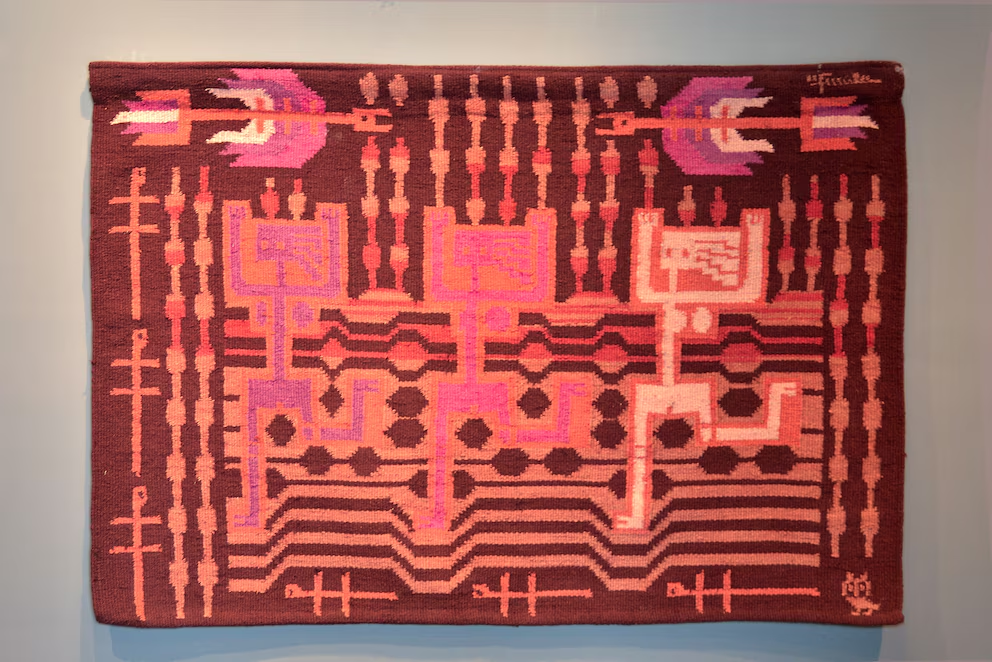
García Bes drew deeply from pre-Columbian traditions, especially the textile culture of Paracas, while developing a language that also engaged with modern abstraction. Flat forms, geometric organization and strong chromatic relationships allowed him to represent stories and legends from ancient American civilizations without simply reproducing archaeological motifs. His compositions connect indigenous memory with twentieth-century experimentation, creating images rooted in the Andes yet formally contemporary. The exhibition therefore presents tradition not as a fixed inheritance, but as cultural material that can be studied, reinterpreted and activated through modern practice.
The nocturnal scenes also carry a regional dimension linked to Salta, the northern Argentine province where the artist was born in 1914. Franzini interprets the works as narratives of territory and indigenous roots that preserve the cultural atmosphere of the region. Landscapes, animals, celestial signs and human figures become part of a visual memory shaped outside the dominant artistic centers of Buenos Aires. In this sense, Nocturno expands the understanding of Argentine modernism by placing provincial knowledge and textile traditions within the country’s national art history.
García Bes trained in Buenos Aires at the National School of Fine Arts and the Ernesto de la Cárcova Higher School of Fine Arts, qualifying as a drawing teacher in 1938 and painting professor in 1942. After returning to Salta that year, he became an artist, researcher, educator and cultural administrator committed to strengthening regional production. He helped found the Tomás Cabrera School of Fine Arts and the Artisan Market, while also serving as a cultural director. Through those roles, he influenced both artistic education and the public recognition of local weaving, craft knowledge and indigenous heritage.
His textile workshop, El Caburé, became the center of a practice that connected formal experimentation with the knowledge of northern Argentine weaving traditions. Critic Rosa Faccaro later identified him as the only artist from Argentina’s interior included in the international movement associated with the Paris center devoted to ancient and modern tapestry. His work also reached exhibition spaces in France and Spain, demonstrating that a regional vocabulary could participate in wider debates about textile modernism. That international circulation strengthens the argument that his tapestries belong within art history rather than solely within the category of traditional craft.
Showing the six works together allows viewers to observe repeated symbols, compositional changes and the development of García Bes’s nocturnal imagery across several years. It also foregrounds material processes requiring patience, physical knowledge and a close relationship between concept, hand and loom. Nocturno opens on Saturday, July 4, at 17:00 at Galería Julia Baitalá, located at Antezana 150 in Villa Crespo, and continues through August 14. By presenting García Bes as a painter who made tapestry a sufficient category in itself, the exhibition restores the medium’s intellectual, historical and aesthetic authority.
Phoenix24 — Global news with clarity and perspective.