

 Phoenix 24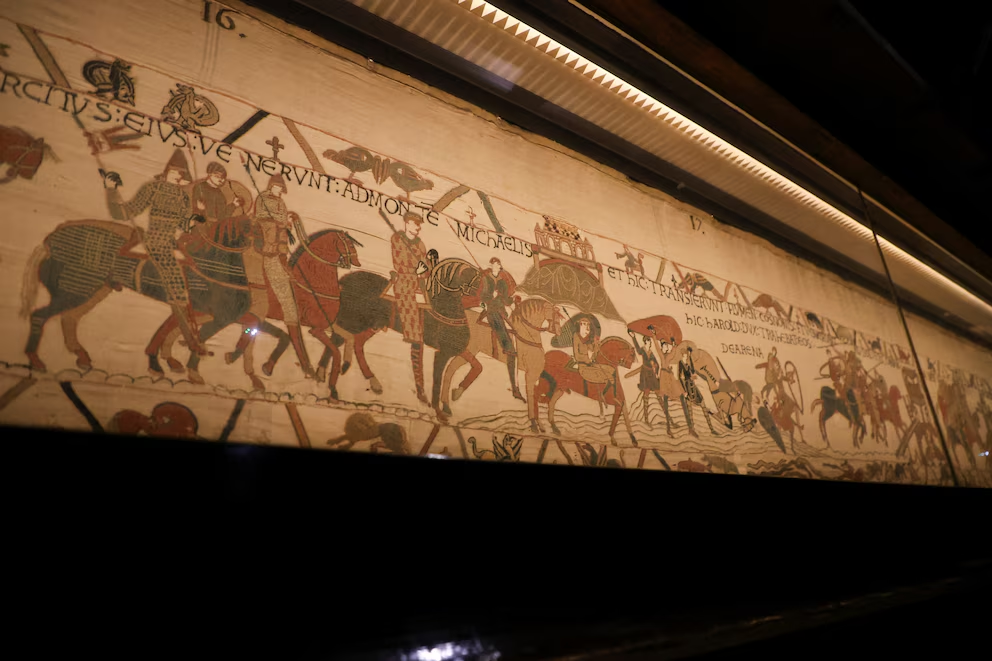
Thousands waited hours for a historic cultural encounter.
LONDON, UNITED KINGDOM — July 2026.
Nearly 80,000 people entered a virtual queue after the British Museum released the first public tickets for its forthcoming exhibition of the Bayeux Tapestry. Some prospective visitors were informed that they could face waits of up to nine hours before reaching the booking page. The extraordinary demand placed intense pressure on the museum’s digital systems and demonstrated the global interest surrounding the medieval masterpiece’s arrival in London. The initial release covered visits scheduled between September and December 2026, rather than the exhibition’s complete duration.
The British Museum recorded more than £2.5 million in ticket revenue during what became its most successful single day of advance sales. Website traffic reached almost five times the museum’s normal daily level as thousands of users attempted to secure preferred dates and times. Many remained connected for hours without knowing whether tickets would still be available when they reached the front of the queue. The unprecedented response placed the exhibition alongside the institution’s most eagerly anticipated cultural events.
The exhibition will open on September 10, 2026, and remain accessible until July 11, 2027. Two additional ticket releases are planned, with one expected in October for visits between January and March and another in January for the final months. This phased system prevents the entire exhibition from selling out during a single booking period and gives unsuccessful users additional opportunities. Museum officials have urged the public not to interpret the initial rush as the only chance to see the historic object.
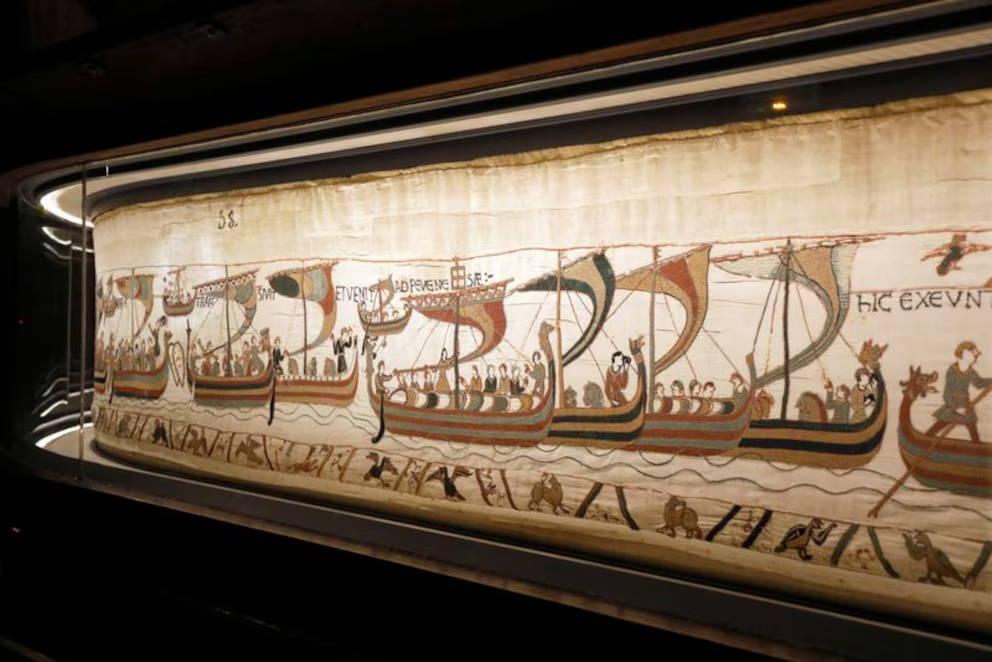
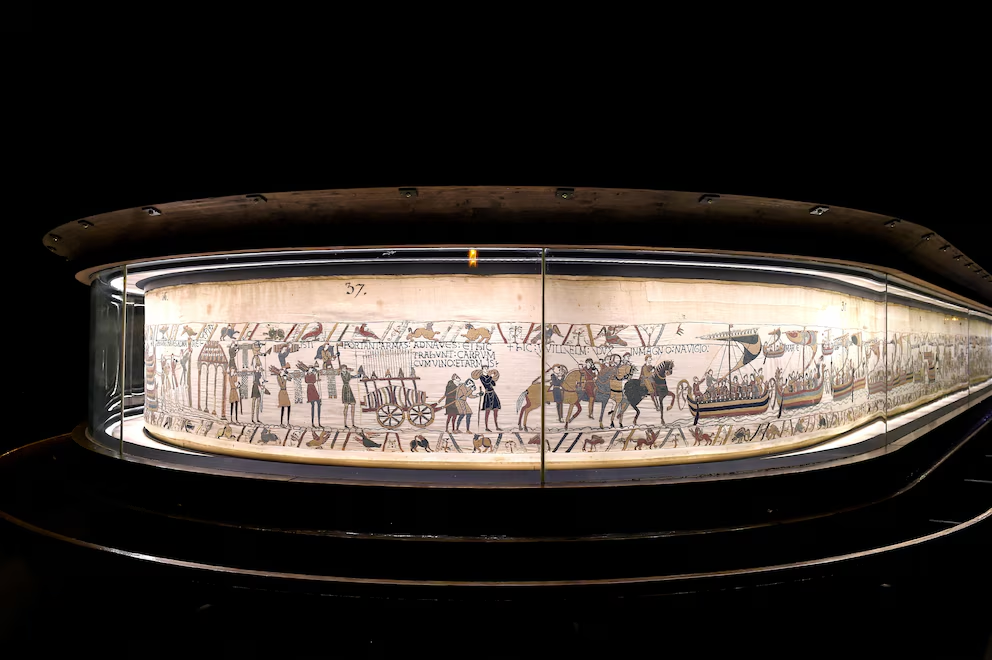
The Bayeux Tapestry is a nearly 70-meter-long embroidered narrative illustrating the events that culminated in the Norman conquest of England. Despite its familiar name, the work is technically an embroidery created with colored wool thread on linen rather than a woven tapestry. Its 58 surviving scenes depict political negotiations, military preparations, ships, horses, soldiers and the Battle of Hastings in 1066. Latin inscriptions guide viewers through a visual account centered on William the Conqueror’s victory over King Harold II.
Its arrival carries exceptional symbolic importance because the artwork has not been displayed in Britain since it was created almost 1,000 years ago. Scholars generally believe that English artisans produced the embroidery, possibly under the direction of patrons connected to William’s half-brother, Bishop Odo of Bayeux. The object later became closely associated with Normandy, where it has been preserved and presented to generations of visitors. Bringing it to London temporarily reconnects the artwork with the country whose conquest forms the central subject of its narrative.
Admission prices range from approximately £27 during off-peak periods to £33 for the most popular times, while selected weekday slots may be offered at a lower rate. Children under the age of 16 will be admitted without charge when accompanied according to the museum’s ticketing requirements. The prices have generated debate because admission to the British Museum’s permanent collection remains free and viewing the tapestry in Normandy has traditionally been less expensive. Museum leaders argue that the structure supports the substantial costs of transportation, conservation, insurance, security and exhibition construction.
The loan resulted from a cultural agreement announced during French President Emmanuel Macron’s state visit to the United Kingdom in 2025. In exchange, British institutions will lend France important objects connected to early medieval European history, including pieces from the Sutton Hoo collection and the Lewis chessmen. Officials from both countries have described the arrangement as an expression of cultural cooperation and shared historical responsibility. The exchange also gives French audiences access to artifacts that illuminate the wider political and artistic world surrounding the Norman conquest.
Transporting the fragile embroidery across the English Channel has generated controversy among conservators and members of the French public. Critics warned that the fabric already contains weaknesses and could be damaged by movement, vibration, humidity changes or handling during installation. Technical studies concluded that the loan could proceed with specially designed climate-controlled containers, shock-absorption systems and carefully rehearsed procedures. The object will also be protected under a British government indemnity arrangement reportedly valued at approximately £800 million.
The British Museum is preparing a specially engineered display that will allow visitors to examine the complete narrative while maintaining strict environmental conditions. Lighting, temperature, humidity and visitor circulation must be carefully controlled because prolonged exposure or physical instability could affect the ancient linen and wool. The exhibition will combine the embroidery with related objects and historical interpretation intended to explain warfare, kingship, religion and daily life during the eleventh century. Its design must balance close public access with the conservation obligations surrounding one of the world’s most vulnerable cultural treasures.
The enormous ticket demand shows that historic artifacts can still generate public excitement comparable to major concerts, sporting events and popular entertainment releases. Visitors are responding not only to the embroidery’s age and artistic quality, but also to the rarity of seeing it on the territory whose transformation it records. For many people, the exhibition represents an encounter with a foundational episode in British and European history that may not be repeated within their lifetime. The nine-hour queues therefore became an unexpected modern prologue to a medieval story that has endured for nearly a millennium.
Phoenix24 — Global news with clarity and perspective.