

 Phoenix 24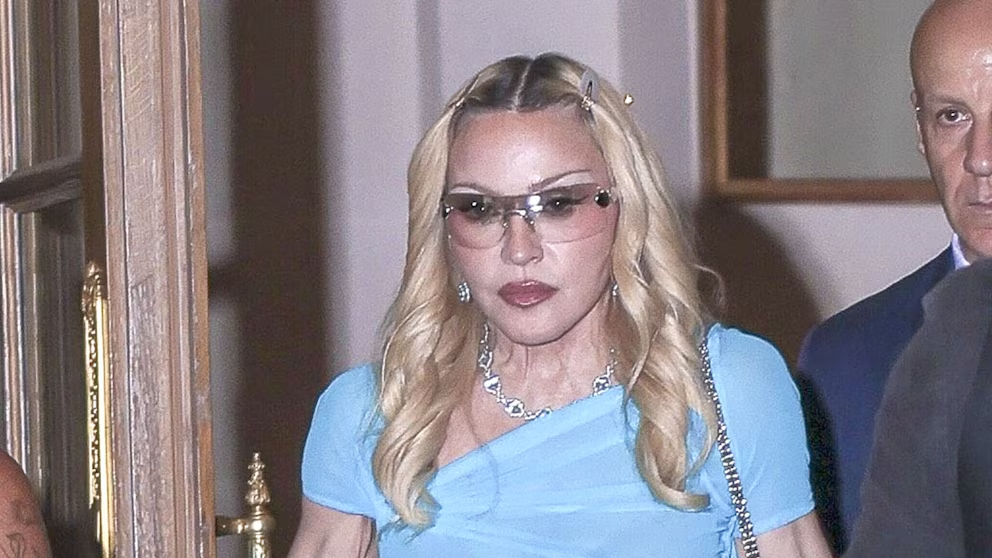
At 67, the pop icon continues challenging fashion’s age expectations.
Paris, June 2026
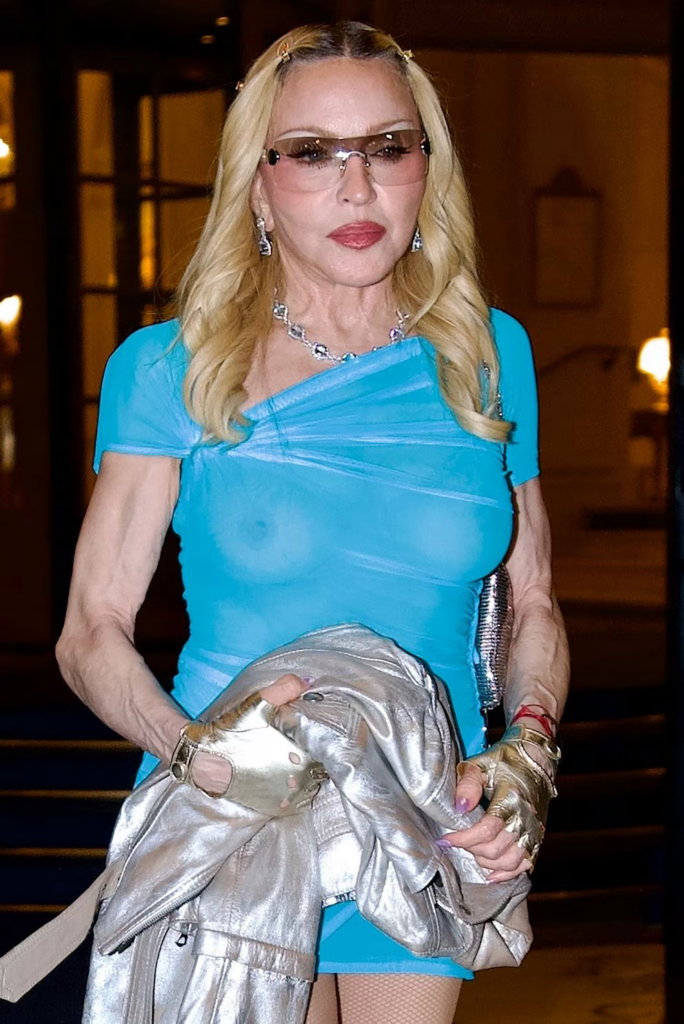
Madonna became one of the most photographed figures of Paris Fashion Week after leaving the Ritz in a sheer cobalt-blue minidress without a bra. The 67-year-old singer completed the striking outfit with nude fishnet tights, metallic boots, dark sunglasses and silver accessories. Surrounded by security personnel and photographers, she turned a private evening departure into another widely circulated fashion moment. The appearance reinforced her longstanding ability to use clothing as performance, provocation and personal declaration.
The asymmetrical garment combined transparent fabric with a short silhouette and a prominent metallic buckle at the waist. A silver-toned jacket added structure to the look, while tall boots extended its futuristic visual language. Madonna wore her blonde hair in soft curls and maintained the controlled expression that has characterized many of her appearances during the Paris events. Images and videos quickly spread through entertainment and fashion media.
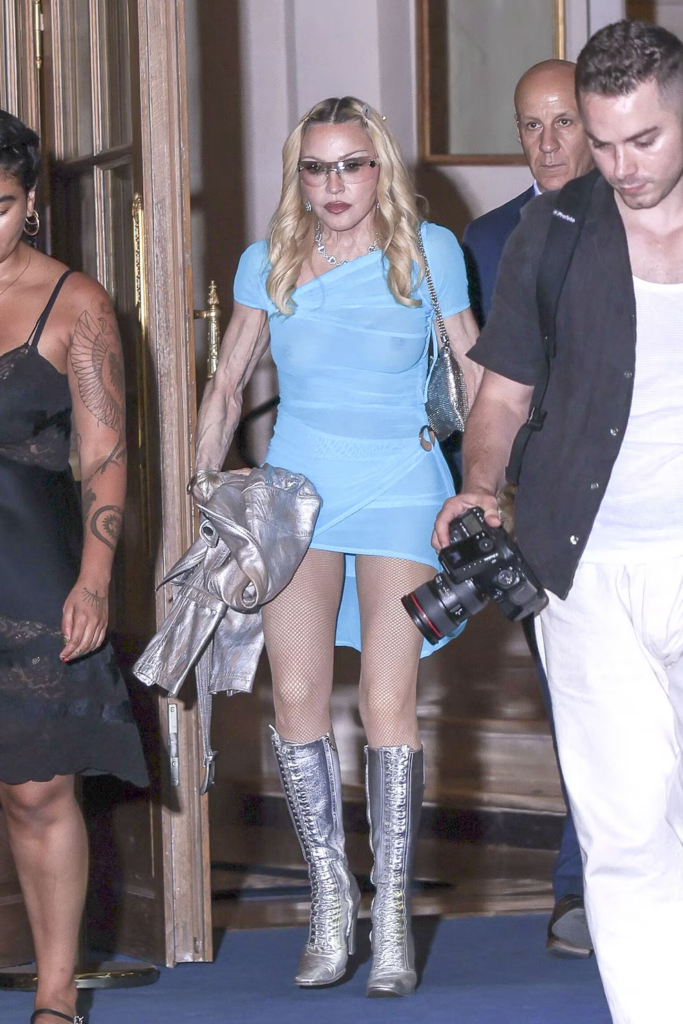
The outfit generated sharply divided reactions online. Supporters praised Madonna for rejecting the expectation that women should become visually conservative as they age. Critics focused on the transparency and length of the dress, often framing their objections around her age rather than the garment itself. That contrast transformed the appearance into a broader debate about who is permitted to dress provocatively in public.
Madonna has confronted similar judgments throughout her career. Since the early 1980s, she has treated fashion as an extension of music, choreography and cultural commentary. Lace, corsetry, visible lingerie, religious symbols and androgynous tailoring have repeatedly become part of her artistic vocabulary. Clothing has rarely functioned as a neutral accessory in her public image.
Her most influential collaborations helped reshape the relationship between pop performance and high fashion. The conical corset created by Jean Paul Gaultier for the Blond Ambition World Tour became one of the most recognizable costumes in modern entertainment. It transformed an undergarment traditionally associated with restriction into a symbol of theatrical control and female authority. The visual impact continued influencing designers and performers decades after the tour ended.
The Paris appearance therefore belongs to a long history rather than representing an isolated attempt to attract attention. Madonna has consistently used the body to question respectability, gender expectations and the commercial boundaries imposed on female artists. Her work has often generated criticism before later being absorbed into mainstream culture. Styles once described as scandalous have subsequently appeared on runways, red carpets and younger performers.
Her presence during Paris Fashion Week extended beyond the blue minidress. Earlier appearances placed her at the Saint Laurent menswear presentation alongside musicians, actors and fashion figures. She was photographed interacting with Charli XCX, ending speculation about possible tension between the two performers. Their public embrace and relaxed conversation became another highly shared moment from the event.
Madonna and Charli XCX also appeared in nightlife-related images connected to the week’s celebrations. Both artists have built careers around club culture, electronic music and the transformation of underground aesthetics into global pop language. Their interaction linked two generations of performers known for combining music with deliberate visual disruption. The encounter was interpreted less as a formal industry appearance than as a meeting of related creative identities.
The attention surrounding Madonna also reflects her ability to remain culturally visible beyond a conventional album or touring cycle. Fashion Week offers a setting where performance does not require a stage. Arriving at a hotel, entering a runway presentation or appearing at a private event can generate a complete visual narrative. Madonna understands that contemporary celebrity operates continuously through photographs, short videos and social-media commentary.
Her age became central to much of the coverage, even though male performers of similar generations are rarely evaluated through the same framework. Women in entertainment often face contradictory demands: they are expected to remain youthful while being criticized for dressing or behaving in ways associated with youth. Madonna’s wardrobe exposes that contradiction because she refuses to present aging as withdrawal from sexuality or experimentation.

That refusal does not require universal approval. Her clothing can be debated as fashion, styling or personal taste without assuming that age should determine what is permissible. The strongest reactions often reveal more about cultural discomfort with older women’s visibility than about the technical qualities of a dress. Madonna has repeatedly positioned herself inside precisely that area of tension.
The moment was particularly notable because she recently reflected on the changing meaning of nudity and provocation. After decades of using exposure as part of her visual language, she suggested that widespread naked dressing had reduced its capacity to surprise. Her interest, she explained, increasingly lies in thought, construction and clothing itself. The sheer Paris outfit illustrated that evolution by combining exposure with deliberate styling rather than presenting nudity as the sole objective.
Transparent fashion has become common on contemporary red carpets and runways. Designers frequently use mesh, lace and translucent materials to challenge the boundary between clothing and the body underneath. Younger stars often receive praise for embracing the trend, while older women encounter stronger moral judgment. Madonna’s appearance exposed that unequal reception with unusual clarity.
The attention also demonstrates how difficult it remains to separate Madonna’s music from her influence on visual culture. Her career helped establish the modern pop star as a figure who controls sound, image, fashion and controversy simultaneously. Later performers inherited an industry in which wardrobe changes, videos and public appearances form part of the artistic product. Many techniques now treated as standard were once associated with her willingness to provoke.
At 67, Madonna is no longer attempting to conform to an image of conventional youth. Her Paris appearances instead suggest continuity with the rebellious instincts that defined her earlier career. The body has changed, the industry has changed and the platforms distributing the images have changed, but the central strategy remains recognizable. She enters a public space knowing that clothing can initiate a cultural argument.
The cobalt-blue dress lasted only for an evening, yet the discussion surrounding it expanded far beyond the hotel entrance. It became a conversation about aging, sexuality, fashion and the unequal standards applied to women in public life. Madonna did not need a concert stage to command attention. A transparent garment, a Paris night and her refusal to disappear were enough.
La libertad también se viste sin pedir permiso. / Freedom also dresses without asking permission.