

 Phoenix 24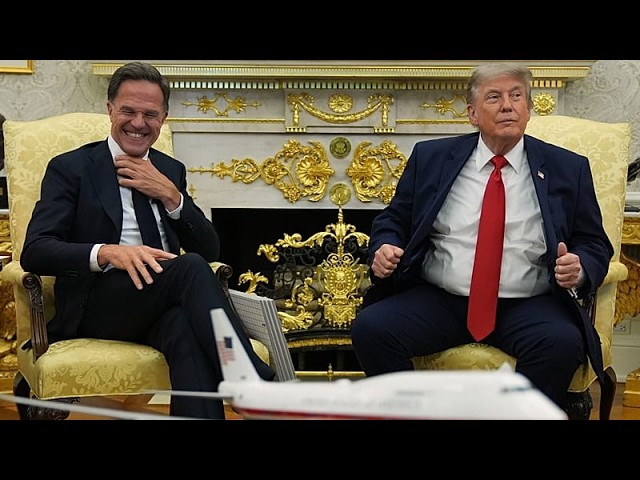
The alliance faces a widening dispute over solidarity and power.
Washington, June 2026
NATO Secretary General Mark Rutte defended European allies during a tense White House meeting in which United States President Donald Trump expressed disappointment over their limited support for Washington’s military campaign against Iran. Rutte argued that Europe had provided extensive logistical assistance and remained strategically indispensable to American operations in the Middle East. Trump rejected the broader characterization, insisting that several prominent allies had failed to deliver the political and military cooperation he expected. The exchange exposed a fundamental disagreement over what solidarity within NATO should require beyond the formal defence of allied territory.
Rutte attempted to demonstrate that European support had been more extensive than public opposition to the war suggested. He pointed to thousands of American military flights supported through European bases and described the continent as an essential platform for projecting United States power toward the Middle East and Africa. According to his argument, logistical access, infrastructure and host-nation assistance represented meaningful participation even when governments declined to join combat operations. Trump remained unconvinced and interrupted the defence of the allies by asserting that they had not supported Washington as claimed.
The president directed particular criticism toward Spain, Italy, Germany, France and the United Kingdom. He argued that those countries had benefited from American security commitments while refusing to stand beside the United States during the confrontation with Iran. Spain received especially harsh treatment because its government restricted cooperation involving military facilities and airspace. Trump portrayed the decision as part of a broader pattern in which European governments demand protection but resist the risks associated with American strategic priorities.
Rutte sought to separate public disagreement from the practical assistance provided through bilateral arrangements. European governments may reject participation in offensive military action while still permitting refueling, transportation, surveillance or other logistical operations from bases hosting American forces. That distinction is central to the dispute because NATO did not collectively authorize the campaign against Iran. Individual allies therefore retained national authority over whether their territory and military resources could support the operation.
Italy quickly challenged Rutte’s presentation after he referred to American flights operating from bases on Italian territory. Rome clarified that it had authorized technical and logistical support but had not approved direct combat missions against Iran. NATO later indicated that the secretary general had been referring to routine movements and support activities conducted under existing bilateral agreements. The controversy illustrated how efforts to reassure Washington can create political difficulties for allied governments seeking to distance themselves from the war.
Trump praised Poland and Turkey as examples of countries that had demonstrated greater loyalty. His emphasis suggested that he evaluates allies not only through defence spending but also through their willingness to support American operations outside NATO’s formal geographic and legal framework. That approach alarms European capitals because it could transform collective defence into a conditional arrangement based on political alignment. The Alliance’s credibility depends on members believing that protection will not be withdrawn because of disagreement over an unrelated military intervention.
Rutte also presented data intended to demonstrate the financial response to Trump’s longstanding pressure on NATO. European countries and Canada have substantially increased defence expenditure, ordered more military equipment and accepted a pathway toward spending five percent of gross domestic product on defence and security by 2035. The secretary general emphasized that many of those investments benefit American manufacturers and workers. He framed the increases as evidence that the allies had responded directly to Trump’s demands for a fairer distribution of responsibility.
The presentation reportedly included visual materials linking the spending increases to Trump’s influence. This reflected Rutte’s familiar diplomatic strategy of recognizing the president’s personal role in securing outcomes valued by Washington. Trump praised Rutte as an effective leader, but the cordial words did not eliminate his criticism of European governments. Personal rapport between the two men may reduce immediate tension without resolving the institutional disagreement affecting the Alliance.
The dispute arrives before the NATO summit scheduled for July 7 and 8 in Ankara. Leaders are expected to discuss defence expenditure, weapons production, Arctic security and the redistribution of military responsibilities between Europe and the United States. Iran now threatens to dominate an agenda originally designed to demonstrate unity. Rutte must prevent the conflict from becoming a test of loyalty that divides members before they address Russia, Ukraine and the future American presence in Europe.
Washington is already reviewing its military posture across the continent. The planned withdrawal of thousands of American troops from Germany has intensified fears that deployments could become instruments of political pressure. European governments have accepted the need to assume greater responsibility, but replacing American intelligence, logistics, air defence and command capabilities cannot be achieved rapidly. A sudden reduction would weaken deterrence while Europe is still expanding its own capacity.
The United States argues that greater European autonomy must be accompanied by a willingness to act when American security interests are challenged. European governments respond that NATO’s collective-defence obligation does not require automatic participation in wars launched without allied consensus. Both positions reflect legitimate strategic concerns, but they produce incompatible expectations. Washington increasingly interprets neutrality as disloyalty, while Europe views automatic alignment as a threat to national sovereignty.
Rutte’s defence of the allies was therefore an attempt to redefine solidarity through practical contribution rather than direct combat. Bases, airspace, logistics and increased military investment all support American power even when political leaders refuse to endorse a specific campaign. Trump’s response indicated that such indirect assistance may no longer satisfy his administration. He expects visible political backing and reciprocal risk-taking from countries protected by the United States.
The White House meeting did not resolve the conflict, but it clarified the issue confronting NATO. The Alliance must determine whether solidarity is limited to obligations established by treaty or extends to military campaigns initiated independently by its most powerful member. Rutte can present figures, logistical evidence and higher spending commitments, yet those measures cannot substitute for agreement on the meaning of loyalty. Ankara will test whether NATO remains a consensus-based alliance or is becoming a more transactional system governed by conditional protection.
Phoenix24: claridad en la zona gris. / Phoenix24: clarity in the grey zone.