

 Phoenix 24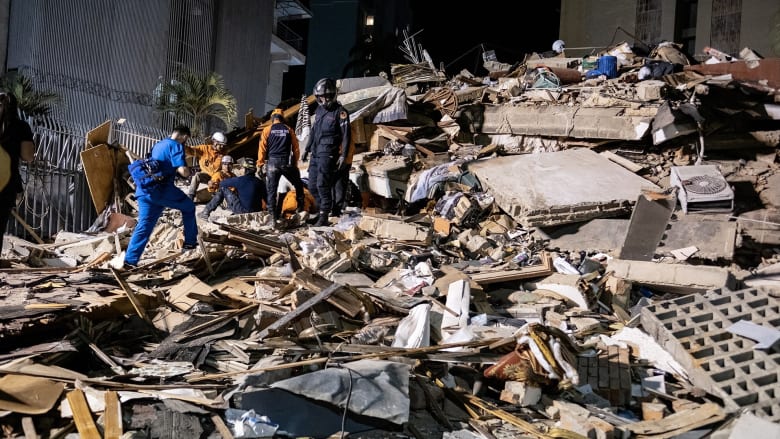
Two shocks within one minute turned cities into rescue zones.
Caracas, June 2026
Venezuela declared a nationwide state of emergency after two powerful earthquakes struck the country on Wednesday evening, killing at least 164 people and injuring more than 1,000. The magnitude 7.2 and 7.5 tremors occurred approximately one minute apart, causing buildings to collapse, damaging essential infrastructure and forcing thousands of residents into the streets. Authorities warned that the casualty figures remained preliminary because rescue teams were still searching through rubble in several affected states. The seismic sequence ranks among the strongest recorded in Venezuela in more than a century.
The first earthquake originated west of Morón, on the Caribbean coast, about 168 kilometers from Caracas, at a depth of approximately 22 kilometers. A second and stronger tremor followed almost immediately, with its epicenter located southwest of the same coastal town and at a shallower depth of around 10 kilometers. The proximity in time and location intensified the damage because structures weakened by the first movement were struck again before residents and emergency services could respond. Aftershocks continued through the night, increasing the danger around partially collapsed buildings.
Acting President Delcy Rodríguez described the destruction as severe and called for national unity as emergency measures were activated. She ordered medical personnel throughout the country to report to hospitals and urged residents to avoid damaged structures. Classes were suspended for several days, while selected schools were converted into temporary shelters and donation centers. The government also mobilized military and civilian rescue units toward the areas reporting the greatest destruction.
Caracas experienced widespread panic as buildings moved violently and sections of walls and façades fell into streets. Residents evacuated apartment towers, offices and commercial establishments, remaining outdoors for hours because they feared further collapses. Dust clouds rose above several busy neighborhoods where restaurants, homes and businesses had been damaged. In some areas, electricity and mobile telephone service were interrupted, complicating communication between families and rescue organizations.
The earthquakes also damaged Simón Bolívar International Airport, forcing authorities to close the country’s principal aviation hub. The suspension disrupted passenger traffic and created an additional obstacle for the arrival of international rescue teams and emergency supplies. Roads were blocked by debris, fallen electrical poles and damaged structures, while public transportation services were suspended pending technical inspections. Restoring strategic transport corridors became one of the government’s immediate priorities.
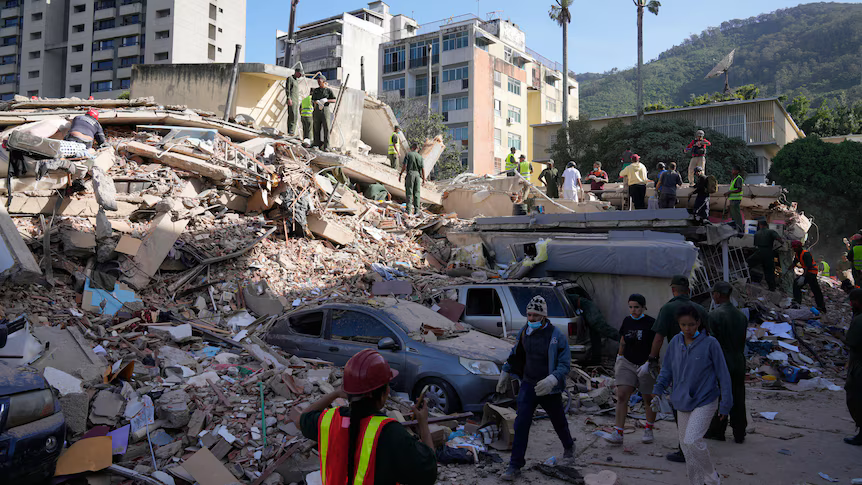
The coastal state of Falcón reported dozens of hospitalizations and people trapped under collapsed buildings several hours after the earthquakes. Other affected regions included Carabobo, Aragua, Miranda and La Guaira, where the extent of the destruction remained difficult to determine. Local emergency units faced simultaneous demands for medical assistance, structural evaluations and rescue equipment. The scale of the emergency quickly exceeded the resources available in some municipalities.
The United States Geological Survey issued its highest-level alert for potential fatalities and economic losses. Its initial statistical model indicated a significant possibility that the final death toll could reach between 10,000 and 100,000 people, although such estimates are projections rather than confirmed casualty counts. They are calculated from earthquake intensity, population exposure, construction vulnerability and historical data. The extraordinary range reflects the uncertainty surrounding conditions in densely populated areas that had not yet reported complete information.
More than 2.3 million people may have been exposed to severe shaking, according to preliminary scientific assessments. The tremors were felt across a vast region and led to evacuations in locations as distant as the Brazilian Amazon, approximately 1,700 kilometers from Caracas. The broad reach of the seismic waves demonstrated the exceptional force of the event. Venezuela had not experienced earthquakes of comparable magnitude since the beginning of the twentieth century.
Among the confirmed victims was Alazne Solabarrieta Lecea, a 65-year-old woman born in Caracas and of Basque ancestry. She had initially been listed among those missing before her death was confirmed. Her identification gave the disaster an international dimension as foreign governments began working to locate citizens who might have been travelling or residing in affected areas. Diplomatic missions were receiving requests from relatives seeking information.
Hospitals entered the emergency under intense pressure as injured residents arrived with fractures, cuts, burns and trauma caused by falling debris. Some medical centers had to treat patients outside because of structural concerns or internal damage. The mobilization of additional physicians and nurses was intended to expand capacity, but shortages of equipment, electricity and transportation remained serious obstacles. The health response will also need to address psychological trauma among survivors who lost relatives, homes or livelihoods.
Rescue teams worked through unstable structures while searching for people who remained trapped. Heavy machinery could not be used indiscriminately because movement of large concrete sections might endanger survivors beneath the rubble. Specialized personnel, trained dogs and acoustic detection equipment were needed to identify signs of life. The first 72 hours are generally considered decisive in earthquake rescue operations, making rapid international assistance particularly important.
The government’s emergency declaration allows authorities to redirect resources, suspend ordinary administrative procedures and coordinate national institutions under exceptional rules. It also creates the legal framework for requesting and receiving foreign assistance. International organizations and several governments began preparing rescue specialists, medical teams and humanitarian supplies. Their effectiveness will depend on access to airports, ports, roads and reliable information from affected communities.
Beyond the immediate casualty figures, Venezuela faces the possibility of a prolonged humanitarian emergency. Thousands of people may be unable to return to buildings until engineers determine whether they remain structurally safe. Damage to water, electricity, communications and transportation could leave neighborhoods without essential services for extended periods. Temporary shelters will require food, sanitation, medical care and protection for children, older adults and people with disabilities.
The two earthquakes struck a country already confronting economic fragility and deteriorated public infrastructure. Those conditions may increase the consequences of the disaster because many buildings were constructed without modern seismic protections or have received limited maintenance. The national response will therefore be tested not only by the number of collapsed structures but also by the capacity to sustain recovery after rescue operations end. Reconstruction could require years of investment and international cooperation.
For now, official attention remains focused on locating survivors and preventing additional deaths. The confirmed toll has already risen rapidly, while scientific estimates warn that the true scale may be far greater. Venezuela’s state of emergency recognizes that the crisis extends across regions and critical systems rather than a single epicentral zone. The country is confronting a national catastrophe whose final human cost remains unknown.
Hechos que no se doblan. / Facts that do not bend.