

 Phoenix 24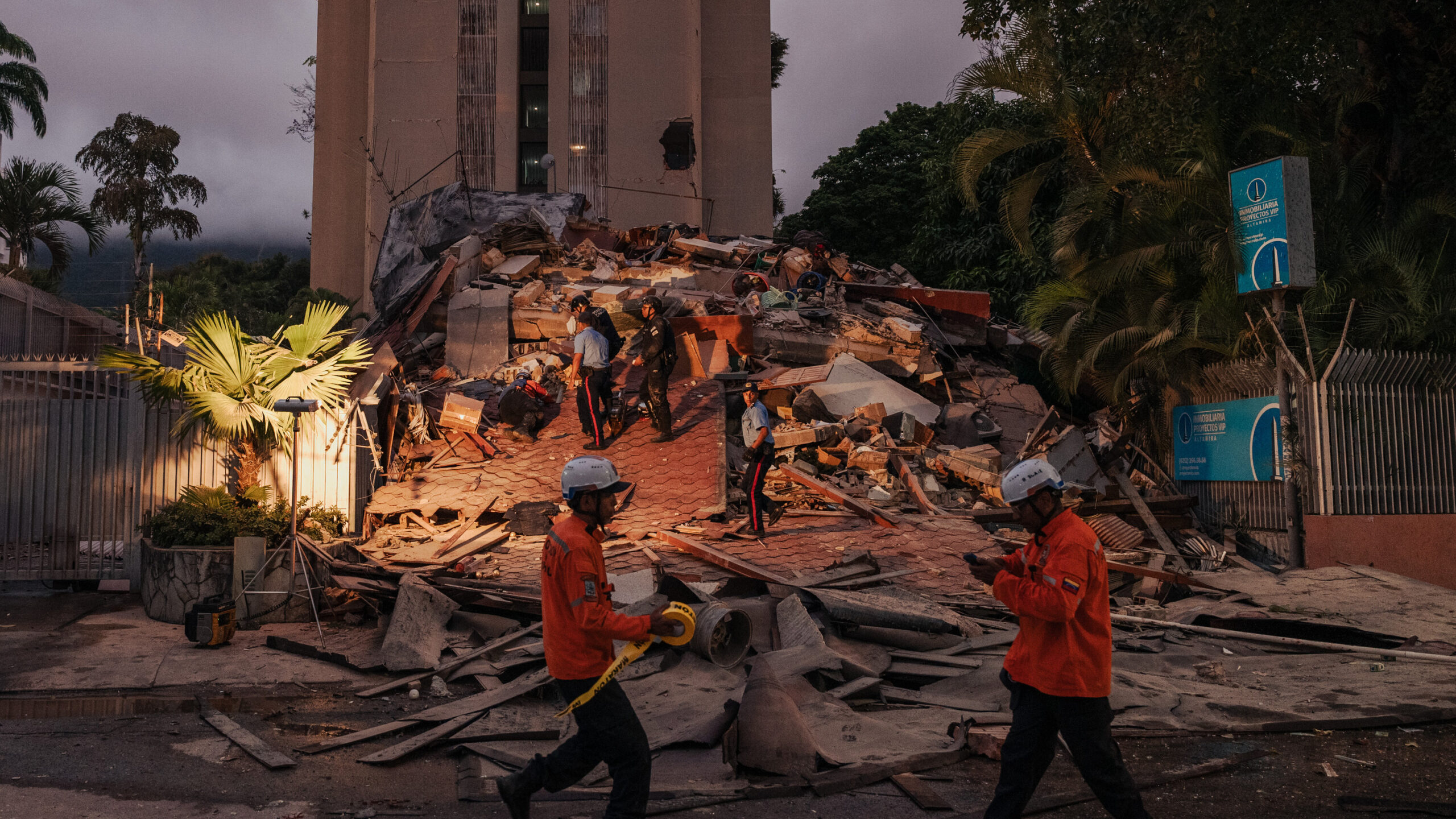
A national emergency now threatens to deepen an existing humanitarian crisis.
Caracas, June 2026
The United Nations has called for an urgent international mobilization after two powerful earthquakes devastated northern Venezuela, killing at least 164 people and injuring 971. The magnitude 7.2 and 7.5 tremors struck within minutes of each other on June 24, collapsing buildings, damaging essential infrastructure and trapping residents beneath rubble. Authorities fear the death toll will continue rising as rescue teams enter areas that remain difficult to access. The disaster has overwhelmed local capacities in a country where nearly eight million people already required humanitarian assistance.
Tom Fletcher, the United Nations humanitarian chief, said the organization was fully mobilized to support the government-led emergency response. He warned that the coming days would require a massive collective effort to rescue survivors, deliver medical assistance and provide shelter to displaced communities. Humanitarian agencies are assessing immediate needs while coordinating with national authorities and international partners. Sustained support will be necessary because the consequences will extend far beyond the initial search-and-rescue period.
The earthquakes struck west of Caracas and caused severe destruction across several northern states, including La Guaira, Miranda, Aragua, Carabobo and Falcón. La Guaira, a densely populated coastal region north of the capital, emerged as one of the most heavily damaged areas. United Nations assessments indicated that more than 100 buildings had collapsed there, exceeding the response capacity of local emergency services. Rescue teams continued searching through unstable structures while repeated aftershocks threatened both survivors and responders.
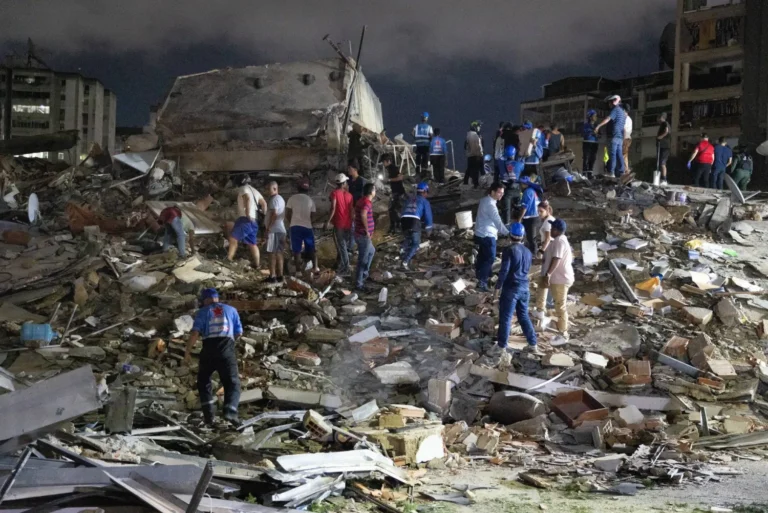
Caracas also suffered extensive damage, particularly in areas such as Chacao, Altamira, Baruta and Los Palos Grandes. Residential buildings and homes collapsed, leaving families uncertain about the fate of relatives and neighbors. Thousands of residents remained outdoors because they feared returning to structures that might have been weakened. Dust, debris and interrupted electricity transformed several neighborhoods into emergency zones requiring immediate engineering inspections.
Acting President Delcy Rodríguez declared a state of emergency and ordered the deployment of additional military and civilian rescue personnel. She urged the population to remain calm, avoid damaged buildings and follow official safety instructions as aftershocks continued. The government transferred response teams from less affected regions toward La Guaira and the capital. Authorities also appealed to doctors, nurses and other health professionals to support overwhelmed hospitals.
Damage to transportation infrastructure complicated the emergency operation. Simón Bolívar International Airport suspended activity after sections of the facility were affected, while metro and railway services were halted as engineers examined tracks, stations and electrical systems. Road damage and debris slowed the movement of ambulances and heavy rescue equipment. Restoring transportation corridors became essential for delivering food, medicine, shelters and international assistance.
The United Nations also urged Venezuelan authorities to remove restrictions on social networks, news platforms and other digital services. Access to reliable information can become a matter of life and death after a major earthquake because survivors use messaging platforms to report locations, seek relatives and request emergency help. Restrictions could obstruct rescue coordination, increase misinformation and isolate communities already affected by disrupted telecommunications. International experts stressed that human rights must guide every aspect of the national and international response.
The disaster struck a country already weakened by years of economic instability, institutional deterioration and large-scale migration. Hospitals, water systems and electricity networks entered the emergency with limited resources and uneven capacity. Many households lacked savings, secure housing or access to basic services even before the earthquakes. The destruction therefore risks converting an immediate natural disaster into a prolonged humanitarian crisis.
International assistance began to mobilize within hours. The United States announced plans to provide search-and-rescue personnel, medical supplies and logistical support in coordination with Venezuelan authorities. European governments activated civil protection mechanisms, while Spain, Italy, France, the Czech Republic and Switzerland offered specialized teams and equipment. Brazil, Colombia, Mexico, China, Turkey and other countries also expressed their readiness to assist.
The European Union activated its Civil Protection Mechanism after receiving a formal request from Caracas. This system allows participating countries to coordinate rescue teams, medical personnel, emergency shelters and specialized equipment through a common operational structure. Switzerland prepared a team including dozens of rescuers, trained dogs and tonnes of technical material for locating people trapped under debris. Such capabilities are especially important during the first days, when every hour can determine whether buried survivors are found alive.
The United States also described its response as a government-wide operation involving diplomatic, humanitarian and defence institutions. Search teams, medical supplies and transportation resources were expected to form part of the deployment. The cooperation reflects a notable change in relations between Washington and Caracas after years of confrontation. During the emergency, political differences have temporarily given way to the immediate priority of saving lives.
Humanitarian organizations warned that emergency relief must reach communities impartially and without political interference. Food, clean water, medicine and temporary shelter will be essential for people who lost their homes or cannot safely return to them. Particular attention will be required for children, older adults, people with disabilities and patients dependent on continuous medical treatment. Damaged sanitation systems could create additional health risks if services are not restored quickly.
The earthquake sequence was especially destructive because the second major tremor struck before structures and residents could recover from the first. Buildings weakened by the initial movement were exposed almost immediately to another powerful shock. Dozens of aftershocks then continued destabilizing damaged areas and complicating rescue operations. Scientists described the event as one of Venezuela’s most severe seismic disasters in more than a century.
The full scale of destruction will take time to establish. Communications remain unstable in several locations, and some communities have not yet delivered complete casualty or infrastructure reports. The confirmed toll may therefore represent only an early measure of the human impact. Emergency teams face the simultaneous tasks of rescuing survivors, identifying victims and preventing additional deaths from damaged buildings or interrupted medical care.
Venezuela now requires more than expressions of solidarity. It needs coordinated international action capable of reinforcing local rescue capacity, maintaining humanitarian access and supporting recovery after the immediate emergency ends. The earthquakes have exposed both physical destruction and the deeper vulnerability created by years of unresolved crisis. The global response will be judged by how quickly assistance reaches the people still waiting beneath the rubble and those who must rebuild after it is cleared.
Phoenix24: periodismo sin fronteras. / Phoenix24: journalism without borders.