

 Phoenix 24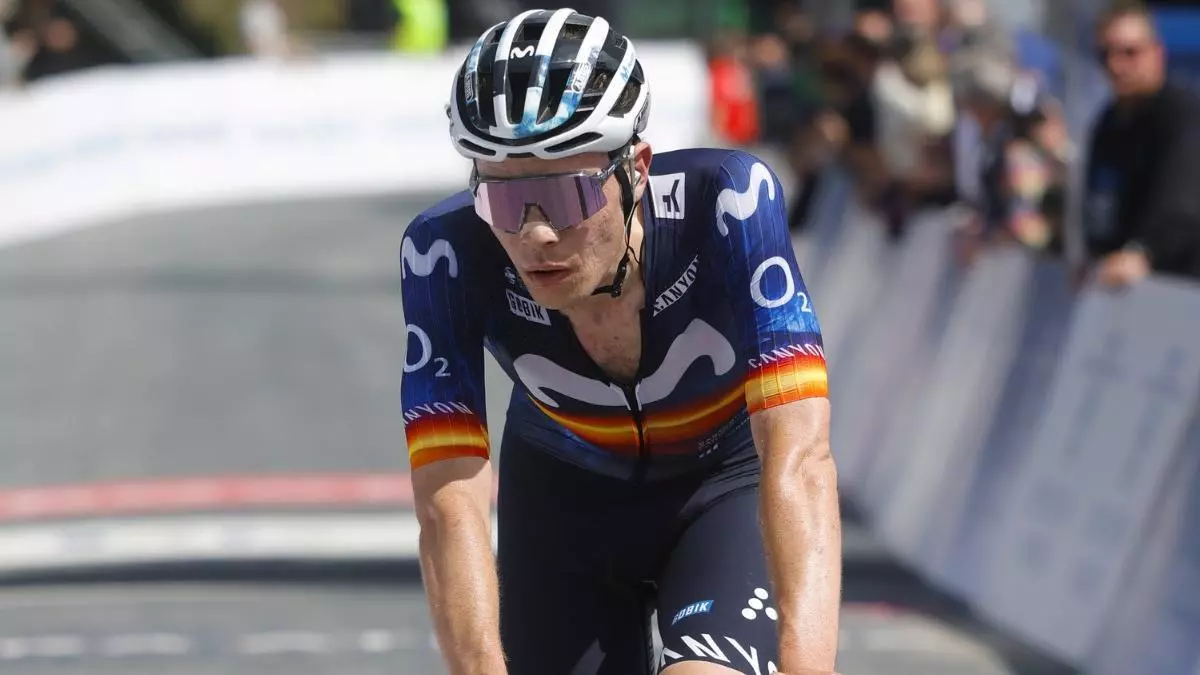
A promising campaign loses crucial strength before its hardest stages.
La Plagne, June 2026
Movistar Team suffered a significant setback after illness forced Iván Romeo and Jefferson Cepeda to withdraw from the Tour Auvergne-Rhône-Alpes before the fifth stage. A flu-like condition affecting members of the Spanish squad prevented both riders from continuing in the French race, reducing the team to only four cyclists for the decisive mountain stages. The withdrawals weakened Movistar’s capacity to support Belgian leader Cian Uijtdebroeks, who remained within reach of the leading positions in the general classification. The situation transformed a promising performance into a test of endurance and tactical adaptation.
Romeo’s absence represents the most visible blow because the 22-year-old Spaniard has become one of Movistar’s principal emerging figures. His strength on rolling terrain, time-trial ability and willingness to work for the team made him an important element in the structure assembled around Uijtdebroeks. Although he was not competing as the principal leader, his ability to maintain pace, control breakaways and protect teammates could have been particularly valuable during the mountainous second half of the race. Losing that versatility leaves fewer tactical options available to the team’s directors.
Cepeda’s withdrawal creates an equally important problem in the high mountains. The Ecuadorian is recognized for his climbing abilities and was expected to assist Uijtdebroeks when the race reached its most demanding ascents. His absence means Movistar has lost one of the riders best suited to remain near its leader when the peloton begins to fragment. The combined loss of Romeo and Cepeda therefore affects both the transitional stages and the decisive climbing battles.
The team had already been reduced before the announcement because Colombian rider Diego Pescador did not start the team time trial. Movistar must now complete the remaining stages with Uijtdebroeks, Pablo Castrillo, Raúl García Pierna and Michel Hessmann. Four riders can still compete effectively, but they cannot provide the same degree of protection, control and strategic coverage as a complete lineup. Every remaining cyclist will be required to assume additional responsibilities.
The setback arrived after several encouraging performances during the opening stages. García Pierna recorded fourth and fifth places, demonstrating consistency and helping maintain the team’s visibility near the front of the race. Movistar also finished seventh in the team time trial, a result that preserved Uijtdebroeks’s prospects in the general classification. Those performances suggested the squad had arrived with the collective strength required to challenge in several areas.
Illness has now altered that competitive picture. Stage races demand recovery, nutrition and physical resistance across consecutive days, leaving little room for respiratory or viral symptoms. A rider may possess sufficient strength to compete in a single event but become unable to perform safely when fatigue accumulates. Teams must also consider the possibility of transmission within hotels, buses and other shared environments.
Removing affected riders can therefore protect both their health and the rest of the squad. Continuing under significant illness could prolong recovery, reduce immune resistance and expose athletes to additional complications. Professional teams increasingly monitor symptoms carefully because the physical stress of elite cycling can magnify conditions that would otherwise appear manageable. The decision to withdraw Romeo and Cepeda reflects the priority given to medical caution over short-term competitive objectives.
For Uijtdebroeks, the reduced lineup will require a more conservative approach. Movistar may no longer possess enough riders to control breakaways throughout an entire stage or respond to every attack from rival teams. The Belgian will need to position himself carefully, rely more heavily on his own judgment and use the work of other squads when their interests align. Energy management will become essential as the race enters terrain where isolated leaders can lose substantial time.
Castrillo and Hessmann are likely to assume greater support duties, while García Pierna may have to balance his own opportunities with the need to protect the general classification leader. Such changes can eliminate the possibility of pursuing stage victories independently. A reduced team must concentrate its resources on the objective with the greatest strategic value. In this case, that priority appears to be keeping Uijtdebroeks competitive in the overall standings.
The withdrawal is especially frustrating for Romeo because his 2026 season has confirmed his development into one of Spanish cycling’s most important young riders. He won the Vuelta a Andalucía, securing his first general classification victory in a professional stage race. He also claimed a stage at O Gran Camiño after building his reputation through strong time-trial performances and increasingly mature racing. His progress has strengthened expectations that he can eventually compete for major one-week events and significant international victories.
Romeo’s physical profile and technical discipline have encouraged comparisons with some of Spain’s most methodical stage racers. At 1.93 meters, he combines substantial power with the aerodynamic qualities required for time trials. His challenge has been converting that capacity into consistency across mountains and long races. The results achieved this season indicate that he is beginning to make that transition.
Movistar will consequently avoid taking unnecessary risks with his recovery. The team has broader objectives extending beyond the current French race, including national championships and major WorldTour events. Returning too quickly could compromise later goals and interrupt the development of a rider viewed as central to the organization’s future. The immediate priority will be ensuring that the illness resolves completely.
The episode also illustrates the vulnerability of cycling teams during stage races. Months of preparation can be disrupted not only by crashes or mechanical problems but also by an illness spreading through a shared environment. Unlike individual sports where athletes can remain relatively isolated, cycling depends on close daily contact among riders, coaches, medical staff and support personnel. A single outbreak can reshape the competitive balance of an entire event.
Movistar’s remaining riders must now respond with greater discipline and cooperation. The team can no longer distribute its workload as originally planned, and each decision will carry greater consequences. Uijtdebroeks remains capable of defending his position, but his path through the mountain stages has become substantially more difficult. His performance will reveal how effectively the reduced group can reorganize under pressure.
For Romeo and Cepeda, the race has ended before they could contribute during the terrain most suited to their abilities. Their withdrawals represent a medical necessity rather than a sporting failure. For Movistar, however, the consequences are immediate: fewer riders, diminished mountain support and a narrower margin for tactical error. A campaign built on strong early performances must now survive one of cycling’s least predictable opponents.
Phoenix24: periodismo sin fronteras. / Phoenix24: journalism without borders.