

 Phoenix 24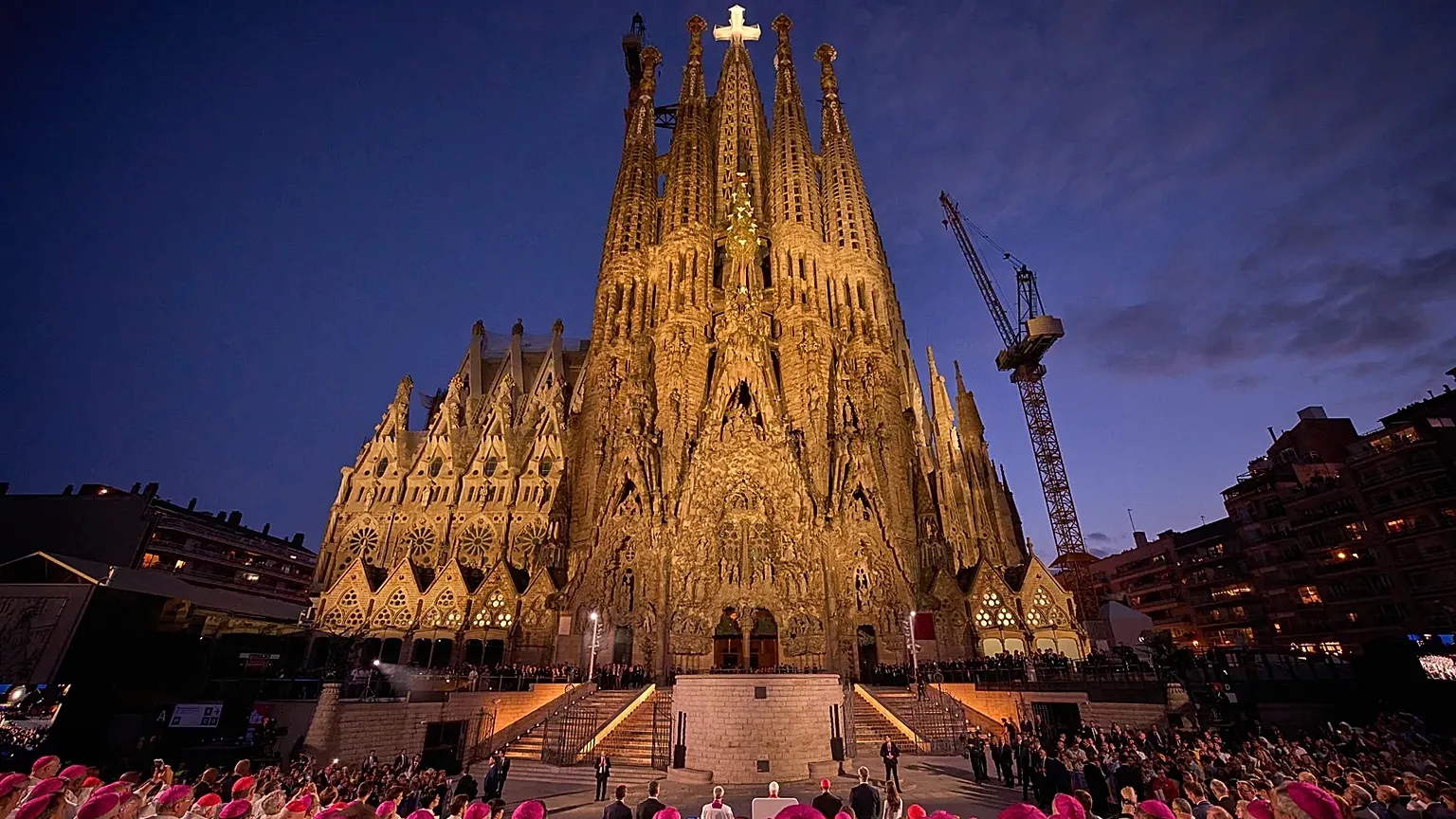
A hidden material made stone and steel act together.
BARCELONA, Spain | June 2026
A high-performance industrial adhesive has become one of the unexpected technologies behind the completion of the Sagrada Família’s six central towers. The material was used to bond stone and steel across 826 prefabricated panels, allowing the components to function as a unified structural system. This engineering solution helped builders translate Antoni Gaudí’s century-old architectural vision into a structure capable of meeting modern safety standards. The achievement reveals how contemporary science has quietly supported one of the world’s most recognizable works of sacred architecture.
The adhesive selected for the project was Loctite EA 9497, an epoxy product developed by the industrial company Henkel. Its role was not decorative, and most visitors will never see where it was applied. The material joins the exterior stone panels to their internal steel structures, distributing forces across the connection instead of relying exclusively on traditional mechanical fasteners. That bond became essential as construction moved higher and the weight, wind exposure and geometric complexity of the towers increased.
The system had to resist extraordinary structural loads while preserving the visual appearance intended by Gaudí. According to the project’s technical explanation, the bonded assembly can withstand pressure equivalent to around 100,000 people concentrated within a square meter. The comparison illustrates the enormous strength required to support the tower sections and the monumental cross crowning the Tower of Jesus Christ. Engineers needed a solution that could maintain stability without compromising the precision of the stone surfaces.
The central towers were built through a prefabrication process that differs sharply from the construction methods available when work on the basilica began in 1882. Stone panels were prepared and connected to steel structures under controlled conditions before being transported to the site. The completed modules could then be lifted into position and assembled at height with greater accuracy. This method reduced uncertainty and allowed complex sections to be produced more efficiently than through conventional stone construction alone.
Gaudí understood that the Sagrada Família would continue long after his death, but he could not anticipate the materials later generations would use. His designs demanded forms inspired by plants, geometry and natural growth, often producing surfaces that resist simple repetition. The current construction team has relied on digital modeling, advanced fabrication and modern engineering analysis to interpret those intentions. The adhesive represents one part of a wider technological system that has allowed the basilica to rise without abandoning its distinctive architectural language.
The Tower of Jesus Christ now reaches 172.5 meters, making the Sagrada Família the tallest church in the world. Its height surpasses Germany’s Ulm Minster while remaining below Barcelona’s Montjuïc hill, in keeping with Gaudí’s belief that human construction should not exceed the work of God. A 17-meter cross crowns the central tower and forms the highest point of the basilica. Its installation completed one of the most symbolically important stages of a project that has continued for more than 140 years.
Pope Leo XIV recently blessed the Tower of Jesus Christ during commemorations marking the centenary of Gaudí’s death. The ceremony transformed the engineering milestone into a religious and cultural event of international importance. For the Catholic Church, the tower represents the culmination of the vertical symbolism guiding the entire basilica toward Christ. For Barcelona, it confirms the building’s place as both a functioning temple and an architectural emblem recognized around the world.
Although the central towers are complete, work on the Sagrada Família has not entirely ended. The Glory Façade, its monumental staircase and sections of the surrounding urban plan remain unfinished. Those elements involve technical challenges as well as disputes involving neighboring properties and the future organization of the area. Current projections suggest that the remaining work could continue into the middle of the next decade.
The use of advanced adhesive challenges the assumption that monumental architecture must depend only on visible materials such as stone, glass or steel. In contemporary construction, performance often relies on components hidden deep inside an assembly. These materials must tolerate vibration, temperature changes, moisture and long-term structural stress without losing effectiveness. Their invisibility does not reduce their importance because the stability of the visible monument depends on them.
Henkel has presented the project as an example of collaboration between industrial innovation and cultural heritage. Applying a commercial engineering product to a basilica designed in the nineteenth century required extensive testing and coordination with architects, engineers and construction specialists. The objective was not simply to introduce new technology, but to ensure that it served the artistic and structural requirements of the building. Success depended on adapting the material to the monument rather than forcing the monument to accommodate the product.
The process also demonstrates that historical preservation does not always require rejecting modern methods. Remaining faithful to an original vision can demand technologies that did not exist when that vision was created. Digital tools helped reconstruct damaged plans and models, while prefabrication made the complex towers manageable at an unprecedented scale. Advanced adhesives then allowed traditional stone to work together with contemporary steel in a way Gaudí could not have technically specified.
The Sagrada Família has always existed between continuity and reinvention. Generations of architects and artisans have interpreted incomplete documentation while responding to war, political change, financial limitations and technological transformation. Each stage has raised questions about where Gaudí’s authorship ends and contemporary responsibility begins. The completed towers suggest that fidelity may lie not in reproducing old methods, but in preserving the logic, symbolism and ambition behind the design.
The adhesive hidden inside the 826 panels will never compete visually with the basilica’s stained glass, sculpted façades or rising towers. Yet it performs the essential task of holding different materials together under extreme conditions. That quiet function mirrors the broader history of the Sagrada Família, where countless specialists have contributed work that disappears inside the final monument. A project famous for stone, color and spiritual symbolism has reached its greatest height with help from one of the least visible inventions of the twenty-first century.
The visible and the hidden, in context. / Lo visible y lo oculto, en contexto.