

 Phoenix 24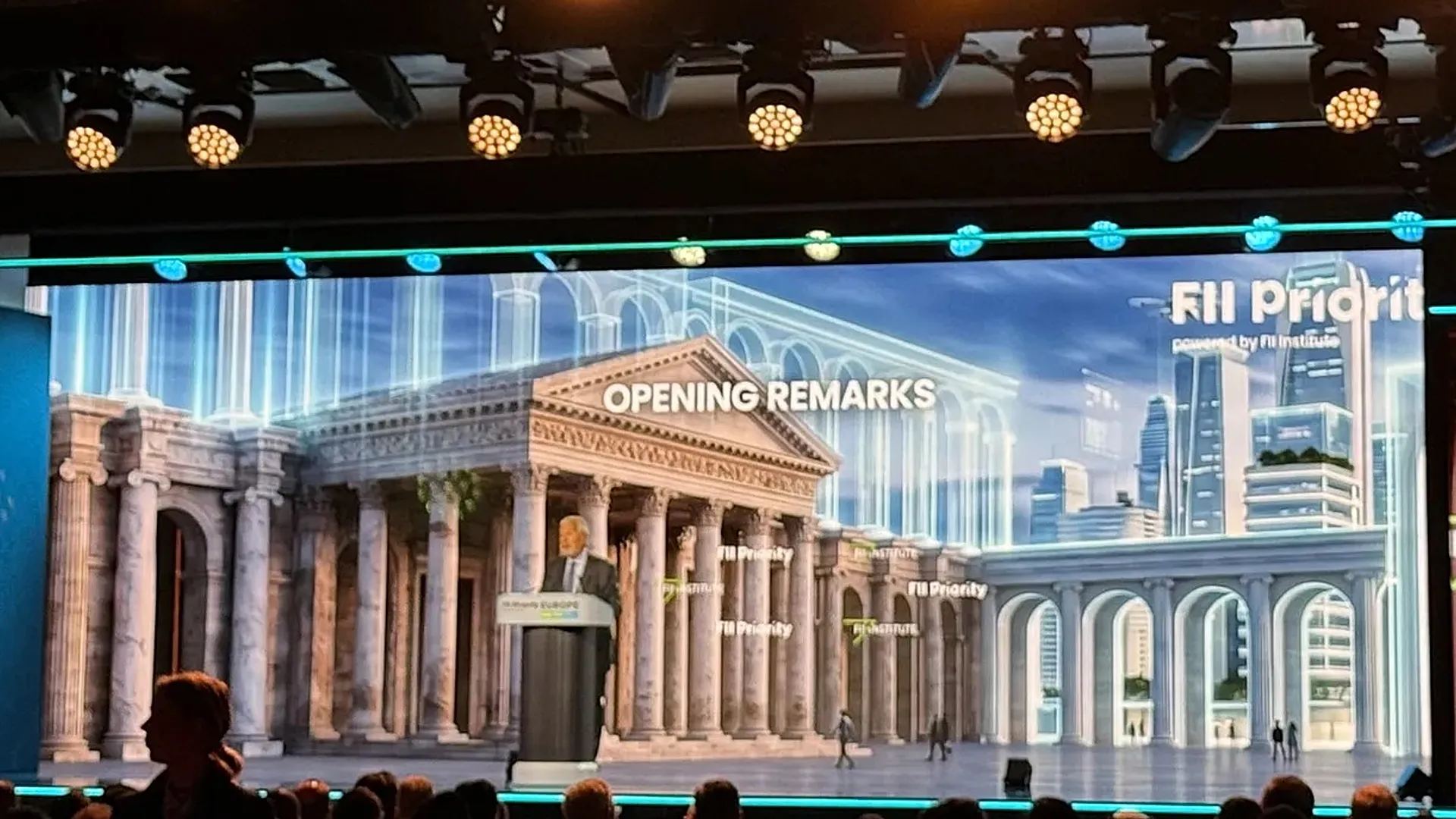
Investment is available, but patience is becoming scarce.
ROME, Italy | June 2026
Europe has the talent, industrial capacity and technological base required to attract a new wave of global investment, but international capital is demanding clearer rules, faster decisions and fewer administrative barriers. That message dominated the FII Priority Europe summit held in Rome, where political leaders, business executives and major investors assessed the continent’s position in an increasingly competitive global economy. Participants argued that Europe retains significant advantages in innovation, infrastructure and skilled human capital. However, those strengths may not translate into sustained growth unless governments accelerate reforms and create more predictable conditions for long-term investment.
The meeting placed economic competitiveness at the center of the international agenda at a time when geopolitical uncertainty is reshaping trade, energy and industrial policy. While global leaders continue debating security threats and international conflicts, investors are examining where the next generation of factories, digital infrastructure and strategic technologies will be developed. Europe has positioned itself as a defender of regulatory standards, environmental responsibility and consumer protection. The challenge is ensuring that those principles do not produce delays capable of driving investment toward the United States, Asia or faster-moving emerging economies.
Richard Attias, executive committee chairman of the Future Investment Initiative Institute, said Europe remains one of the world’s most attractive markets. He emphasized that the continent possesses the talent, innovation and industrial capabilities necessary to lead the next phase of global economic transformation. Nevertheless, investors increasingly prioritize clarity, predictability and speed when deciding where to allocate capital. Complex approval procedures and regulatory uncertainty can weaken Europe’s appeal even when the economic fundamentals of a project remain strong.
The call for greater flexibility does not necessarily imply dismantling European standards or abandoning public oversight. Investors are instead seeking rules that are easier to understand, consistently applied and capable of adapting to rapidly evolving sectors. Artificial intelligence, digital infrastructure, clean energy and advanced manufacturing require large investments that often span several countries and regulatory jurisdictions. When permits, financing decisions or compliance reviews take years, projects can migrate to markets where authorities offer faster and more coordinated responses.
Europe faces particularly intense competition from the United States, which has used subsidies, tax incentives and industrial policy to attract investment in semiconductors, energy and advanced technologies. Asian economies are also expanding support for strategic industries and strengthening supply chains in areas considered essential to national security. Several emerging markets have simplified procedures to attract international companies and sovereign capital. In this environment, Europe cannot assume that its market size and institutional stability will automatically secure investment.
Attias argued that the central question is how to balance regulation, innovation and economic expansion. Europe’s rules have often influenced global standards because access to its large consumer market requires companies to comply with demanding legal frameworks. That regulatory influence gives the European Union considerable international power. Yet the same system can become a competitive disadvantage when fragmented implementation, overlapping institutions or slow decision-making prevent companies from acting at the speed required by technological change.
The debate is closely connected to Europe’s objective of achieving greater strategic autonomy. The continent wants to reduce excessive dependence on foreign energy, critical technologies and vulnerable supply chains. Reaching that goal will require enormous volumes of public and private capital for industrial facilities, research centers, energy networks and digital systems. Strategic autonomy will therefore depend not only on political declarations but also on Europe’s capacity to transform investment commitments into operational projects.
Yasir Al Rumayyan, governor of Saudi Arabia’s Public Investment Fund and chairman of Aramco, also described Europe as a market with substantial long-term opportunities. He identified energy transition, technological innovation and strategic infrastructure as areas capable of attracting major investment. His assessment carries considerable weight because the Public Investment Fund manages assets valued at approximately 1.15 trillion dollars. The scale of those resources illustrates the importance of sovereign investment funds in financing projects that national budgets or conventional private capital may be unable to support alone.
The presence of Saudi investment leaders also reflects the changing geography of global finance. Capital is no longer concentrated exclusively in traditional Western financial centers, as Gulf states and Asian institutions have become increasingly influential investors. These funds seek stable returns, but they also pursue strategic partnerships, technological access and participation in sectors expected to shape future economic power. Europe’s ability to attract them will depend on whether it can offer competitive projects without creating uncertainty through prolonged political or regulatory processes.
Clean energy is among the areas where Europe could benefit most from global capital. The continent needs extensive investment in electricity grids, renewable generation, energy storage and industrial decarbonization. These projects are expensive, technically complex and dependent on long-term regulatory certainty. Investors may accept lower immediate returns when policies remain stable, but they are less likely to commit resources when governments repeatedly modify incentives, approval standards or energy strategies.
Artificial intelligence and digital infrastructure present a similar challenge. Europe has strong universities, research centers and specialized companies, but it has struggled to build technology businesses at the scale achieved in the United States and China. Access to financing is only part of the problem because companies also face fragmented markets, different national procedures and difficulties expanding across borders. A more integrated European capital market could help retain innovative companies that currently seek funding or relocate operations elsewhere.
The Rome summit ultimately delivered a warning wrapped in confidence. Global investors still view Europe as a region of opportunity, institutional stability and sophisticated economic capacity. What they question is whether the continent can move quickly enough to convert those advantages into projects before competitors capture the same capital. The issue is not whether Europe should regulate, but whether its regulatory model can protect public interests without obstructing investment, innovation and industrial growth.
Europe’s next economic phase will depend on its ability to combine its traditional strengths with a faster institutional rhythm. Capital will continue moving toward regions offering credible returns, political stability and efficient execution. Europe possesses the first two conditions but remains under pressure to improve the third. Without reform, the continent risks watching its strategic ambitions advance more slowly than the global economy surrounding it.
Información que anticipa futuros. / Information that anticipates futures.