

 Phoenix 24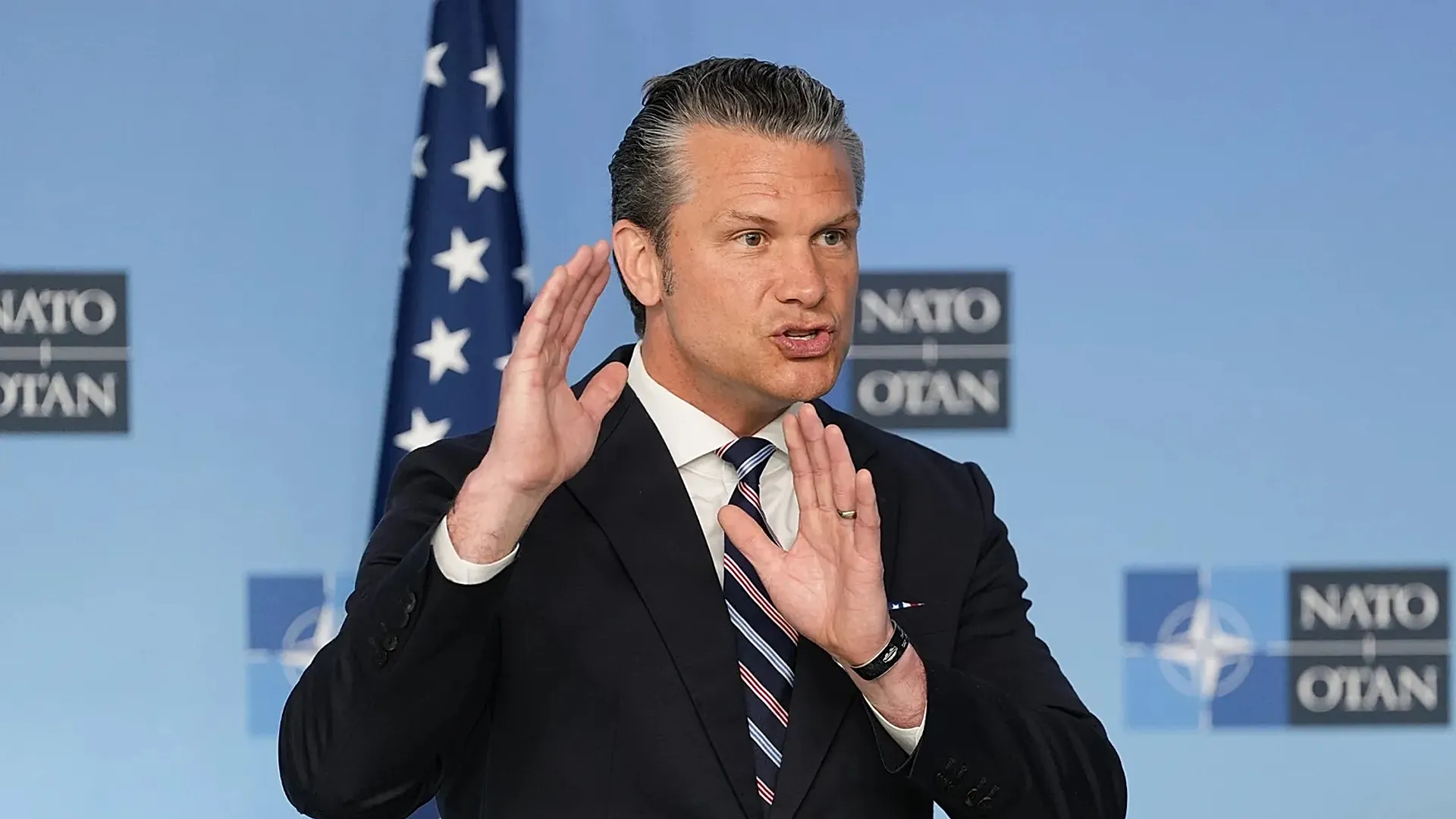
Washington’s pressure is testing the alliance from within.
BRUSSELS, Belgium | June 2026
NATO Secretary General Mark Rutte sought to contain the political fallout after United States Secretary of War Pete Hegseth launched a severe attack against several European allies during a meeting of defense ministers in Brussels. Hegseth accused countries such as Spain, Italy and France of acting shamefully by refusing to provide bases and airspace for American operations during the war in Iran. He also warned that Washington would review its military presence in Europe and could reduce its financial contributions to NATO when members fail to meet agreed defense spending targets. Rutte responded by portraying the criticism as legitimate pressure intended to strengthen the alliance rather than as evidence of a growing rupture.
Hegseth presented what he called “NATO 3.0,” a model in which European countries would assume greater responsibility for their own security while the United States reconsidered the scale and conditions of its support. The Pentagon will examine the number and location of American forces stationed across Europe during the next six months. Washington also intends to condition its annual NATO contributions on whether allies are moving toward spending 5 percent of gross domestic product on defense by 2035. The commitment was adopted at the previous alliance summit following persistent pressure from President Donald Trump.
The American defense chief said countries that failed to increase military expenditure with sufficient urgency could no longer expect Washington to maintain the same level of support. He warned that the United States would closely monitor governments that were not progressing toward the new target. Hegseth also described NATO as a “paper tiger,” arguing that European members had spent decades depending on American protection while allowing their armed forces and defense industries to weaken. His intervention transformed a discussion about military capacity into a broader confrontation over political loyalty and burden sharing.
The strongest criticism was directed at Spain, Italy and France because they declined to make their military facilities and airspace available to American forces during the conflict with Iran. Hegseth argued that allies should not expect unconditional protection from the United States while refusing assistance when Washington considers it necessary. Germany granted the American military full access to Ramstein Air Base, but relations with Berlin also deteriorated after Chancellor Friedrich Merz publicly questioned the strategy used in the war. Trump subsequently announced the withdrawal of 5,000 American troops from Germany.
Hegseth extended his criticism beyond military spending and accused European governments of prioritizing climate change, gender equality and welfare policies over tanks, combat aircraft and air defenses. He also connected immigration with what he described as a decline in European confidence and civilization. The speech echoed previous attacks by senior members of the Trump administration against Europe’s political and social model. It suggested that Washington’s dissatisfaction with NATO is no longer limited to defense budgets but now includes ideological disagreements over how European societies are governed.
Rutte avoided confronting Hegseth directly and instead emphasized the progress already made by alliance members. He noted that NATO countries allocated more than 90 billion euros in additional defense spending during 2025, an unprecedented annual increase. The secretary general acknowledged that some members still needed to do more and said pressure from Washington could help maintain momentum. By stating that allies must tell each other the truth, Rutte attempted to frame Hegseth’s language as an uncomfortable but useful demand for accountability.
The conciliatory response reflected the difficult position facing NATO’s leadership. Publicly rejecting the American accusations could deepen tensions with the alliance’s most powerful military member, particularly while Washington is considering reductions in troops, capabilities and financial support. Accepting the criticism without qualification, however, risks normalizing the use of collective defense as a tool for pressuring European governments into supporting unrelated American military campaigns. Rutte therefore sought to preserve unity by focusing on spending commitments and avoiding the political implications of Hegseth’s threats.
The dispute has become more serious because the United States is preparing to restrict several military capabilities currently available to NATO during wartime. These measures reportedly include long-range strike systems, strategic bombers, submarines and aircraft carriers that could be redirected toward other regions. Such assets cannot be replaced quickly by European forces because they require advanced technology, large defense budgets and years of industrial planning. Their removal would force NATO commanders to revise operational assumptions and could weaken the alliance’s capacity to respond rapidly to a major conflict.
European officials broadly recognize the need to expand defense production and reduce excessive dependence on the United States. Russia’s war against Ukraine has already exposed shortages in ammunition, air defenses, transport capacity and military manufacturing across the continent. Nevertheless, several governments reject the idea that supporting NATO should require automatic participation in every operation ordered by Washington. The disagreement therefore concerns not only how much Europe spends, but also who determines when allied territory and infrastructure must be used.
The possibility of reducing American forces in countries considered insufficiently cooperative introduces a transactional logic into NATO’s security structure. Military deployments could increasingly reward governments aligned with Washington and penalize those pursuing greater strategic autonomy. That approach would create divisions between European members and make alliance planning dependent on bilateral political relationships. It could also weaken confidence in Article 5, the principle that an attack against one member is treated as an attack against all.
Rutte insisted that any reduction in American forces would occur through an organized process involving NATO military planners and consultation with allied governments. His reassurance was intended to prevent the impression that Washington might take abrupt unilateral decisions capable of creating immediate security gaps. Yet the scale of the announced review and the severity of Hegseth’s rhetoric indicate that the relationship has entered a more conditional phase. Europe is being asked to prepare for a future in which American protection may be smaller, more selective and more closely tied to political obedience.
The confrontation in Brussels exposed an alliance attempting to adapt while its members disagree over the meaning of solidarity. Rutte may have reduced the immediate diplomatic temperature, but he did not resolve the central questions raised by the American warning. NATO must now determine whether it can strengthen European defense without abandoning the collective principles that have sustained it for decades. The pressure is no longer only outside the alliance, because the struggle over its future is unfolding within its own institutions.
La narrativa también es poder. / Narrative is power too.