

 Phoenix 24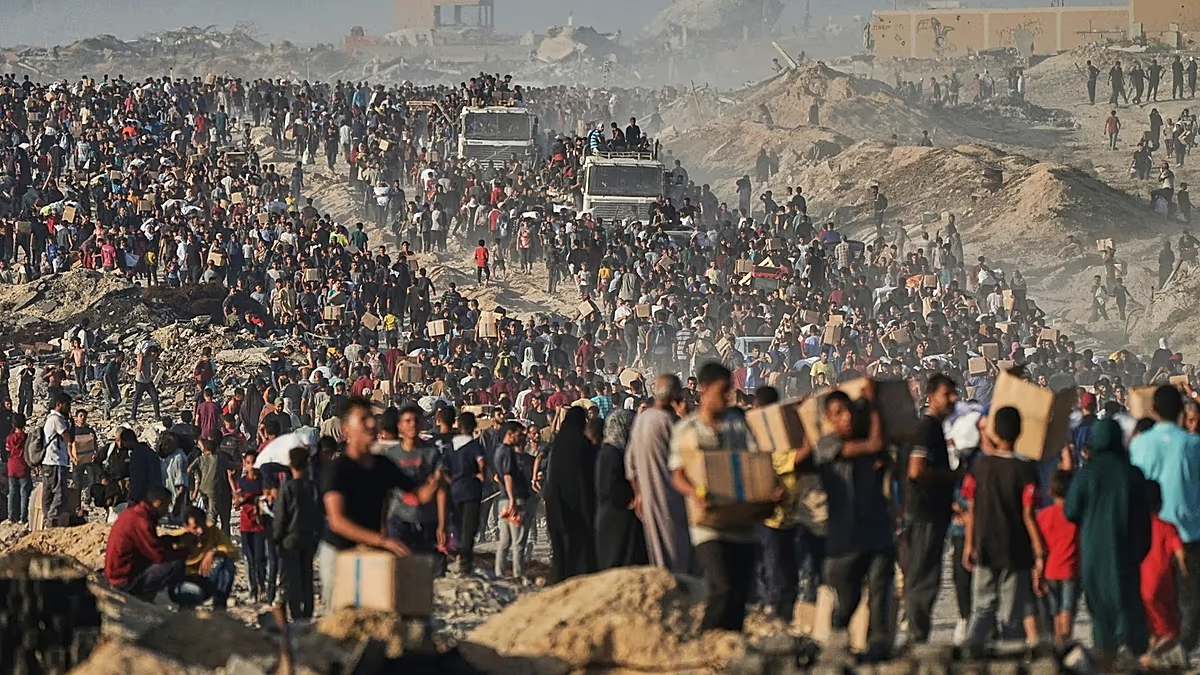
Funding arrives as hunger deepens across thirteen critical hotspots.
ROME, ITALY — June 2026. The United Nations World Food Programme has welcomed an $800 million contribution from the United States as it confronts severe funding shortages and a rapidly worsening global hunger crisis. The donation, equivalent to approximately €695 million, will support emergency food and nutrition programs for vulnerable communities in at least 37 countries. The agency estimates that the funds could help reach more than 38 million people facing some of the most acute humanitarian conditions.
The contribution arrives after a significant decline in international assistance to the organization. The WFP received approximately $10 billion in contributions during 2024, but that figure fell to about $6 billion the following year. The reduction has forced the agency to scale back operations at a time when armed conflicts, economic instability and climate-related disasters are increasing the number of people requiring urgent support.
Acting WFP Executive Director Carl Skau said the American funding had arrived at a critical moment because global needs now exceed the resources available to humanitarian organizations. The agency intends to assist 110 million of the world’s most vulnerable people during 2026, but it estimates that it will require around $13 billion to meet that objective. Current funding levels remain far below the amount needed to sustain operations throughout the year.
The WFP said the new contribution would finance life-saving food and nutrition assistance across a broad range of emergencies. These programs include direct food distribution, specialized nutritional support for children and pregnant women, cash assistance and logistical services in areas where conventional supply chains have collapsed. The agency also supports transportation and storage systems used by other humanitarian organizations.
Financial pressure has intensified as operational costs rise in several regions. The conflict involving Iran has added logistical difficulties and increased the expense of transporting humanitarian supplies to countries dependent on international assistance. Disruptions to maritime routes, higher insurance costs and greater fuel prices have made it more difficult to deliver food quickly to communities already facing serious shortages.
The funding announcement coincided with a new warning from the WFP and the United Nations Food and Agriculture Organization regarding thirteen hunger hotspots. The agencies expect acute food insecurity to deteriorate between June and November 2026 as conflict, funding shortages and climatic shocks push millions of people closer to famine. Approximately 266 million people are already experiencing high levels of acute food insecurity worldwide.
Sudan, South Sudan, Yemen and the Palestinian territories remain among the areas causing the greatest concern. Nigeria and Somalia have recently joined the highest-alert category as conditions deteriorate and the probability of famine rises. The agencies warned that delays in humanitarian intervention could allow already fragile situations to become catastrophic during the coming months.
Conflict and organized violence remain the principal drivers of hunger in almost all the identified hotspots. Fighting frequently forces families from their homes, destroys agricultural production, interrupts markets and prevents humanitarian organizations from reaching affected communities. In prolonged conflicts, food insecurity can persist even when supplies exist because insecurity makes transportation and distribution impossible.
Sudan continues to face one of the world’s most severe humanitarian emergencies as warfare displaces civilians and disrupts food production. Communities in several regions have been cut off from regular assistance, while humanitarian workers encounter restrictions, insecurity and damaged infrastructure. The risk is particularly severe for children, whose health can deteriorate rapidly when access to nutritious food and medical treatment is interrupted.
South Sudan remains vulnerable because of recurring violence, economic instability, flooding and the arrival of people escaping the conflict in neighboring Sudan. Many communities depend heavily on humanitarian assistance, but limited funding has forced agencies to prioritize only the most urgent cases. The combination of displacement, poor infrastructure and extreme weather continues to weaken the country’s ability to recover.
In Yemen, years of conflict have devastated public services and left millions of people dependent on humanitarian support. Reduced international funding has led to cuts in food assistance despite persistent malnutrition and economic hardship. Families increasingly face difficult decisions between purchasing food, medicine, water and other essential goods.
The humanitarian situation in the Palestinian territories also remains critical. Restrictions on the movement of goods, destruction of infrastructure and continued violence have disrupted access to food, clean water and medical care. Humanitarian organizations have repeatedly warned that safe, sustained and large-scale access is necessary to prevent further deterioration.
Nigeria and Somalia have entered the most serious category because of expanding insecurity, displacement and climate pressures. Armed groups continue to disrupt livelihoods in parts of Nigeria, while communities in Somalia face the combined effects of conflict, poverty and recurring drought. Both countries have large populations requiring assistance, but humanitarian programs remain constrained by insufficient resources.
Economic shocks are also intensifying the crisis by reducing household purchasing power. Rising food prices, currency instability and unemployment make basic goods inaccessible even where markets continue operating. Families often respond by reducing meal frequency, selling productive assets, withdrawing children from school or taking on debt, measures that can deepen long-term vulnerability.
The expected effects of El Niño could further increase hunger through droughts, floods and unpredictable rainfall. Agricultural communities in already fragile regions may lose crops and livestock, while damaged roads and bridges could delay humanitarian deliveries. The agencies warned that climate shocks rarely act alone and become especially dangerous when combined with conflict, displacement and economic decline.
The WFP and FAO urged governments and donors to act before conditions reach famine levels. Early intervention is generally less costly and more effective than responding after livelihoods, markets and health systems have collapsed. The agencies stressed that immediate financing, humanitarian access and conflict prevention are essential to protect millions of people during the second half of 2026.
The American contribution will provide substantial relief, but it will not eliminate the WFP’s wider funding deficit. The agency still faces a major gap between the resources available and the number of people requiring support. Without further contributions, humanitarian organizations may be forced to reduce food rations, suspend programs or exclude communities whose needs remain severe.
At Phoenix24, every humanitarian warning demands global attention.