

 Phoenix 24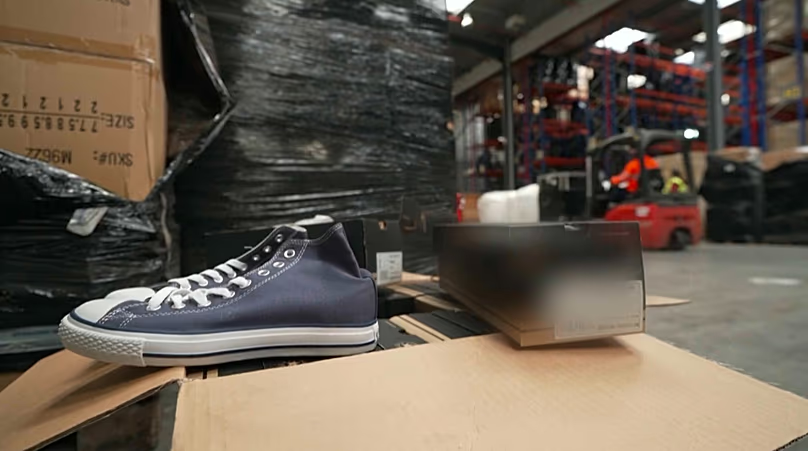
Fake goods reveal the logistics of hidden crime.
Le Havre, June 2026. France’s destruction of nearly 38,000 counterfeit sneakers is more than a customs operation. It is the visible ending of a 15-year legal battle that began with three containers arriving from China in 2011 and ended with shredded footwear, criminal penalties and a reminder that counterfeit trade is not a marginal economy. It is an industrialized shadow market.
The goods had remained stored in a secret location in Le Havre while the case moved through the judicial system. The French importer was eventually convicted in December 2025, receiving a customs fine of 1.56 million euros, an additional 260,000 euros for customs-related laundering and a three-year prison sentence, with two years suspended. Only after that ruling could customs authorities proceed with destruction.
The scale matters. France seized more than 20 million counterfeit products last year, including roughly 1.2 million intercepted in Le Havre alone. Shoes, clothing, toys, technology devices and automobile parts all circulate through the same hidden architecture of imitation, deception and profit. The counterfeit economy does not merely copy brands; it exploits ports, supply chains, legal delays and consumer demand.
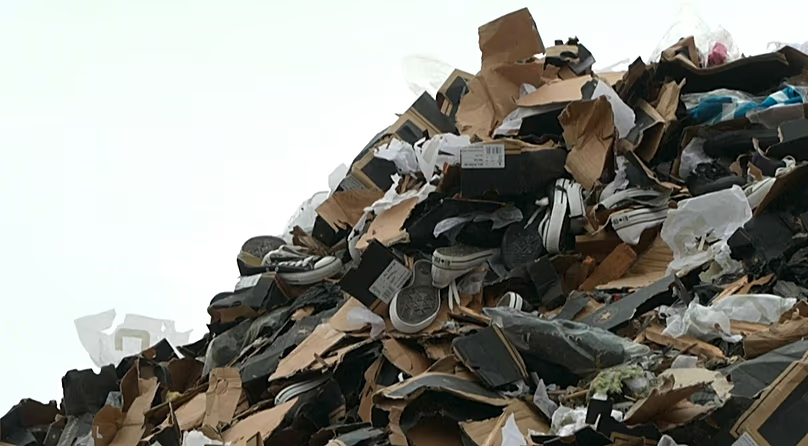
The moral discomfort is predictable. Destroying thousands of pairs of shoes can appear wasteful in a period of social pressure and economic inequality. Yet customs authorities argue that counterfeit goods cannot be redistributed or resold because they may violate safety rules, contain toxic materials or re-enter illicit commercial circuits. What looks like waste from the outside becomes risk management from the state’s perspective.
The final operation was carried out on June 3 at a specialized facility in the French port city. Mobile cranes crushed the sneakers before feeding them into an industrial shredder. The resulting waste will be incinerated or used for energy recovery, transforming an illegal consumer product into a residue of enforcement and industrial disposal.
The deeper story is not the sneakers. It is the system that moved them, hid them, litigated them and finally destroyed them. Counterfeit markets survive because global commerce creates speed, opacity and scale. Ports move legitimate prosperity, but they also expose the vulnerabilities of a world where almost everything can be copied, shipped and monetized.
For Europe, the warning is structural. Fighting counterfeit trade is not only about protecting luxury brands. It is about consumer safety, customs sovereignty, organized crime, fiscal losses and the integrity of legal supply chains. Le Havre’s shredded sneakers show that the counterfeit economy may end in a crusher, but it begins much earlier: in the gaps between globalization, enforcement and profit.
Contra la propaganda, memoria. / Against propaganda, memory.