

 Phoenix 24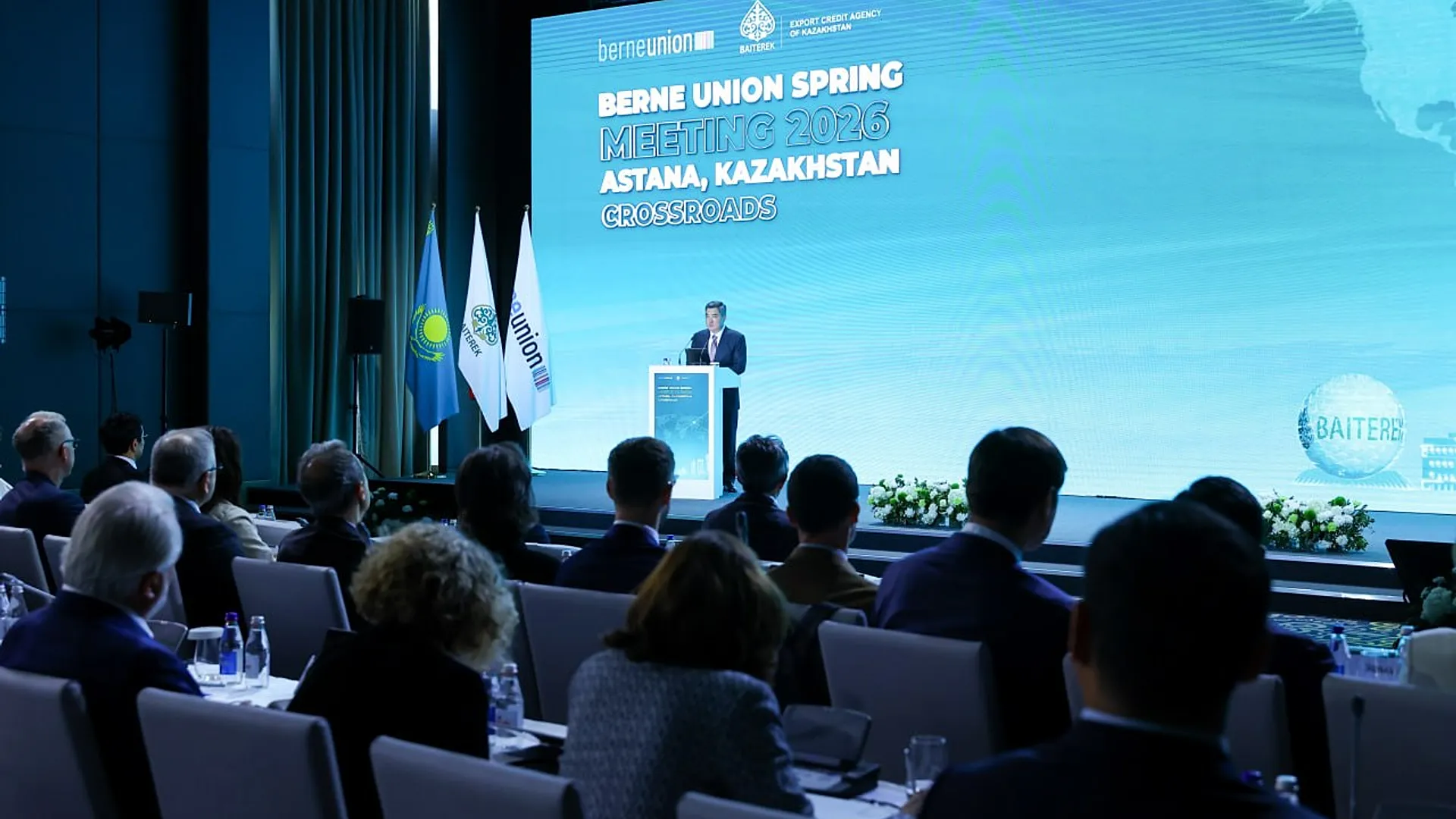
Insurance capital is following geopolitical stability.
Astana | June 2026
Kazakhstan is positioning itself as more than an energy economy by targeting nearly 45 billion euros in non-commodity exports by 2030. The ambition reflects a deliberate effort to reduce dependence on oil, metals and raw materials while presenting Central Asia as a safer corridor for trade finance, industrial investment and export insurance. In a global environment marked by war risk, shipping disruption and supply-chain fragmentation, Astana is selling diversification as both economic policy and geopolitical insurance.
The strategy comes as export credit agencies and investment insurers increase their attention on Central Asia. These institutions are not secondary actors; they shape which infrastructure, manufacturing and cross-border projects become financially possible. When insurers view a region as relatively stable, capital moves faster, contracts become easier to secure and large industrial projects gain credibility. Kazakhstan understands that attracting insurance coverage is part of attracting the future architecture of trade.
The target also signals a broader transformation in how Kazakhstan wants to be seen internationally. For decades, the country’s global relevance was tied heavily to hydrocarbons, uranium, minerals and its position between Russia, China and Europe. Now, the emphasis on non-energy exports points toward machinery, processed goods, agriculture, logistics, industrial services and value-added production. The objective is not to abandon the resource base, but to build an economy less exposed to commodity cycles and external shocks.
Geopolitically, the timing is favorable. Russia’s war in Ukraine, instability in the Middle East and pressure on maritime routes have made land corridors and middle-power economies more attractive to investors seeking alternatives. Kazakhstan’s geography, once seen mainly as a constraint, is increasingly framed as a transit advantage between Asia and Europe. That shift gives Astana room to negotiate with multiple partners while avoiding excessive dependence on any single bloc.
The challenge will be execution. Export targets require more than official ambition; they require competitive logistics, predictable regulation, skilled labor, industrial depth and trust from foreign capital. Kazakhstan has the scale and location to become a major non-energy trade platform, but it must prove that diversification is structural rather than rhetorical. If it succeeds, Central Asia’s largest economy could become a central node in the next phase of Eurasian trade, where risk management, infrastructure and industrial policy define power as much as oil once did.
Lo visible y lo oculto, en contexto. / The visible and the hidden, in context.