

 Phoenix 24
The blockade became a political measurement.
La Paz, May 2026. Supporters of Evo Morales and peasant organizations maintained at least 59 roadblocks across six regions of Bolivia, deepening pressure on the government and revealing that Morales still retains significant mobilization capacity despite his growing institutional isolation. The protests are not only transportation disruptions; they are demonstrations of territorial influence.
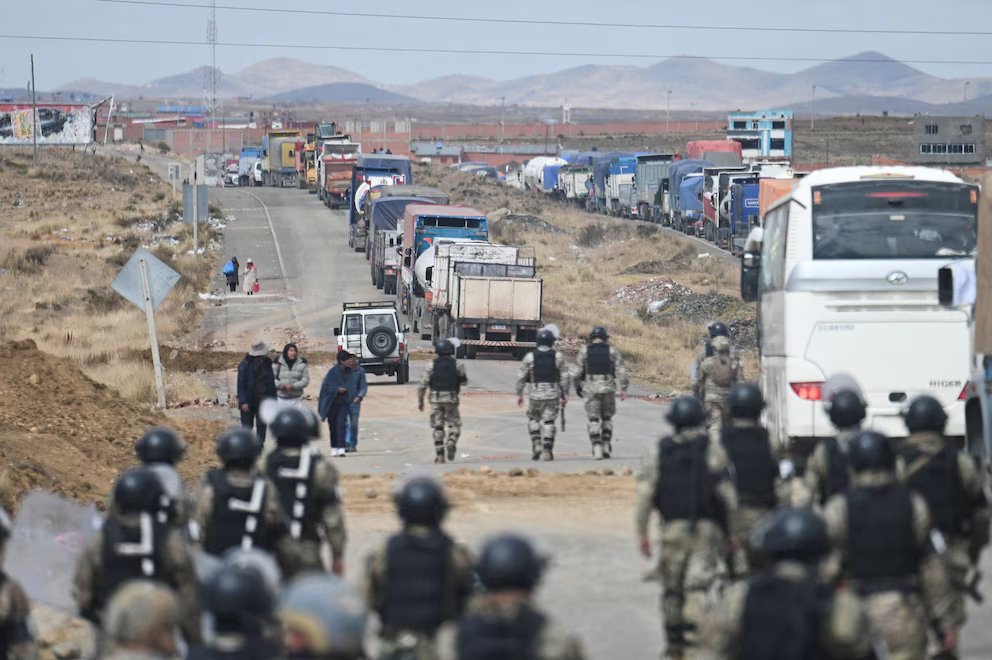
The blockades have affected highways, logistics routes and regional mobility, increasing political tension in a country already fractured by disputes inside the ruling movement. Morales’ allies demand political guarantees and reject what they describe as judicial and electoral persecution against the former president, while the government seeks to contain the crisis without allowing the conflict to spiral into broader instability.

The roadblocks also expose the unresolved fracture between Evo Morales and President Luis Arce. What once appeared to be an internal dispute inside Bolivia’s governing political structure has evolved into a struggle for legitimacy, leadership and control over the future of the Movimiento al Socialismo. The confrontation is no longer rhetorical; it is now territorial and operational.
For Bolivia, the danger lies in normalization. When highways become recurring instruments of political negotiation, institutional authority weakens and governance begins shifting toward pressure dynamics rather than formal resolution mechanisms. The country enters a cycle where mobility, supply chains and regional stability become hostage to factional power struggles.

The deeper issue is that Morales continues to operate as more than a former president. Even outside formal electoral certainty, he remains a symbolic and organizational pole capable of activating social pressure across strategic regions. The blockades therefore measure not only discontent, but the persistence of parallel political authority inside Bolivia.
Phoenix24: claridad en la zona gris. / Phoenix24: clarity in the grey zone.