

 Phoenix 24
Messaging platforms are becoming visual identity systems.
San Francisco, May 2026. WhatsApp has expanded and simplified its sticker creation tools, allowing users to transform personal photos directly into custom stickers without relying on external applications. The feature reflects a broader evolution inside digital communication, where messaging increasingly depends on visual personalization rather than text alone.
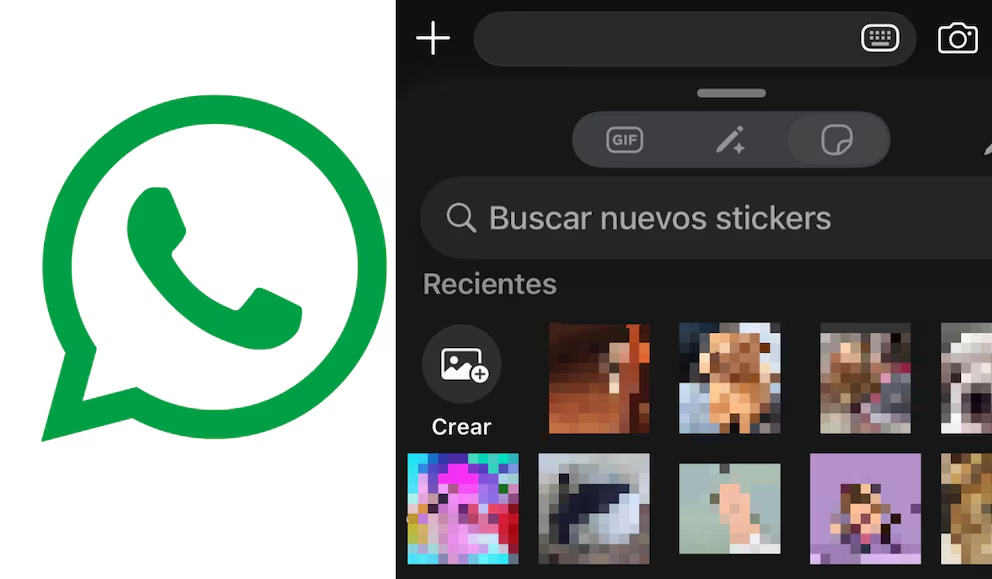
The process is integrated directly into WhatsApp’s sticker menu. Users can open a chat, access the sticker section and select the option to create a new sticker from an image stored on the device. Once the photo is chosen, the application automatically isolates the subject from the background and offers editing tools such as text insertion, emojis and freehand drawing.
The update reduces dependence on third-party sticker apps that previously dominated this function. Until recently, creating personalized stickers often required external software, file conversions or separate sticker packs. WhatsApp is now absorbing those tools into its own ecosystem, reinforcing user retention and platform centralization.
The feature also demonstrates how messaging apps are evolving into emotional-expression platforms. Stickers operate as compressed social language: reactions, irony, affection and identity condensed into visual fragments that move faster than written sentences. Personal photos intensify that dynamic because they transform private imagery into conversational currency.
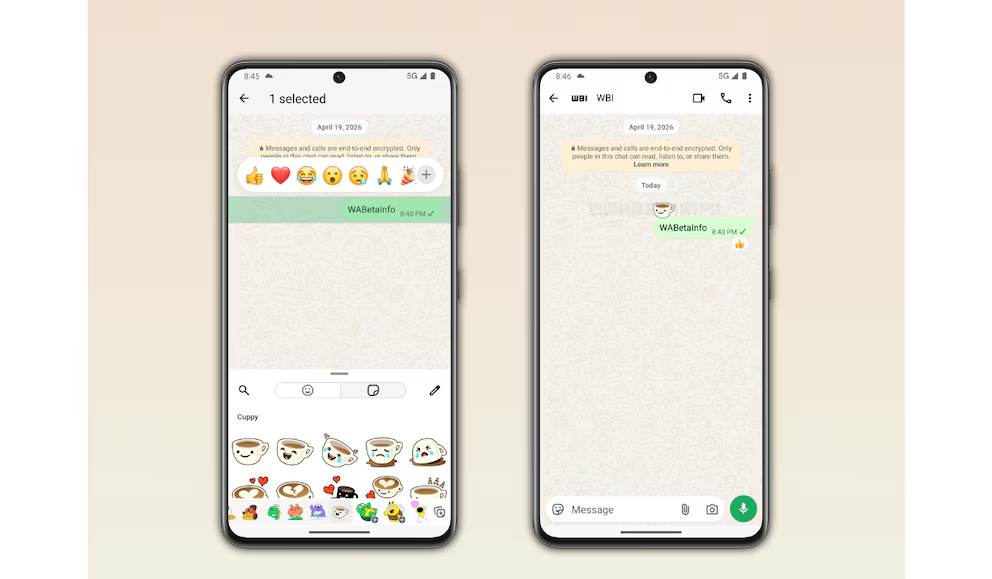
Meta has steadily expanded customization tools across its messaging platforms as competition intensifies around engagement and user interaction time. Personalized stickers, AI-assisted image editing and avatar systems are increasingly part of the same strategic objective: turning communication apps into immersive social environments rather than simple messaging utilities.
For users, the attraction lies in immediacy. A photo taken moments earlier can now become a sticker inside a conversation within seconds. What appears as a minor update is actually part of a larger shift in digital culture, where communication is becoming progressively more visual, reactive and identity-driven.
Narrative is power too. / La narrativa también es poder.