

 Phoenix 24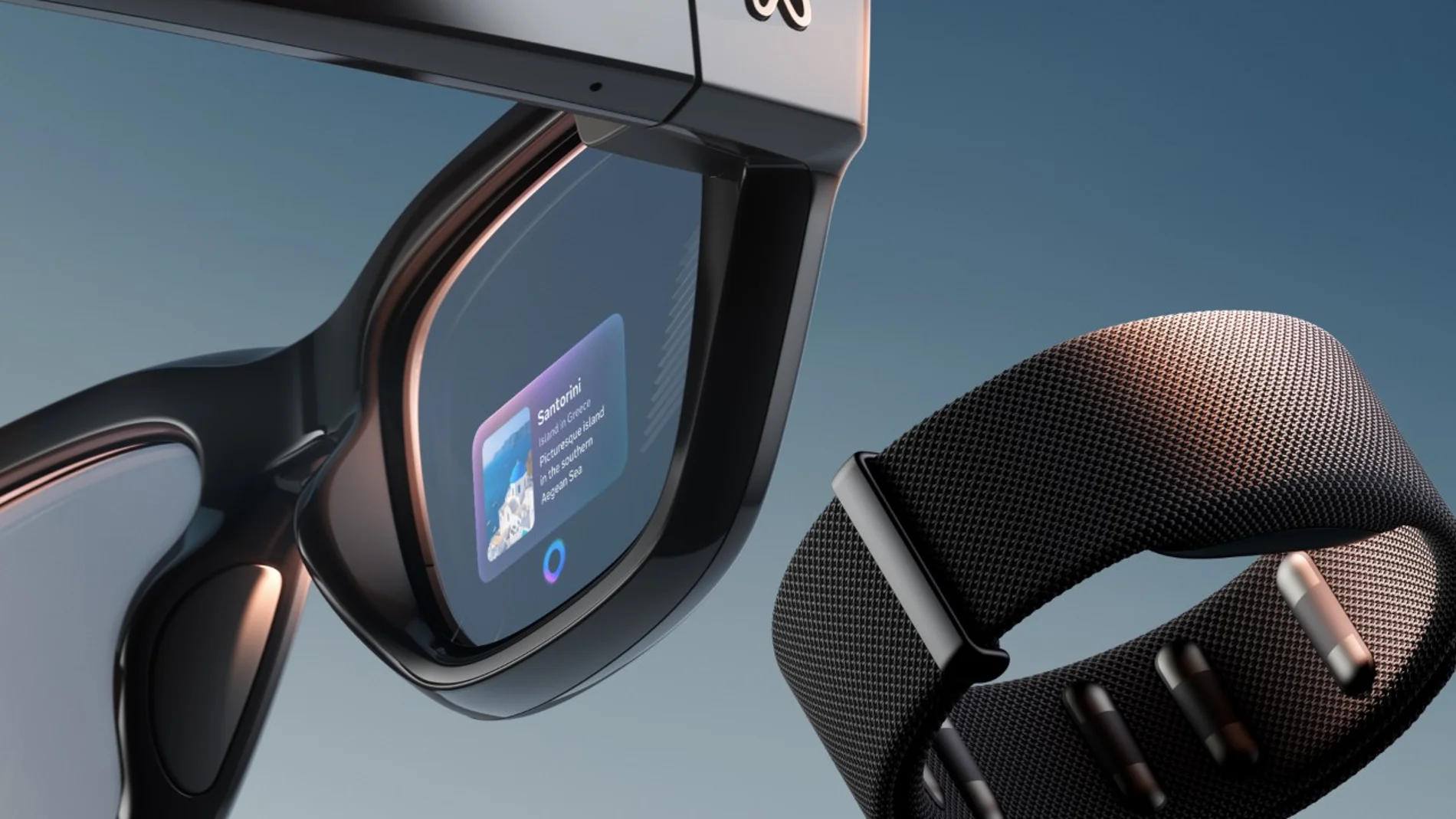
The hand is becoming the new keyboard.
Menlo Park, May 2026
Meta’s Ray-Ban Display glasses are pushing wearable technology into a more intimate phase of everyday communication. The new function allows users to write messages for WhatsApp, Messenger, Instagram, and native messaging apps without touching a phone, using hand gestures detected by the Meta Neural Band. What appears at first as a convenience feature is actually a deeper shift in the human-machine interface.
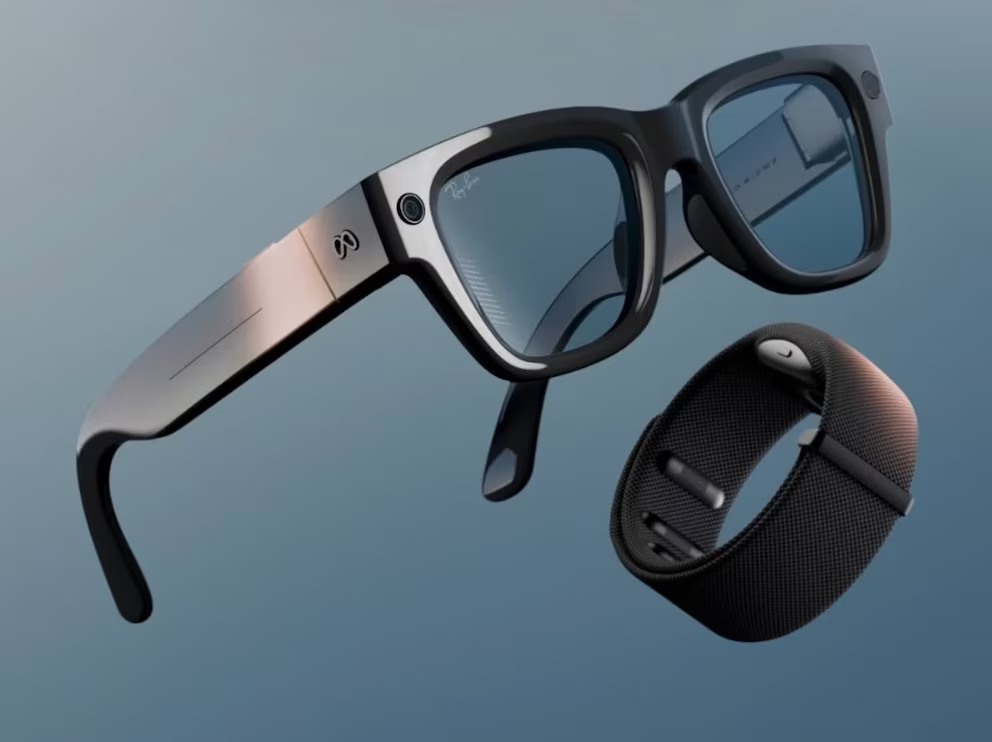
The system works by interpreting small muscular movements when the user simulates writing with a finger over a surface. Those signals are converted into text and displayed through the glasses, turning the wrist, hand, and lens into a compact communication circuit. The phone does not disappear, but it loses symbolic centrality. Interaction begins moving from the screen to the body.
That change is powerful because it reduces friction. A message can be written while walking, waiting, working, or avoiding the social interruption of pulling out a device. For users, the promise is discretion and speed. For Meta, the strategic prize is larger: owning the interface layer before the next generation of computing leaves the smartphone behind.
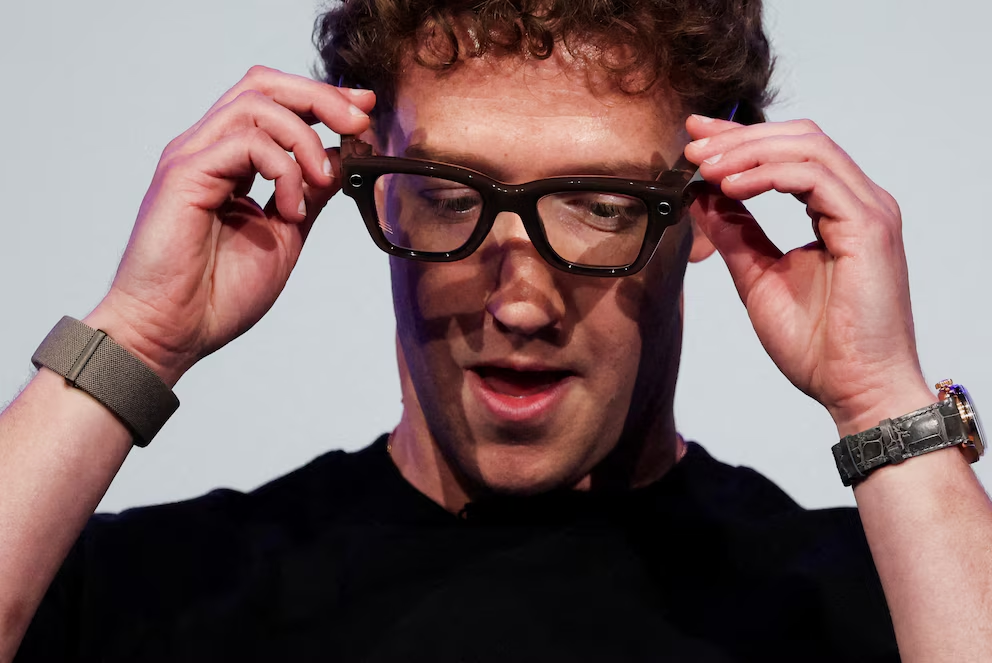
The update also includes screen recording that captures the external environment, the lens display, and ambient audio in a single file. This turns the glasses into a portable documentation tool for creators, workers, travelers, and professionals who need to record not just what they see, but how digital information appears over reality. Wearables are no longer only accessories; they are becoming perception devices.

The unresolved question is privacy. When cameras, microphones, displays, artificial intelligence, and biometric-like gesture interpretation converge in a consumer product, the boundary between assistance and surveillance becomes thinner. Meta will present the feature as natural interaction. Regulators and users will eventually ask who controls the signals, what is stored, and how invisible computing reshapes public space.
The deeper pattern is clear. Meta is not simply improving smart glasses. It is testing whether the body itself can become the next operating surface of digital life. If the experiment succeeds, typing on glass may soon feel like an old ritual from the smartphone age.
Detrás de cada dato, la intención. / Behind every data point, the intention.