

 Phoenix 24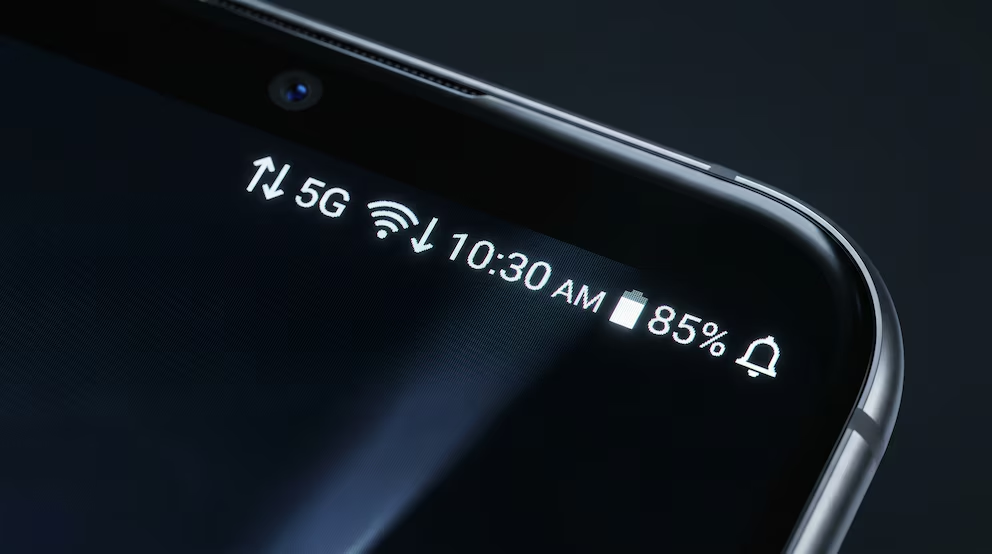
Your smartphone may be revealing more than you think.
Mexico City, May 2026. The small arrows that appear beside Wi-Fi, mobile data or Bluetooth icons on smartphones have become one of the most overlooked indicators in modern digital life. Although many users dismiss them as ordinary interface animations, these symbols actually reveal when a device is actively sending or receiving information through wireless networks or connected services.

On both Android and iPhone devices, the arrows function as a live traffic signal for digital activity occurring in the background. When they flash briefly, they usually reflect normal actions such as loading messages, synchronizing notifications or updating applications. However, when the indicators remain constantly active, especially while the phone appears idle, they may point toward aggressive background processes, excessive tracking activity or apps maintaining persistent communication with remote servers.
Cybersecurity specialists increasingly warn that smartphones operate less like passive communication tools and more like permanent data ecosystems. Navigation history, location tracking, voice assistants, cloud synchronization and advertising algorithms continuously exchange information with external infrastructures. In many cases, users authorize these permissions without fully understanding the scale of data extraction involved in modern app ecosystems.
The concern becomes more significant when battery drain, overheating or unexplained data consumption appear alongside persistent network arrows. Those patterns can sometimes indicate poorly optimized applications, spyware risks, unauthorized location access or hidden synchronization services running continuously in the background. While the arrows themselves are not evidence of hacking, they can function as one of the few visible clues that unusual activity may be occurring inside the device.
The phenomenon also reflects a broader transformation in digital culture. Smartphones are no longer simple personal gadgets; they have evolved into behavioral monitoring platforms capable of mapping habits, routines, mobility patterns and consumption behavior in real time. Every notification refresh, cloud backup and advertising request contributes to an invisible economy built around continuous user interaction.

Technology companies defend these systems by arguing that constant connectivity improves personalization, convenience and security. Features such as instant backups, live synchronization and location-based services depend on uninterrupted communication between devices and cloud infrastructures. Yet critics argue that most users remain structurally uninformed about how much information is exchanged automatically throughout the day.
Privacy analysts often recommend basic digital hygiene practices to reduce unnecessary background activity. Reviewing app permissions, disabling constant location tracking, limiting microphone access, auditing Bluetooth connections and monitoring battery usage statistics can significantly improve device transparency. Operating system updates also play a central role because outdated software can leave vulnerabilities exposed to malicious applications or intrusive tracking mechanisms.
The psychological dimension is equally important. Modern smartphone interfaces are intentionally designed to simplify complexity and reduce user friction. As a result, critical technical indicators become visually minimized, encouraging passive trust in systems that process enormous quantities of personal information. The tiny arrows exemplify this paradox: they are permanently visible, yet socially invisible.
In practical terms, the symbols are not a reason for paranoia, but they are a reminder that digital awareness increasingly depends on understanding small interface details. In an era where smartphones contain banking systems, private conversations, biometric authentication and professional data, ignoring persistent network activity can mean overlooking the operational heartbeat of the device itself.
Phoenix24: journalism without borders. / Phoenix24: periodismo sin fronteras.