

 Phoenix 24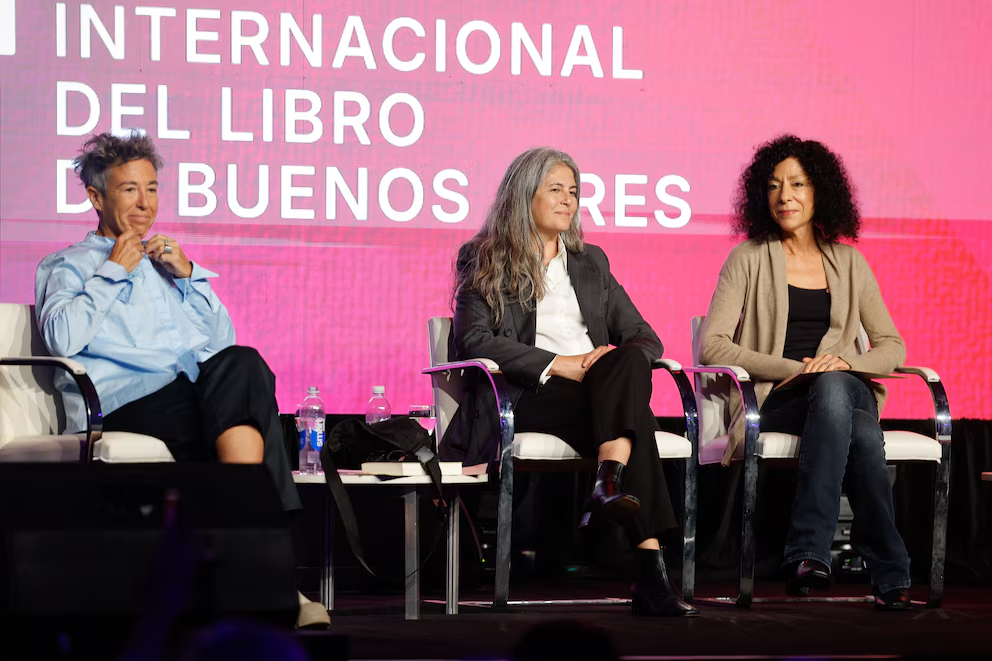
A dictatorship’s wound has crossed another border.
Rome, May 2026. Argentine writer and journalist Leila Guerriero won the 2026 European Strega Prize for La llamada. Historia de una mujer argentina, a work centered on the life of Silvia Labayru, a former Montoneros militant kidnapped while pregnant and held at ESMA during Argentina’s dictatorship. The award confirms the international force of a book that refuses to treat memory as archive alone.
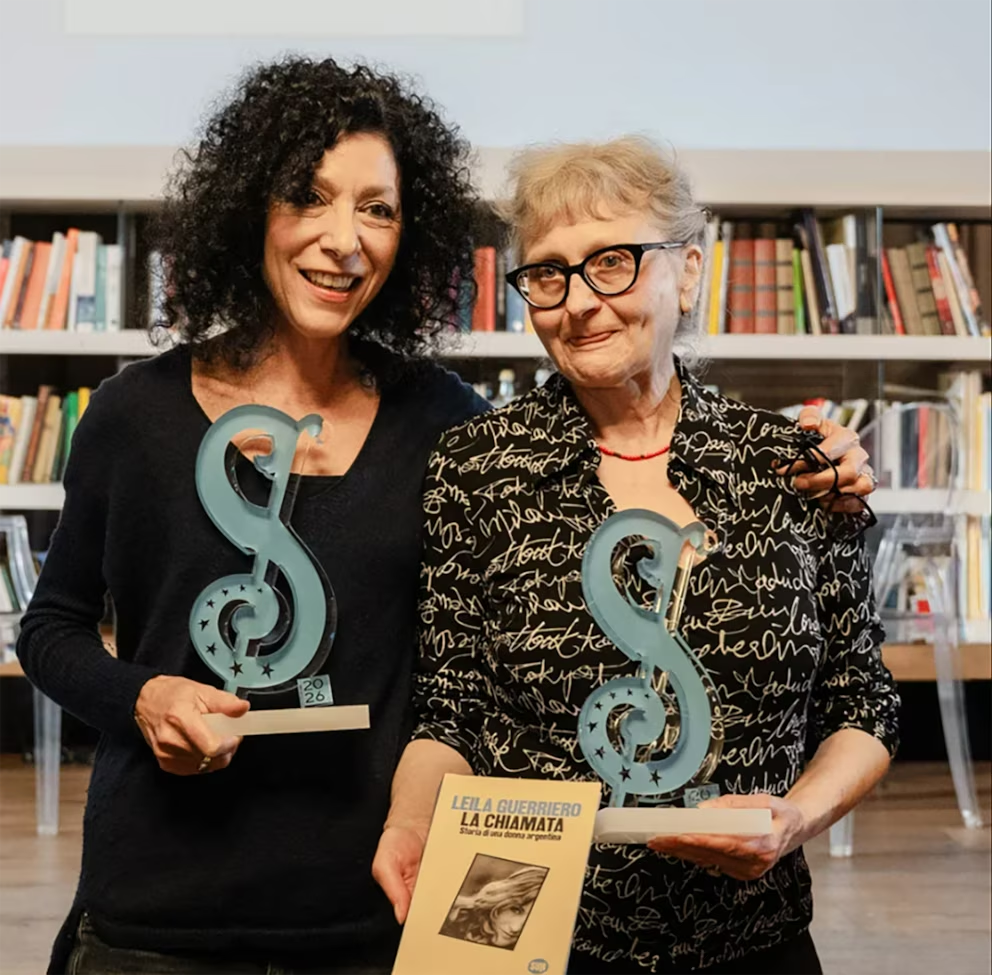
The work reconstructs Labayru’s survival through dictatorship, torture, exile, guilt and social rejection. Guerriero does not write from simplification, but from moral discomfort. Her narrative examines how political violence continues to inhabit bodies, families and reputations long after the formal end of terror.
The jury recognized a book that blends literary journalism, biography and historical testimony with unusual precision. Its Italian edition, translated by Maria Nicola and published by SUR, obtained the strongest support among the finalists. That recognition places Guerriero within a European literary conversation increasingly attentive to Latin American memory, authoritarian trauma and the ethics of narration.
The power of La llamada lies in its refusal to offer a clean heroine or a closed verdict. Labayru’s story forces the reader into a difficult zone where victimhood, survival and judgment coexist without easy resolution. In that ambiguity, Guerriero turns testimony into literature without stripping it of its human fracture.
For Argentina, the prize arrives at a moment when debates over dictatorship, memory and historical denial remain politically alive. For European readers, the book functions as a reminder that state terror is never only national history. It becomes part of a wider moral geography where silence, complicity and remembrance continue to dispute the future.
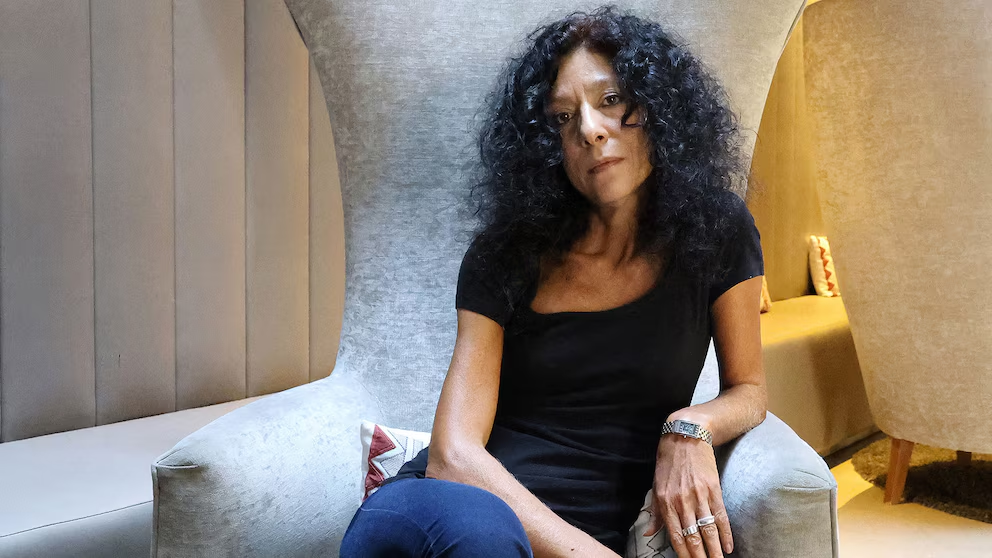
Guerriero’s victory is not merely a literary honor. It is a signal that rigorous narrative journalism can still intervene in the deepest conflicts of memory. In an age of speed, noise and ideological compression, La llamada proves that some truths require slowness, discomfort and a writer willing to stay inside the wound.
Lo visible y lo oculto, en contexto. / The visible and the hidden, in context.