

 Phoenix 24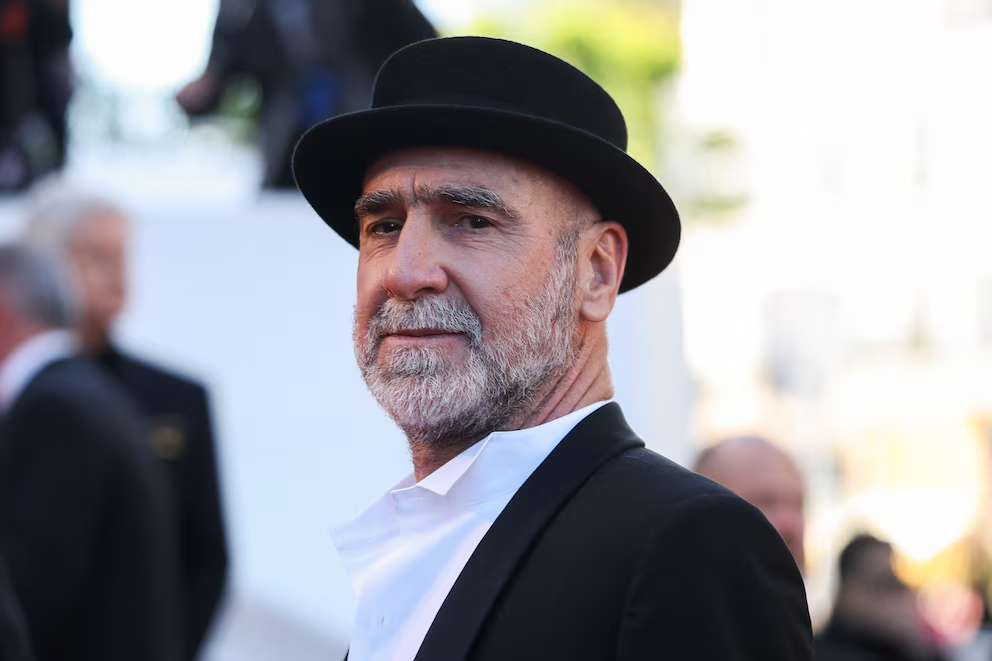
The legend now faces the man behind it.
Cannes, May 2026. Eric Cantona has surprised the Cannes Film Festival with a raw documentary that avoids the usual triumphalism of sports storytelling and instead places his contradictions at the center of the frame. The former Manchester United star appears not as an untouchable icon, but as a man still negotiating with memory, ego, therapy and the emotional turbulence that followed him through fame.
The film, directed by David Tryhorn and Ben Nicholas, uses extensive interviews that at times feel closer to psychoanalysis than conventional biography. Cantona speaks openly about his demons, his instinctive way of living and the inner volatility that helped create both his charisma and his conflicts. That sincerity gives the documentary its force: it does not polish the legend, it interrogates it.
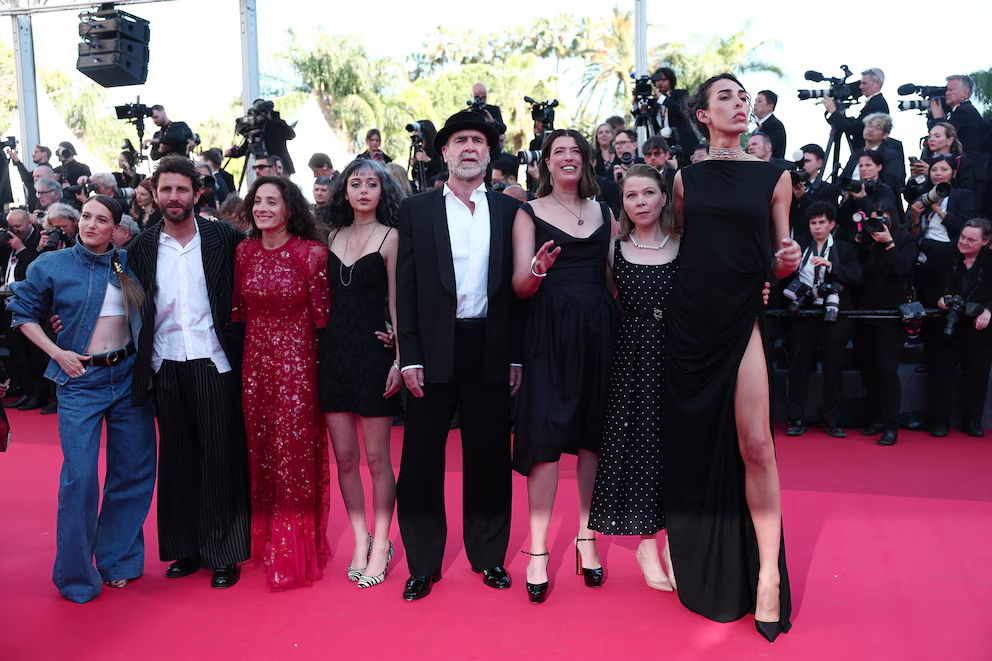
The most inevitable episode is the 1995 kung-fu kick against a Crystal Palace supporter, the moment that turned Cantona’s temper into global spectacle and led to a long suspension. But the documentary does not treat the incident as a simple scandal. It places it inside a broader portrait of a gifted, fragile and defiant figure who never fully separated performance from identity.
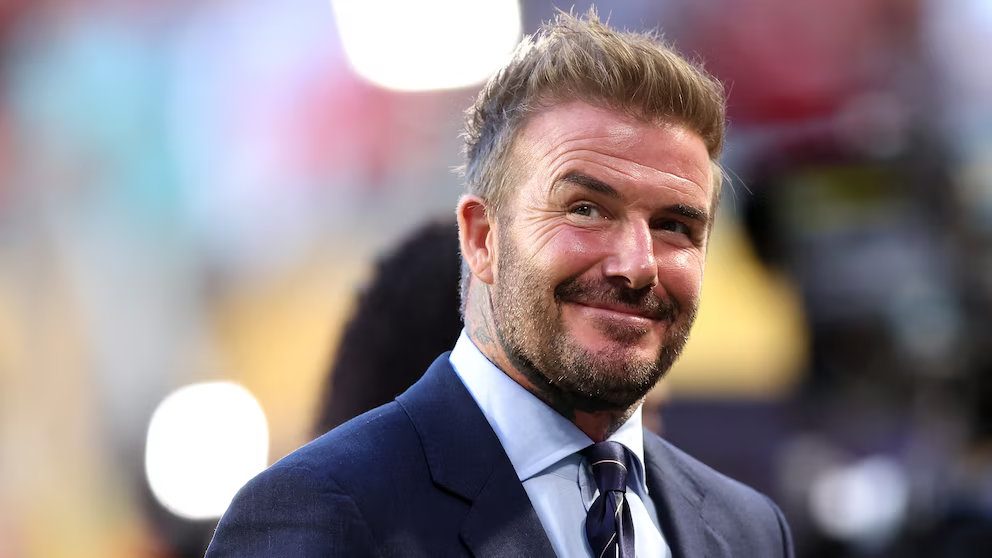
Testimonies from figures such as Alex Ferguson and David Beckham add institutional memory to the story, but the center remains Cantona himself. His presence still carries theatrical gravity, yet the film’s strongest material appears when that gravity breaks and vulnerability enters. The result is less a celebration of greatness than a study of what greatness costs when it becomes inseparable from conflict.
Cantona’s post-football life as an actor also deepens the reading. The documentary arrives as he appears in another Cannes project, reinforcing his transformation from athlete to cultural figure. He no longer belongs only to football history; he now occupies the territory where sport, cinema and self-examination overlap.
What makes the film unusual is its refusal to rescue Cantona from himself. It allows the myth to breathe, but also lets it bruise. In doing so, it suggests that the most powerful sports documentaries are not those that preserve heroes, but those brave enough to show how heroes survive their own image.
La narrativa también es poder. / Narrative is power too.