

 Phoenix 24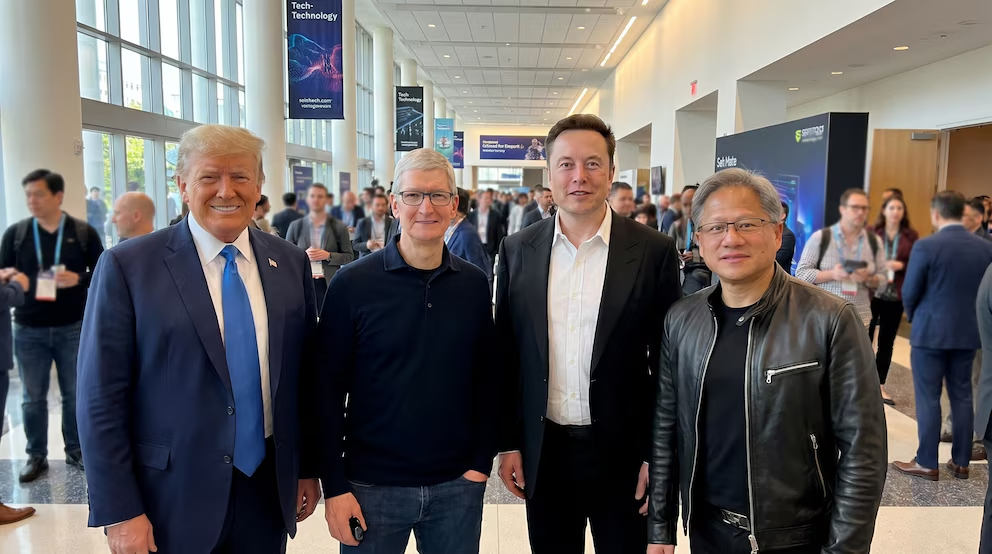
The delegation is the message.
Beijing, May 2026. Donald Trump’s visit to China is being accompanied by a powerful group of American technology and business leaders, turning the diplomatic trip into a direct negotiation between state power, corporate ambition and strategic dependency. The presence of figures such as Elon Musk, Tim Cook and Jensen Huang signals that the summit is not only about tariffs or protocol. It is about who controls the next phase of industrial access, artificial intelligence and global supply chains.
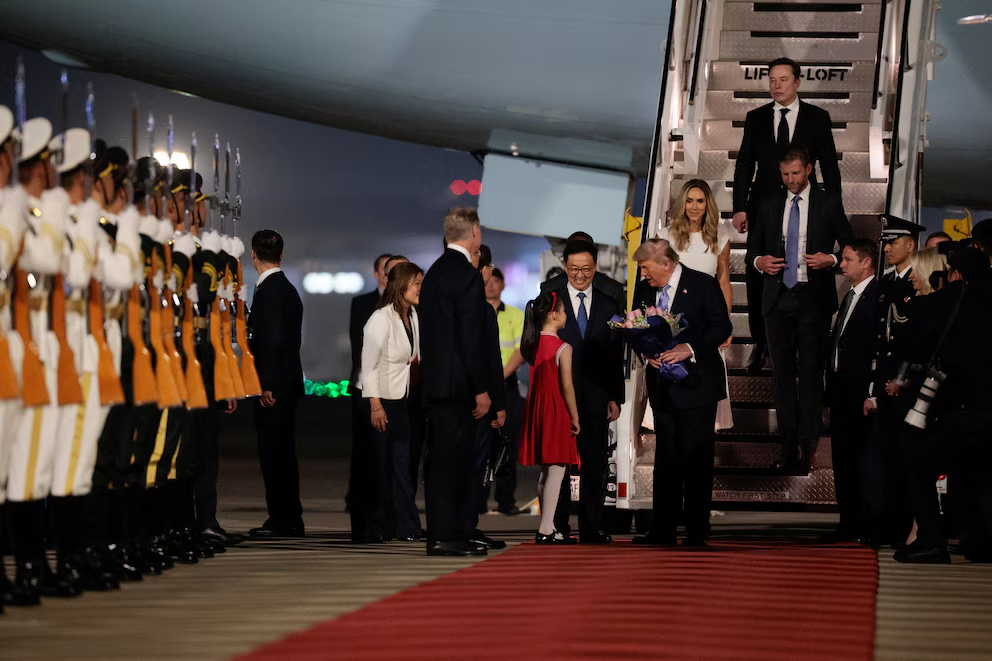
Musk arrives as the face of a company deeply exposed to China through Tesla’s manufacturing and consumer market. Cook represents Apple’s long and complicated dependence on Chinese production networks, even as the company continues diversifying parts of its supply chain. Huang’s participation is especially sensitive because Nvidia sits at the center of the AI chip conflict, where commercial opportunity collides with national security restrictions.
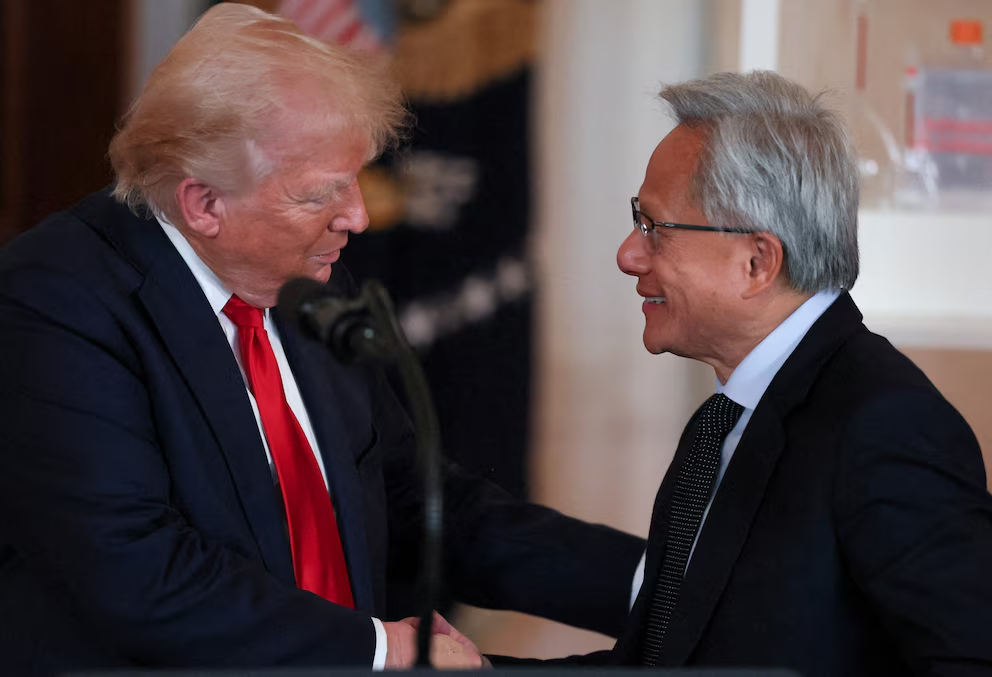
The delegation also includes major executives from finance, aviation and investment, showing that Washington is approaching Beijing through a broad economic front rather than a purely diplomatic channel. That structure reflects Trump’s preferred style: converting foreign policy into transactional pressure, measurable deals and visible corporate alignment. In this model, CEOs do not merely accompany the president; they become instruments of negotiation.
For China, the presence of these executives is equally useful. Beijing can show that U.S. corporate power still wants access to its market despite political hostility, export controls and security rhetoric. That gives Xi Jinping leverage, because the companies most closely tied to American innovation also remain tied to Chinese scale, manufacturing capacity and consumer demand.
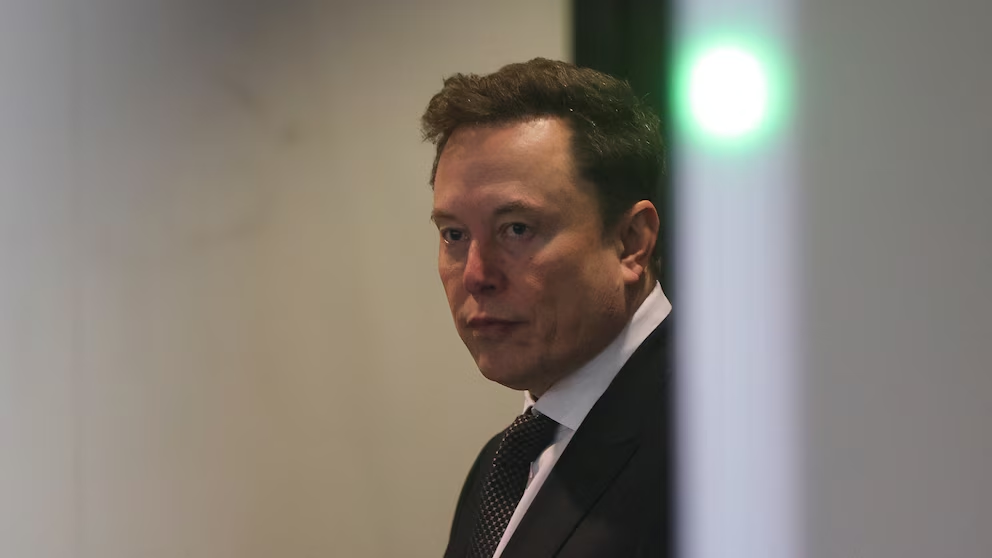
The deeper contradiction is clear. Washington wants to restrict China’s technological rise while preserving commercial access for its own giants. Beijing wants foreign investment, advanced chips and business confidence while resisting U.S. pressure over Taiwan, trade rules and industrial policy. The executives traveling with Trump embody that contradiction: they are both beneficiaries of globalization and witnesses to its fragmentation.
This is why the visit matters beyond the personalities. Musk, Cook, Huang and other corporate leaders represent the private architecture beneath U.S.-China rivalry. The summit may produce agreements, gestures or temporary relief, but the larger reality remains unresolved: the world’s two largest powers are trying to decouple politically while remaining economically entangled.
Más allá de la noticia, el patrón. / Beyond the news, the pattern.