

 Phoenix 24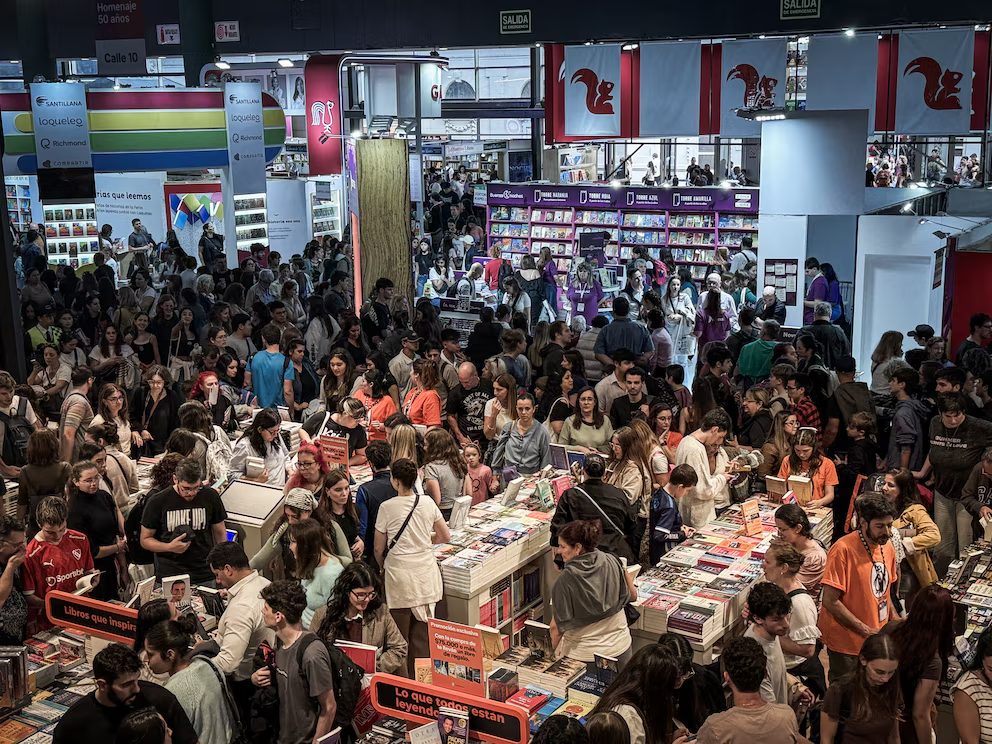
Reading still gathers bodies, not just clicks.
Buenos Aires, May 2026. The 50th edition of the Buenos Aires Book Fair has broken its attendance record with 1.34 million visitors over 19 days, confirming that large cultural gatherings still retain public force in an age dominated by screens, platforms and fragmented attention. The figure is not only an institutional milestone. It is a signal that books continue to operate as social infrastructure, even in a market shaped by economic uncertainty and changing consumption habits.
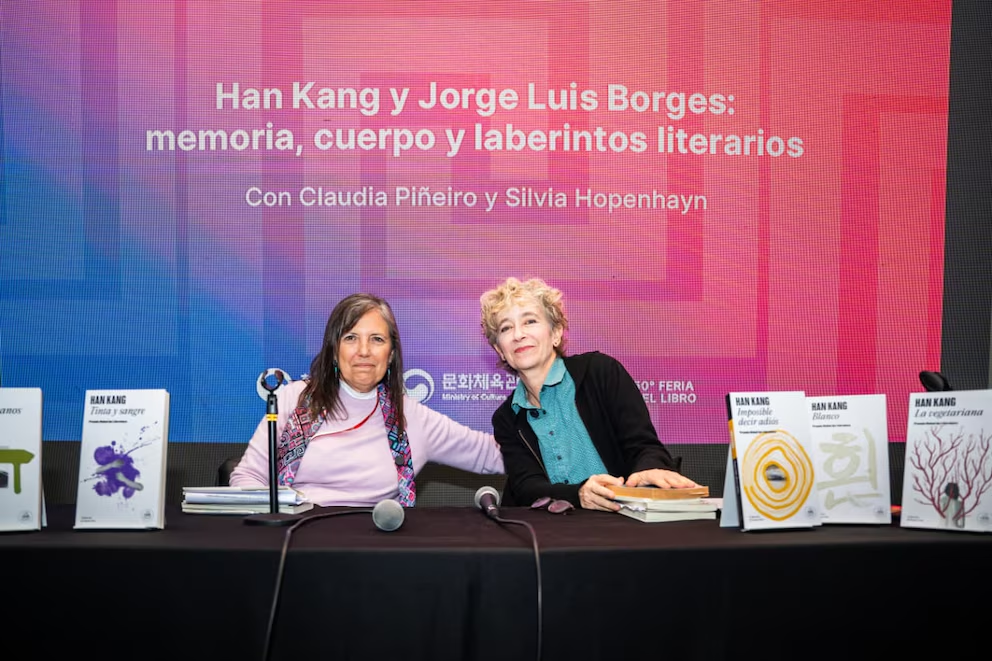
The record matters because Argentina’s publishing ecosystem is not moving through easy conditions. Inflation, weakened purchasing power and pressure on household spending have affected how readers buy, compare prices and decide which titles are worth taking home. Yet the fair remained crowded, showing that cultural participation can survive even when direct sales become more uneven across publishers, bookstores and independent labels.
That tension defines the real story. The fair was full, but the commercial picture was not uniform. Some major publishers reported strong movement driven by bestselling authors, international figures and long signing lines. Smaller and regional presses experienced a more mixed landscape, sustained by visibility, loyal readers and targeted audiences rather than massive purchasing power. The result is a fair that works as both marketplace and cultural refuge.
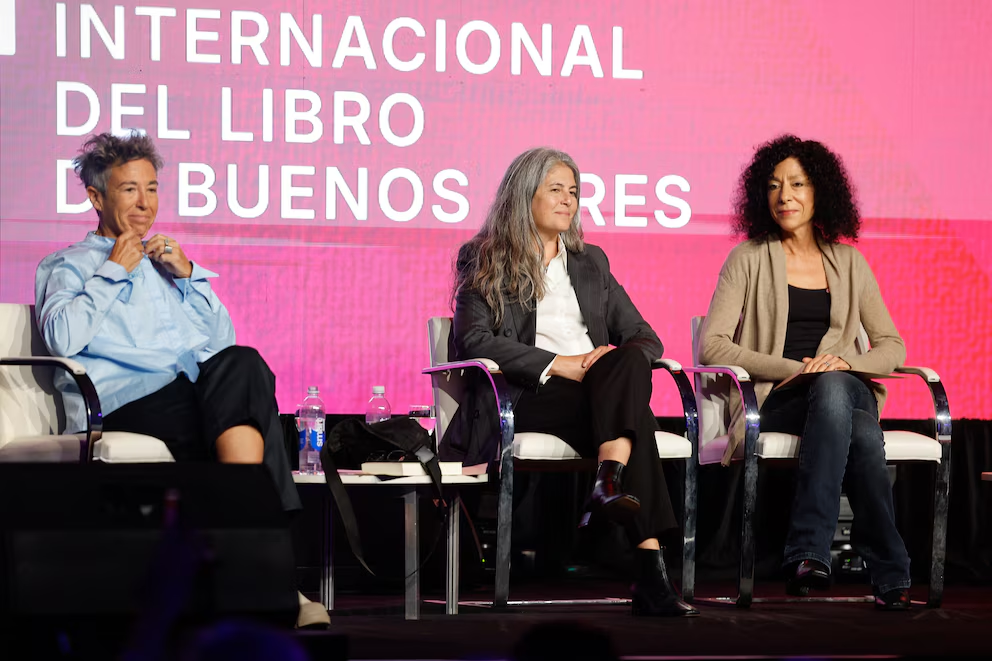
The 50th edition also carried symbolic weight. A half-century of continuity gives the event an authority that goes beyond annual programming. The Buenos Aires Book Fair has become one of the major literary meeting points of the Spanish-speaking world, linking publishers, writers, schools, libraries, translators, critics and readers in a single urban ritual. Its record attendance confirms that the book, as object and experience, still has civic magnetism.
There is also a generational dimension. The presence of young readers, families, teachers and students suggests that the future of reading is not only digital or algorithmic. Physical fairs still offer discovery, encounter and recommendation in ways platforms cannot fully reproduce. In that sense, the fair functions as a counterweight to passive consumption: people walk, browse, ask, listen, compare and build cultural memory through movement.

The deeper lesson is that reading culture does not depend only on individual habits. It requires public spaces, editorial diversity, access policies and symbolic events capable of making books visible at scale. When a fair reaches record attendance during a difficult economic period, it reveals both resilience and fragility: the public wants culture, but the industry still needs sustainable conditions to produce and circulate it.

Buenos Aires has shown that the book fair remains more than a commercial event. It is a thermometer of social desire, intellectual continuity and democratic conversation. The record does not solve the crisis of the publishing market, but it does contradict the idea that reading has lost its place in public life. In a distracted century, 1.34 million visitors are not just a statistic. They are a crowd choosing attention.
La verdad es estructura, no ruido. / Truth is structure, not noise.