

 Phoenix 24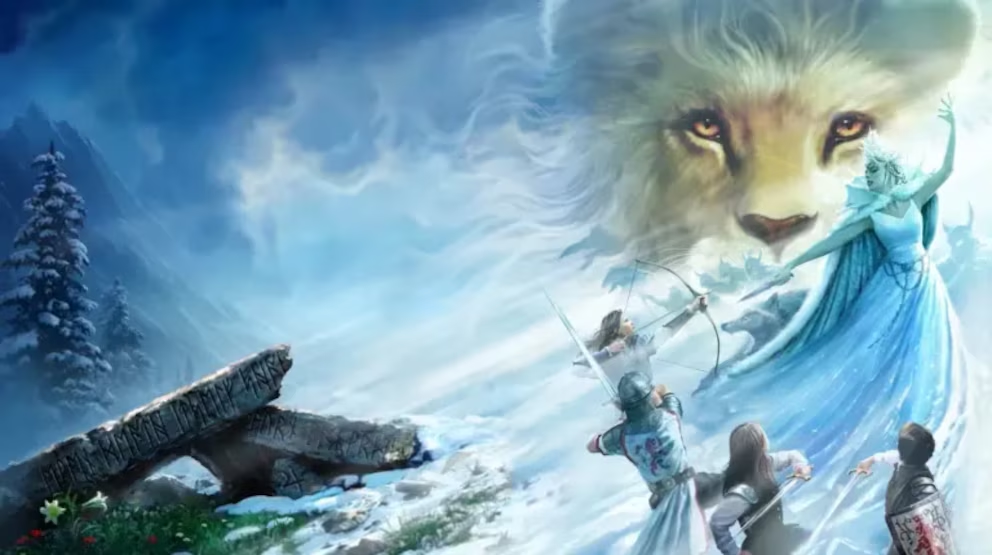
A classic returns through visual discipline.
Bogotá, May 2026. Owen Richardson’s appearance at the Bogotá International Book Fair placed The Chronicles of Narnia back at the center of a conversation that goes beyond nostalgia. The American illustrator, invited as one of FILBo 2026’s featured guests, presented the creative process behind the renewed covers of C. S. Lewis’s seven-book saga, a project tied to the 75th anniversary of one of modern fantasy’s most enduring literary universes.
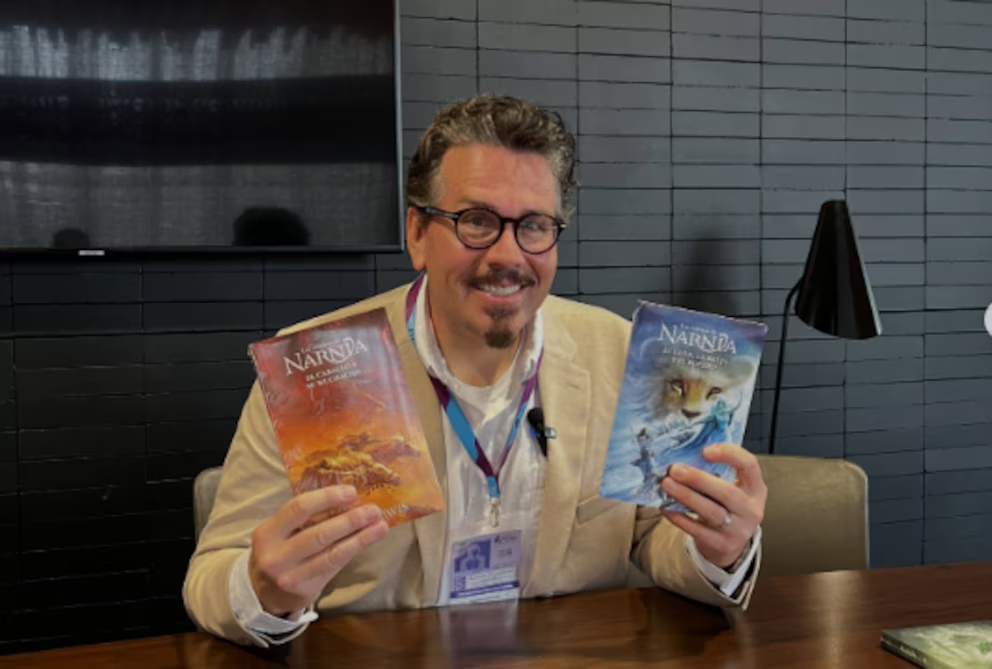
Richardson spent a full year developing the seven covers, a process that required hundreds of sketches, repeated readings of each book and a constant negotiation between fidelity and reinvention. His guiding question was not simply how to make Narnia look new, but how to honor the world Lewis created without turning reverence into imitation. That tension defined the project: tradition had to be respected, but not frozen.
The challenge was especially delicate because Narnia already has a powerful visual inheritance. Pauline Baynes, the original illustrator associated with Lewis’s work, shaped much of the saga’s early imagery, leaving behind a reference point that no redesign can ignore. Richardson approached that legacy with caution, drawing from the original atmosphere while allowing his own visual language to enter the frame.
One of the most difficult decisions, according to Richardson, was choosing which scenes could carry the symbolic weight of each book. A cover is not a summary; it is a threshold. It must invite the reader into a world while compressing character, atmosphere and mystery into a single image. That demand explains why the project required discipline, editorial dialogue and a deep immersion in the internal architecture of the books.
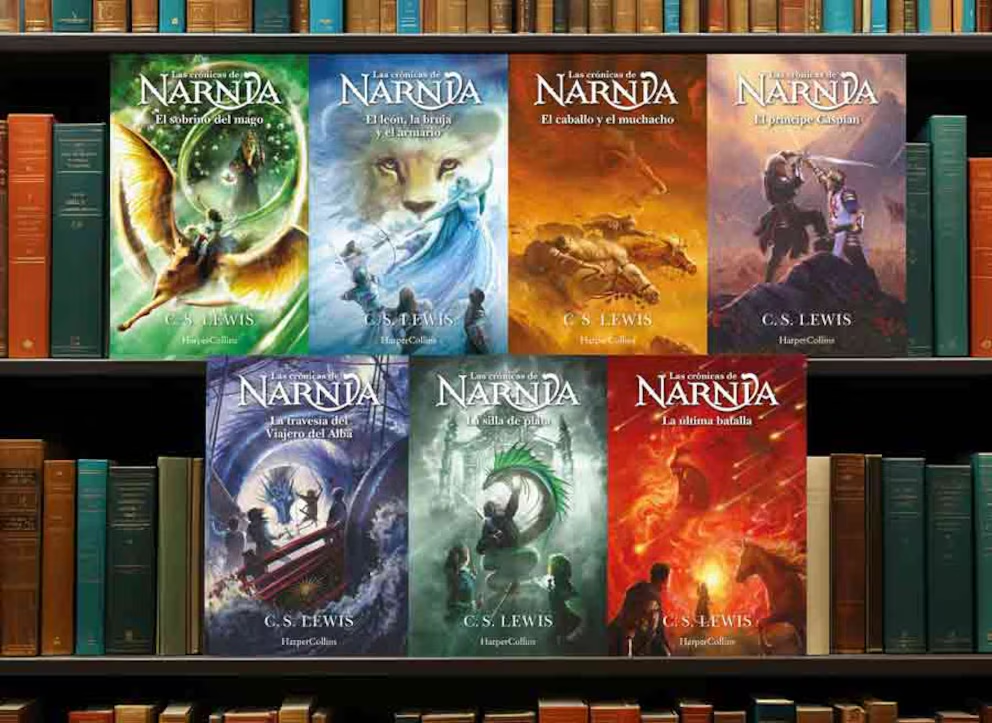
The renewed covers also show how classic literature survives in the visual economy of the present. New generations often meet books first through images, shelves, screens and recommendation systems before they encounter the text itself. In that context, cover design becomes more than packaging. It is cultural mediation, a bridge between inherited imagination and contemporary attention.
Richardson’s work suggests that the future of literary classics will depend not only on preserving texts, but on renewing the visual gateways that allow readers to re-enter them. Narnia remains powerful because it can be recognized and rediscovered at the same time. Its new covers do not replace memory; they give memory another door.
La narrativa también es poder. / Narrative is power too.