

 Phoenix 24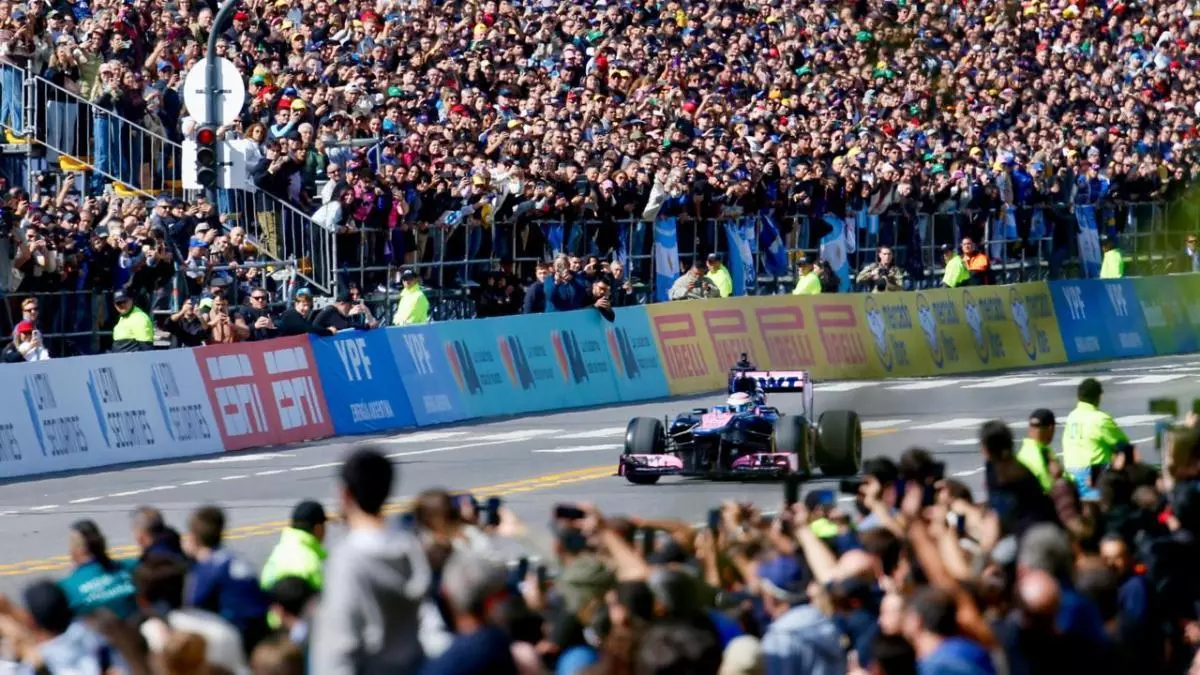
A country heard its future in one engine.
Buenos Aires, April 2026.
Franco Colapinto unleashed a massive wave of Formula 1 enthusiasm in Buenos Aires, turning a street exhibition into a national motorsport event with symbolic weight far beyond the show itself. Hundreds of thousands of fans filled the Palermo area to watch the Argentine driver perform in front of a public that had waited decades to feel Formula 1 machinery so close again. The event confirmed that Colapinto is no longer only a driver with international projection. He has become a cultural trigger for Argentina’s return to the global racing imagination.
The scale of the turnout revealed something deeper than sporting curiosity. Families, young fans and longtime motorsport followers gathered as if the city were hosting a Grand Prix rather than a road show. Each acceleration, donut and high-speed pass worked as a collective release for a country that has carried Formula 1 nostalgia since the era of Juan Manuel Fangio and the last Argentine Grand Prix in 1998. The spectacle was mechanical, but the response was emotional.
Colapinto drove a Lotus E20 from 2012, carrying Alpine colors and powered by a Renault V8 engine whose sound gave the event a historic texture. He also appeared linked to the legacy of Fangio through the presence of the legendary Mercedes W196, connecting Argentina’s motorsport past with its most promising contemporary figure. That image mattered because it compressed generations into one scene. Fangio represented the myth; Colapinto represents the possibility of return.
For Buenos Aires, the exhibition became a statement of capability. A city that can mobilize this level of public attention around Formula 1 sends a clear message to the motorsport world: Argentina still has a market, a memory and a fan base ready for the global calendar. The absence of a Grand Prix has not erased the culture. It has intensified the longing.
The political and commercial implications are difficult to ignore. Formula 1 no longer selects venues only through tradition; it measures audience reach, sponsorship power, infrastructure, tourism value and global media impact. Colapinto’s road show delivered a form of public evidence. Argentina can generate the kind of spectacle that modern Formula 1 knows how to monetize.
For Alpine, the event also had strategic value. Colapinto is not simply an Argentine driver inside a European structure; he is a gateway to a national audience with enormous emotional intensity. In a championship increasingly shaped by markets, identities and fan engagement, that matters. A driver who mobilizes hundreds of thousands outside a race weekend becomes more than an athlete. He becomes an asset of cultural expansion.
Yet the phenomenon also places pressure on Colapinto. Popular expectation can elevate a career, but it can also compress it. Argentina is not only celebrating him; it is projecting decades of absence onto his trajectory. Every step he takes in Formula 1 now carries a national echo that few drivers experience with such intensity.
That is the paradox of the moment. The event was a celebration, but it also exposed the hunger of a country that wants to see itself back inside the sport’s central stage. Colapinto gave Buenos Aires a taste of what had been missing. Now the question is whether Formula 1, Alpine and Argentine institutions can transform emotion into calendar, infrastructure and continuity.
The road show proved that motorsport in Argentina is not a memory preserved in museums. It is a living force capable of occupying avenues, moving crowds and turning a single driver into a national symbol. Colapinto did not bring Formula 1 back officially, but for one day, Buenos Aires behaved as if it had returned.
A machine can awaken what history never erased.
Una máquina puede despertar lo que la historia nunca borró.