

 Phoenix 24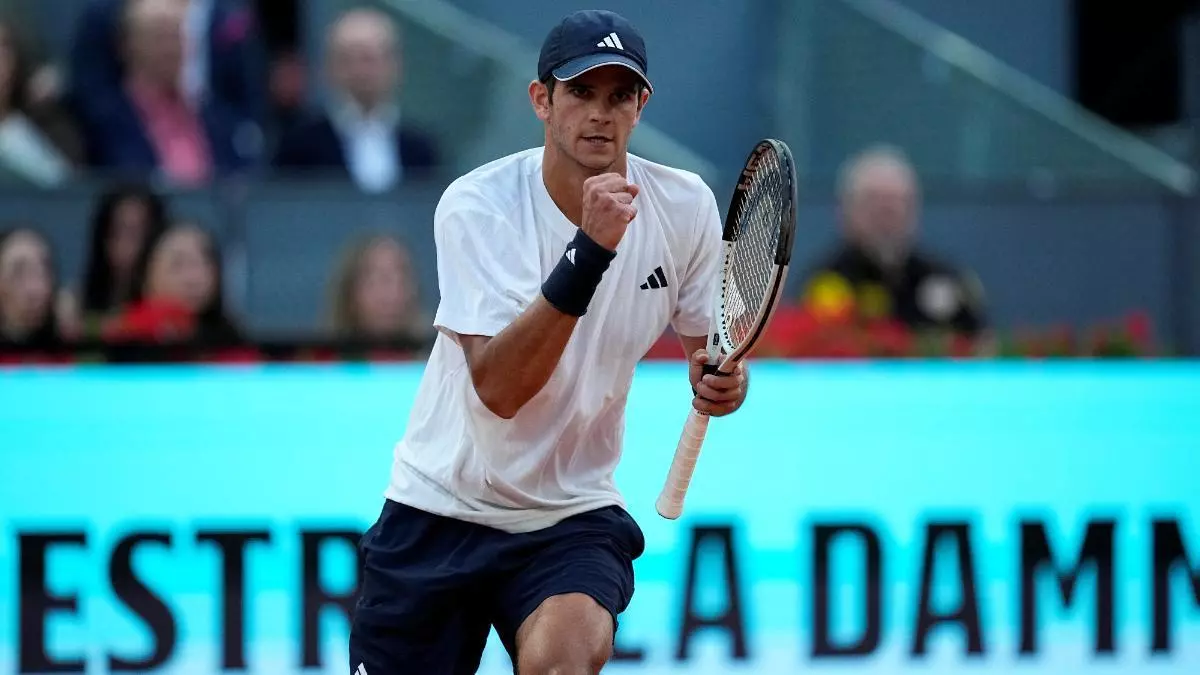
Talent becomes serious when comparison arrives early.
Madrid, April 2026.
Rafael Jódar has entered the accelerated conversation reserved for the rarest kind of tennis prospect: the one whose first steps are immediately measured against the beginnings of Carlos Alcaraz and Jannik Sinner. His rise at the Madrid Open, strengthened by a statement win over João Fonseca, has turned a promising Spanish player into a name carrying national expectation. The comparison is dangerous, but unavoidable. In modern tennis, precocity is no longer observed patiently; it is converted into narrative almost overnight.
Jódar’s case is striking because his progress is not built only on hype. At 19, he has already shown the kind of competitive nerve that separates a talented junior from a player capable of surviving the professional circuit. His victory over Fonseca mattered because it arrived against another symbol of the sport’s future. These matches are never just about a result. They are early claims in the hierarchy of the next generation.
Spain understands that language better than most tennis nations. After Rafael Nadal, every promising Spanish player has carried the burden of comparison, but Alcaraz changed the scale of expectation again. He proved that a teenager from Spain could arrive not as a long-term project, but as an immediate force. That precedent now shapes how Jódar is viewed. His development is being read through the lens of acceleration.
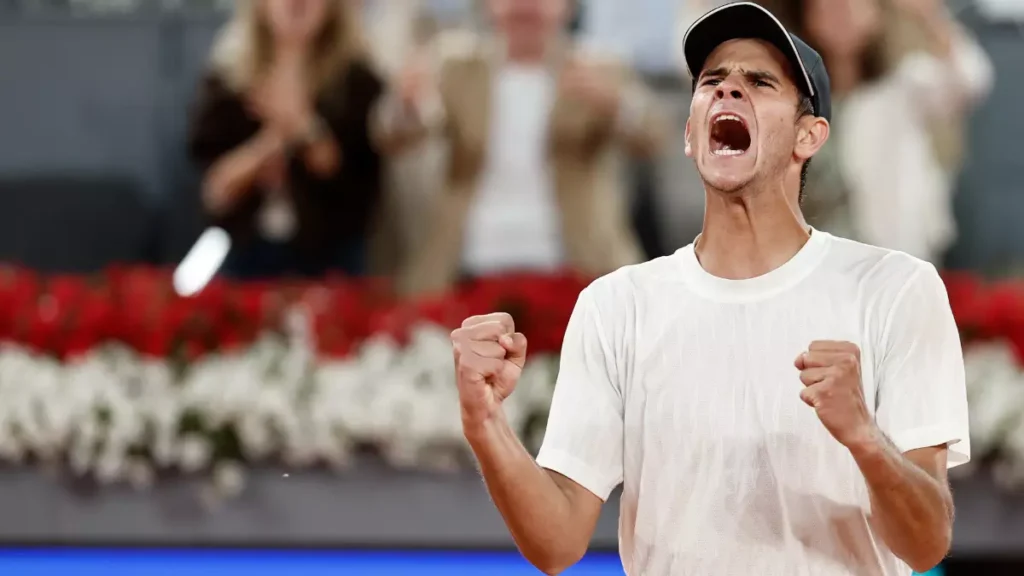
The reference to Sinner adds another dimension. Sinner’s rise was less explosive than Alcaraz’s, but more surgical, built on discipline, technical refinement and steady competitive growth. To say that Jódar improves on some early markers associated with Alcaraz and Sinner does not mean he is destined to replicate their careers. It means his trajectory has reached the point where statistical comparison becomes tempting. That is both an opportunity and a trap.
The danger lies in confusing early rhythm with final destination. Tennis history is full of players who advanced faster than expected before discovering that the top of the tour requires a different kind of endurance. The professional circuit tests travel, recovery, emotional stability, tactical adjustment and the ability to lose without identity collapse. Jódar’s challenge will not be proving that he belongs for one week in Madrid. It will be proving that his game can absorb the calendar.
Still, what he has shown deserves attention. His presence on court carries maturity, physical reach and a competitive calm that suggest a player learning faster than the rankings alone can explain. Against Fonseca, he did not merely survive pressure; he altered the emotional balance of the match. That quality matters because elite tennis often turns on invisible shifts: one hold under stress, one return game that unsettles the opponent, one sequence where belief changes sides.
For Spanish tennis, Jódar’s emergence arrives at a strategically perfect moment. Nadal’s era has already entered history, while Alcaraz remains the present and future face of the nation’s tennis identity. A new player rising behind him gives Spain depth, continuity and narrative renewal. It also prevents the national imagination from depending entirely on one figure, however extraordinary Alcaraz may be.
The global circuit is also ready for this kind of storyline. Tennis is entering a generational phase where Alcaraz, Sinner, Fonseca, Rune, Fils and others are being positioned as heirs to the post-Big Three order. Jódar’s arrival complicates that map in the best possible way. He does not need to be crowned too soon. He only needs to keep forcing the conversation.
The next step will reveal more than the current breakthrough. Opponents will study him, pressure will increase and the emotional protection of surprise will disappear. That is when genuine prospects begin to separate from temporary sensations. The first climb attracts attention. The second confirms whether the player has structure.
Jódar’s rise should therefore be read with ambition, but not impatience. He has earned the right to be watched closely, not the burden of being declared inevitable. Comparisons with Alcaraz and Sinner may illuminate the scale of his promise, but they cannot define the architecture of his future. That work still belongs to matches, training blocks, defeats and the difficult silence between tournaments.
A star is not born when the crowd notices. It is built when pressure stops being new.
Una estrella no nace cuando la mira el público. Se construye cuando la presión deja de ser nueva.