

 Phoenix 24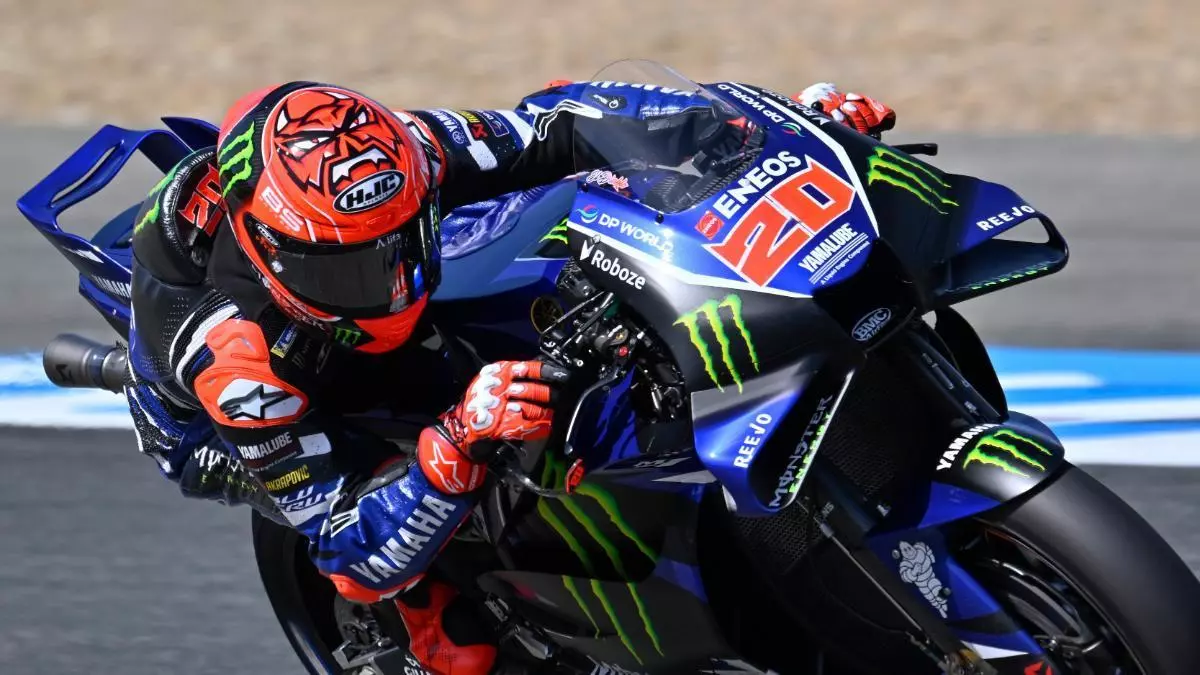
A great badge cannot outrun a slow machine.
Jerez, April 2026.
Yamaha has reached one of the most delicate points of its modern MotoGP cycle, with results and internal frustration confirming that the project remains far from competitive recovery. What was supposed to be a technical reset has instead deepened the sense of decline. Fabio Quartararo’s frustration after another difficult weekend reflects a reality that can no longer be hidden behind development language: the M1 is not giving its riders the tools to fight where Yamaha’s history says it should be.
The problem is not only speed. Quartararo has made clear that the bike lacks strengths across several decisive phases of performance, including braking, entry, rotation and corner exit. That diagnosis is severe because it means Yamaha is not fighting a single technical weakness. It is confronting a structural deficit in the motorcycle’s behavior, one that affects rhythm, confidence and race execution.
The arrival of the V4 concept was meant to signal a new era. Instead, it has exposed the difficulty of transforming a MotoGP identity built for one technical philosophy into a competitive package under current conditions. Yamaha spent years associated with balance, corner speed and precision. But modern MotoGP increasingly rewards acceleration, traction, aerodynamic efficiency and aggressive power delivery. In that environment, tradition becomes fragile if engineering evolution arrives late.
Álex Rins’ confirmed exit after the 2026 season reinforces the impression of a project in transition rather than consolidation. A factory team that loses stability in both performance and rider continuity sends a difficult message to the paddock. Yamaha does not only need a better bike; it needs to rebuild belief around its direction. Riders can endure development cycles, but they need evidence that sacrifice is producing progress.
The comparison with 2025 is especially damaging because the promise of improvement now appears suspended. Returning to the level of last season would not be a triumph; it would be damage control. That is the depth of the crisis. Yamaha is no longer measuring itself against Ducati, Aprilia or KTM at the front, but against its own recent decline.
Quartararo’s position is particularly sensitive. He remains one of the most talented riders on the grid and a former world champion, but talent loses visibility when the machine cannot translate it into results. His insistence that he still knows how to ride is more than a personal defense. It is a warning to Yamaha that rider quality cannot compensate indefinitely for technical stagnation.
The challenge is also organizational. MotoGP development now moves at a pace where delays become competitive debt. Ducati’s dominance did not emerge from one innovation, but from a system capable of integrating aerodynamics, data, engine behavior, satellite feedback and rider adaptation. Yamaha must compete not only against motorcycles, but against development cultures that have become faster, broader and more aggressive.
This is where the crisis becomes strategic. A factory with Yamaha’s history cannot afford to be seen as a place where careers lose momentum. If the brand cannot persuade elite riders that the project is viable, recruitment becomes harder and technical feedback weakens. Performance decline then becomes circular: weaker results reduce confidence, reduced confidence limits attraction, and limited attraction slows recovery.
There is still a path back, but it requires more than patience. Yamaha needs a coherent development roadmap, visible technical gains and a machine with at least one clear competitive weapon. Without that, every race weekend becomes another public audit of a project trying to explain why its future keeps arriving late.
The danger is not that Yamaha is having a bad season. The danger is that MotoGP has evolved faster than Yamaha’s response. In a championship where engineering velocity defines survival, heritage can inspire but cannot defend lap time. The clock is now running not only against the stopwatch, but against the credibility of the entire project.
Speed exposes what reputation can no longer protect.
La velocidad exhibe lo que la reputación ya no puede proteger.